Books, Bunk beds, and a Biblioteca: Librarians Explore Nicaragua

Books, Bunk beds, and a Biblioteca: Librarians Explore Nicaragua

by Sue Keefer, Director of Learning Resources, Otero Junior College, La Junta, Colorado

A desire by one woman to put books into the hands of children in Nicaragua has changed the lives of many Nicaraguans due to her expertise in collaboration.

May 2000, Jane Mirandette found herself in San Juan del Sur, Nicaragua, semi -retired and owning a bed and breakfast hotel. She realized quite quickly that there were no children with books in their hands. Up until she arrived, Nicaragua had no lending libraries. If someone wanted to read a book, he or she would have to go to a government-run library in a large city. Books were kept behind the desk, so the person would have to request a particular book, and staff would retrieve it. Then the person would sit in the library and read it. Adult or not, no one was allowed to take books out of the library. It was the rule.
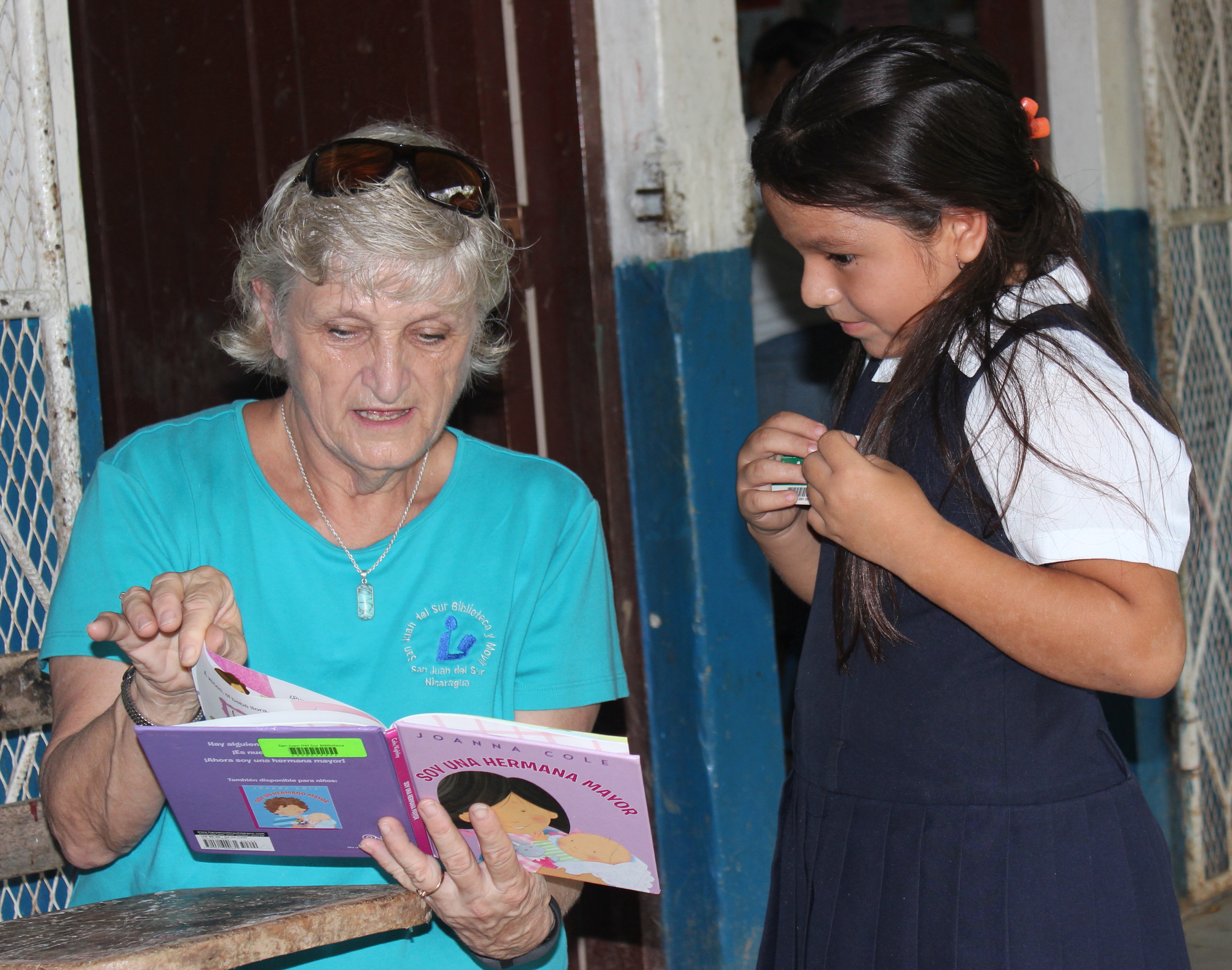
Jane Mirandette reading to a student at a rural school

Jane Mirandette reading to a student at a rural school


Jane has grown up with a tradition of reading and she felt strongly that children needed books. Her “lending library” started out in the patio of her newly-purchased hotel. Later it expanded to a small building across the street, and it currently resides in a much larger, newly renovated building a block away.

When Jane started the lending project, she was met with naysayers: “They won’t bring the books back!” But she persevered. Children needed books, and that was that. They did bring the books back, because they wanted to check out more!

Fast-forward to November, 2015. The San Juan del Sur Biblioteca, which is supported by donations, was about to celebrate its 14th anniversary. A group of librarians, sponsored by the Colorado Association of Libraries International Libraries and Cultural Exchange Interest Group, made plans to journey to Nicaragua, visit libraries, help with the celebration, and do a bit of sightseeing as well. I decided to join the group on ILCE-IG’s first international adventure.

We arrived in Managua on Nov. 7, a week before the celebration. Our first “lesson” was an explanation of a “library in a box,” something Jane and her staff had created to help others start libraries in their areas. A Library in a Box consists of a tub full of books, simple craft projects to go along with the books, and check-out materials. Each box has materials worth about $300.
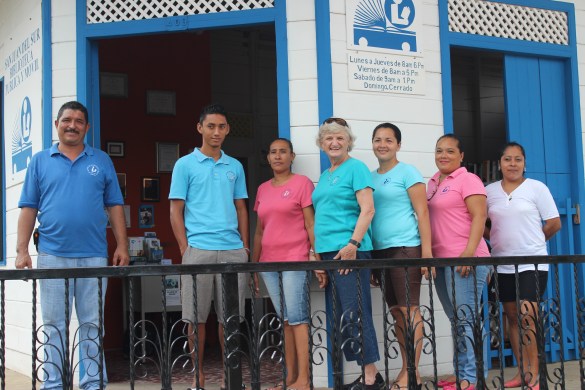
sjds staff

The incredible staff of the San Juan del Sur Biblioteca

Jane receives requests from people who want to recreate lending programs, and start lending libraries. There are 64 Libraries in a Box Recipient Programs functioning in Nicaragua using this system.  On the first morning after our arrival she demonstrated the system with a box about to be delivered to a group arriving that evening to start their second library program. That same evening, Jane gave a box of books to a man named Darryl Bushnell, who has worked with the Puedo Leer library in Granada, the second lending library in Nicaragua started by Carol Rea, a Canadian teacher retired and living in Granada.  That program has several Library in a Box recipients they work with, all using this same system. Darryl had requested a donation of a Library in a Box to take to a rural clinic he is assisting, so children would have something to read when their parents were being seen by the doctor.

The next day, Nov. 8, after some sightseeing, we visited Puedo Leer (I Can Read), which has been in operation for 10 years and is headed up by Carol Rea. Two of the library staff were there and with Darryl and a translator explained the operations of the library to our very interested group of librarians. It was a small library, and we filled it fairly full. The library was supposed to be closed, but the door was open, and soon, a young boy came in, ignored everyone, put his books in the proper place, walked over and chose two more, and then went to the checkout desk. He probably had more photographs taken of him that day than he had his whole life.

aww, mom

He told our group of librarians that his name was Santiago. He was 5. He seemed undaunted by the attention, and left soon after, books in hand. He had no idea that he had just made our day.

The Puedo Leer librarians, Connie and Yvonne, deliver books to 24 schools so that teachers can read books to their classes. Each month they rotate the books. They also do a “read in the park” program, and also read in a room at the Hotel Corazon.

“The mission is very simple,” Darryl explained. “Bringing the joy of reading to the children of Nicaragua. We’re simply inviting people to use these accessible resources.”

Each person can take two books out per time. Teachers can take 15. The library has 1,025 member cards. But all is not about lending books and reading. They also help children with homework. Volunteers give English classes. Saturdays are for crafts.

The library also participates in a program to educate women and children about violence. Posters explain that no one has the right to hit or molest women or children. These grassroots libraries are the only source of independent information, as most of the information comes from traditional sources such as mothers, mothers-in-law, or priests, who all have their own agendas or practices.

Puedo Leer library’s budget is about $1,000 per month. This figure includes rent, salaries, and programs. The San Juan del Sur Biblioteca’s budget is $3,000 a month, including its mobile project. Jane believes that nationals should be trained to provide library services, and that they should be paid. This provides salaries as well as esteem. In this way the libraries are sustained.

Later the tour went to a rural medical clinic. The Library in a Box that Jane had given Darryl the day before had already found a room in the back. Tables, chairs, and bookshelves were in place. Along with four children who were reading!

The doctor was overjoyed with the donation. She said that the children will now have something to do when their parents are being examined.

Behind the clinic is an area where men are being taught to make cooking stoves from brick tiles. They cost $12. The men learn a skill, make a little money, and provide a way for people to cook food at their homes that is efficient, uses little fuel, and reduces harmful smoke.

“Education changes the paradigm,” Jane said. “Nothing else does.” She noted that while churches and service groups, and Non-governmental Organizations (NGOs) help the poor, they are all starting to be concerned about education. Over one half of all Library in a Box recipient programs are run by churches and service groups, including Peace Corps.

The next stop was a Christian school and homeless shelter. Books, stuffed animals, and snacks were given to the children. Adjoining the school is a shelter, which consists of two small rooms. Twenty children, a couple of single mothers with children, and an older woman lived there. They were also given books, snacks, and stuffed animals.

We noted that sleeping arrangements consisted of thin pads placed on a concrete floor. There were eight pads too few. After we left, we decided to purchase enough bunk beds so everyone would have a bed. Jane promised to check with the manager of the shelter for approval.

We remarked on how polite the children and adults were at both the school and orphanage. No one pushed into line or complained about what they received. Older children hung back until younger children had their treats. Smiles and “gracias” were in abundance.

We arrived at San Juan del Sur that night. The next morning, we walked the one block to the library that started it all, San Juan del Sur Biblioteca. Jane told us that a library card is the first ID a child has. “It gives them a sense of power,” she explained.

The SJDS library (http://www.sjdsbiblioteca.org/)  has computers for patrons to use (with Wi-Fi), children’s and adult books in Spanish, some books in English, stuffed animals for the children to play with or borrow, homework help, crafts, and presentations. The Poudre River Public Library District in Fort Collins, CO, became the sister library to SJDS in 2013, set up the Koha automated catalog and circulation program and hosts the server that runs it.
itsy bitsy


But the building doesn’t just house the library. It is a true community center. There are English classes for children and adults; a STEM class for children, which has six levels and lasts two years; and one room is used for disabled workers who make tote bags out of rice and bean bags. The people who make the bags work there five mornings a week and are able to keep their profits.

The mobile library, Biblioteca Movil, which is an offshoot of the main library, is also housed here. More than 3,000 children who attend rural schools have library cards through the mobile library. There is a competition among the schools; the schools that turns in the most books win a Christmas Fiesta—and an example of what Jane calls “using the carrot, not the stick.”

That evening, Jane shared her story. She and a friend came to Nicaragua to see if it might be a good place to retire. They tried to buy a beach home, but that fell through. They ended up buying a hotel. During the early days of hotel ownership, Jane noticed that the local children never had any books. Her “library” started on the hotel’s patio, with 200 books. 400 children showed up.  People scoffed at her idea of a lending library, saying the books would never be returned. But they were, and still are, 14 years later. Recent numbers coming from the newly automated programs show over 7000 books loaned through the mobile project from April to October of this year.

Jane established the Hester J. Hodgdon Libraries for All nonprofit foundation (http://www.librariesforall.org/) to support the SJDS library and to promote lending libraries throughout Central America. The foundation is named after her grandmother, who lived with her family until she was 12. “I had more books than anyone else in my school,” she said. “Because of my grandmother, I could read at age 5.”

Sustainability is very important to Jane; she produced a pamphlet for an ALA International Relations Program, “Exploring Seven Aspects of Sustainability for Lending Library Projects in Nicaragua and Other Developing Nations.”   The pamphlet has been used in many sustainability classes and is available on the website.

The seven aspects are: 1. Leadership Development: Each project has its own passionate director and a team of creators; 2. Financial Resources: Provide connection, transparent accountability, and accurate projections; 3. Clearly Defined Ongoing Goals: Ascertain sustainability and buy-in from the target group; 4. Succession Planning: Create redundancy, find the heirs apparent, and let them have their say! 5. Sufficient Staffing: Give staff authority, autonomy, and esteem; 6. Collection Development: Provide culturally appropriate materials and maintain fine-tuned lending systems; 7. Providing Effective Library and Community Services: Research or develop protocols and keep them current.

We had a choice to travel with the “bookmobiles” (two pickup trucks) or not. We all went, some enjoying an opportunity to ride in the back of a truck! The trucks contain bins of books, a table, chairs, and two laptops. The same checkout system that the public library has isused for the mobile libraries; but each library is kept separate. When a child registers, the staff tries to get his or her birth date, but that isn’t always possible. Addresses don’t exist. Often all they have is the child’s name and name of the school.

kathy with girl and library card

Kathy Plath registers a student


The schools usually consisted of a couple of rooms in a cement-block building—very basic accommodations and furnishings. However, the children were excited when we arrived. When the teachers said they could, they brought books back and excitedly looked for new ones. Frequently they helped each other find books. Several of the visiting librarians checked books in and out.

Books were left for the teachers to use. Pre-schoolers aren’t allowed to check out books in some of the rural schools, but their teachers do read to them. Jane, of course, is trying to get that changed in every school!

The advent of the mobile library has resulted in other projects as well. Jane helped found a local Rotary Club that then became involved in providing a water system for the schools, which consists of a water tower with piping to sinks in class rooms. Students can now wash their hands—soap on a stick is provided as well. Rotary members, both local and from the U.S., also put in toilets, with doors. (Adolescent girls stop going to school if there aren’t toilets with doors). The water system/toilet project has lead to another service:  the health department now visits the schools to talk about cleanliness.

When the bookmobiles are delivering books, they also take government-supplied beans and rice to the schools. The library donated big bins to put the commodities in to keep pests away.

On our last day in San Juan del Sur, we participated in the library’s 14th anniversary celebration. Jane hosts a celebration every year. To participate, the child has to be in good standing; all of their books must be in. However, if a child loses a book, he or she can either bring in another book to replace it, pay $3, or work for the library for three hours (more of the carrot instead of the stick approach).

The celebration is a major event in the town. Tents are set up for various crafts. This year’s theme revolved around Nicaraguan poet Rubén Darío. Two of his children’s books, “Del Tropico,” and “A Margarita,” were featured, and many of the crafts had a tropical theme involving fish and birds. However, the most popular table had temporary tattoos, which were donated by one of the Colorado librarians. Games such as musical chairs were played, and piñatas were broken. Finger paints were set out so children could put their handprints on a large white sheet. Library staff wrote the child’s name next to the handprint.

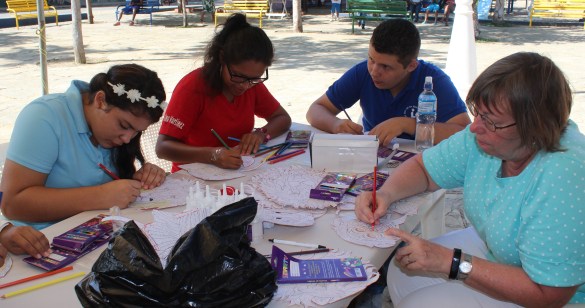
girl reading del tropico


brenda and kids

Brenda helping color masks


Bob tattooing

Bob applying a temporary tattoo

The library provided a meal of arroz con pollo, salad, bread, and iced tea. About 650 people were served. Following the meal, awards were given for various achievements, such as a poetry contest, most books checked out, etc. This year the Nicaraguan Minister of Education was in attendance, as well as ANIBIPA librarians (Asociación Nicaragüense de Bibliotecarios y Profesionales Afines /Association of Nicaraguan Librarians). After the awards, birthday cake was served to all.

enjoying the meal

Enjoying a meal of arroz con pollo

In the evening, we were invited to a dinner with library staff and ANIBIPA. Special awards were given to library staff, another piñata was broken, and more cake was served. Some of us even danced!

On our last day, on our way back to Managua, we stopped by the shelter again to deliver the bunk beds. We were disappointed that the residents weren’t there, but we left the beds with the caretakers. We heard later that our gift was greatly appreciated.
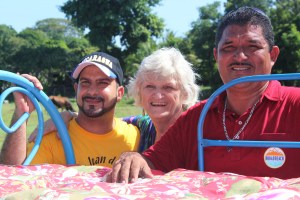
delivery

Diego, Jane, and Edwin delivering bunk beds to the shelter


Although we also enjoyed such sights as the Masaya Volcano, a large statue of Jesus which overlooks the bay; and activities such as zip-lining, a sailboat trip (with swimming in the Pacific Ocean), and a visit to a beach where we saw live sand dollars; and were treated to amazing food, we all agreed that the highlights of the trip were watching the children get excited about books, helping with the anniversary celebration, and providing beds for some children who needed them. We received much more than we gave.
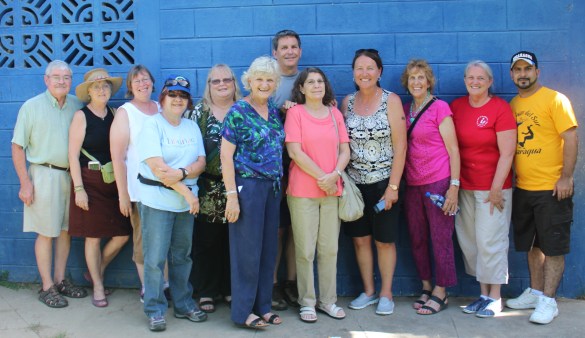
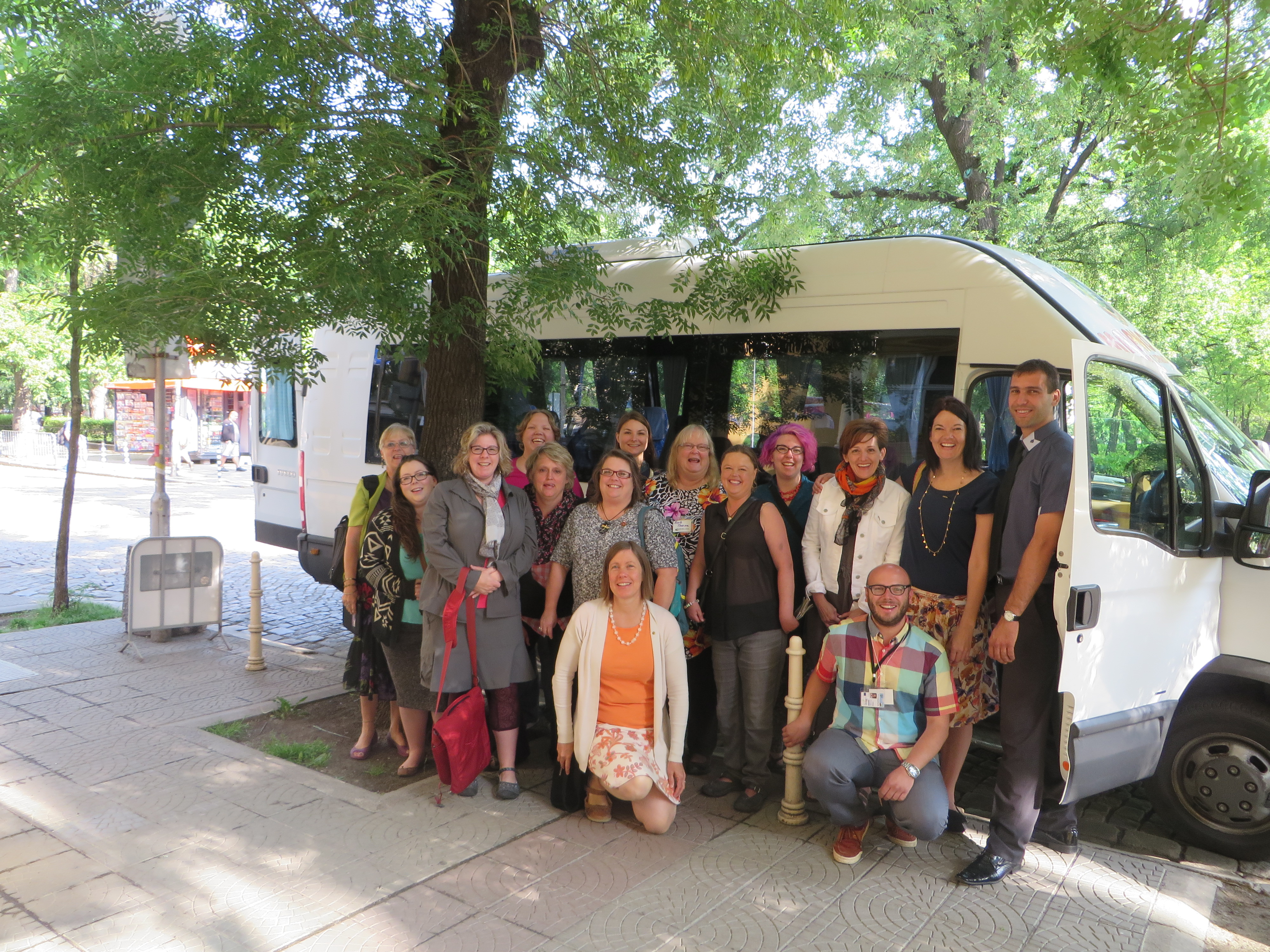
group photo

The entire group bids Nicaragua farewell


Bulgaria Trip Journal by Marjorie Snyder

Bulgaria Trip Journal

Marjorie Snyder

Monday, May 10, 2015Bulgaria Trip_MNS_5102015

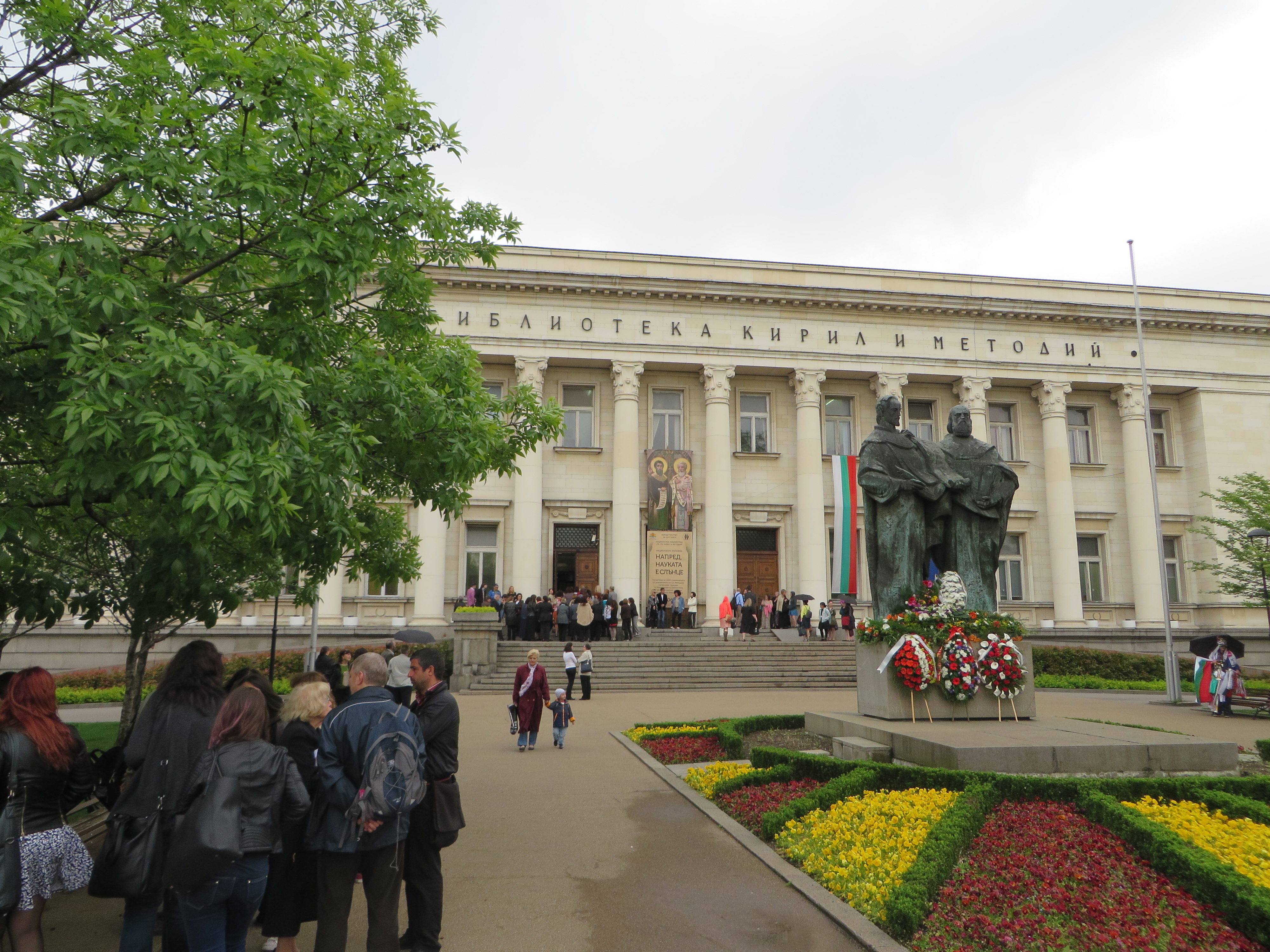
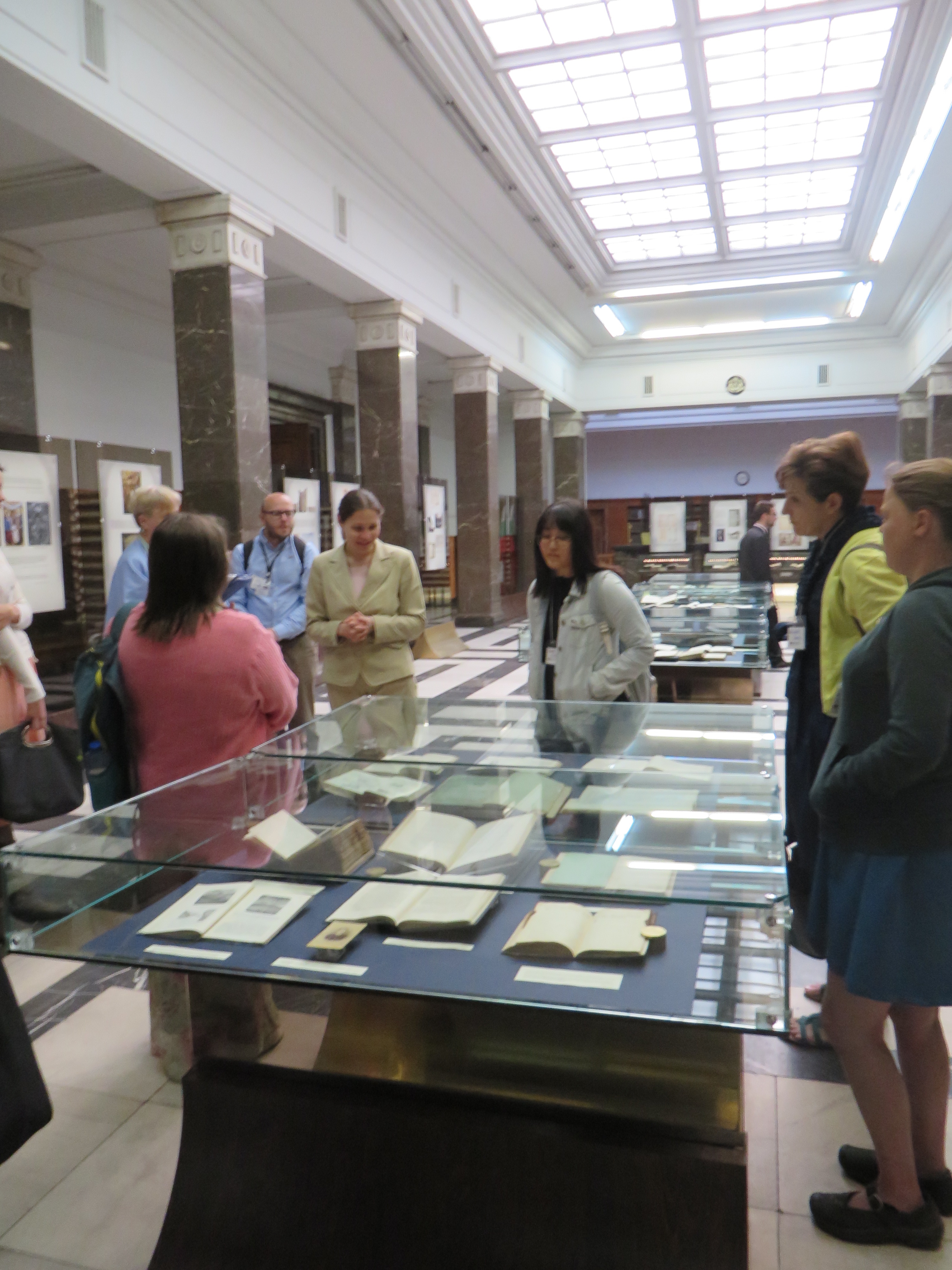
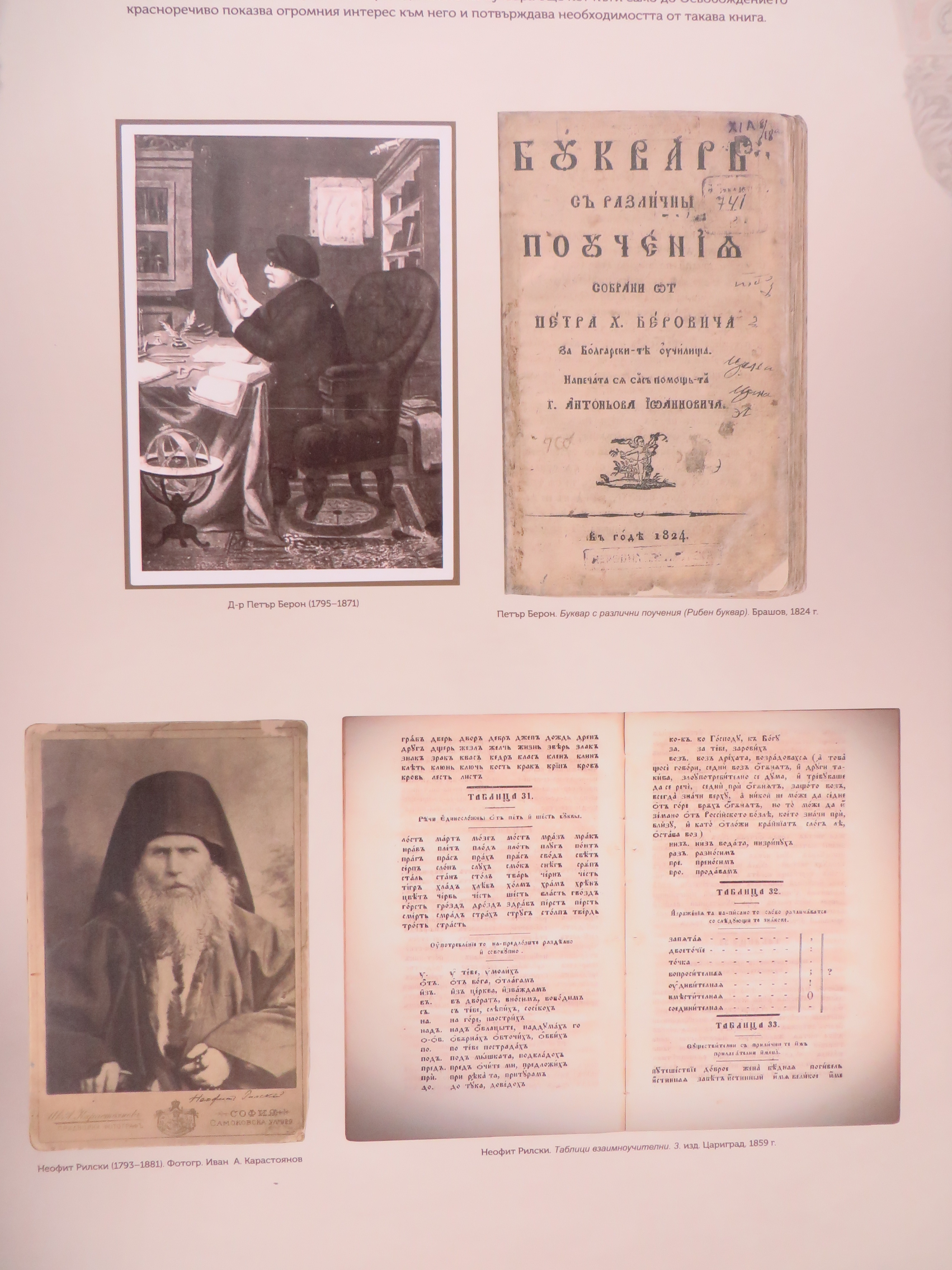
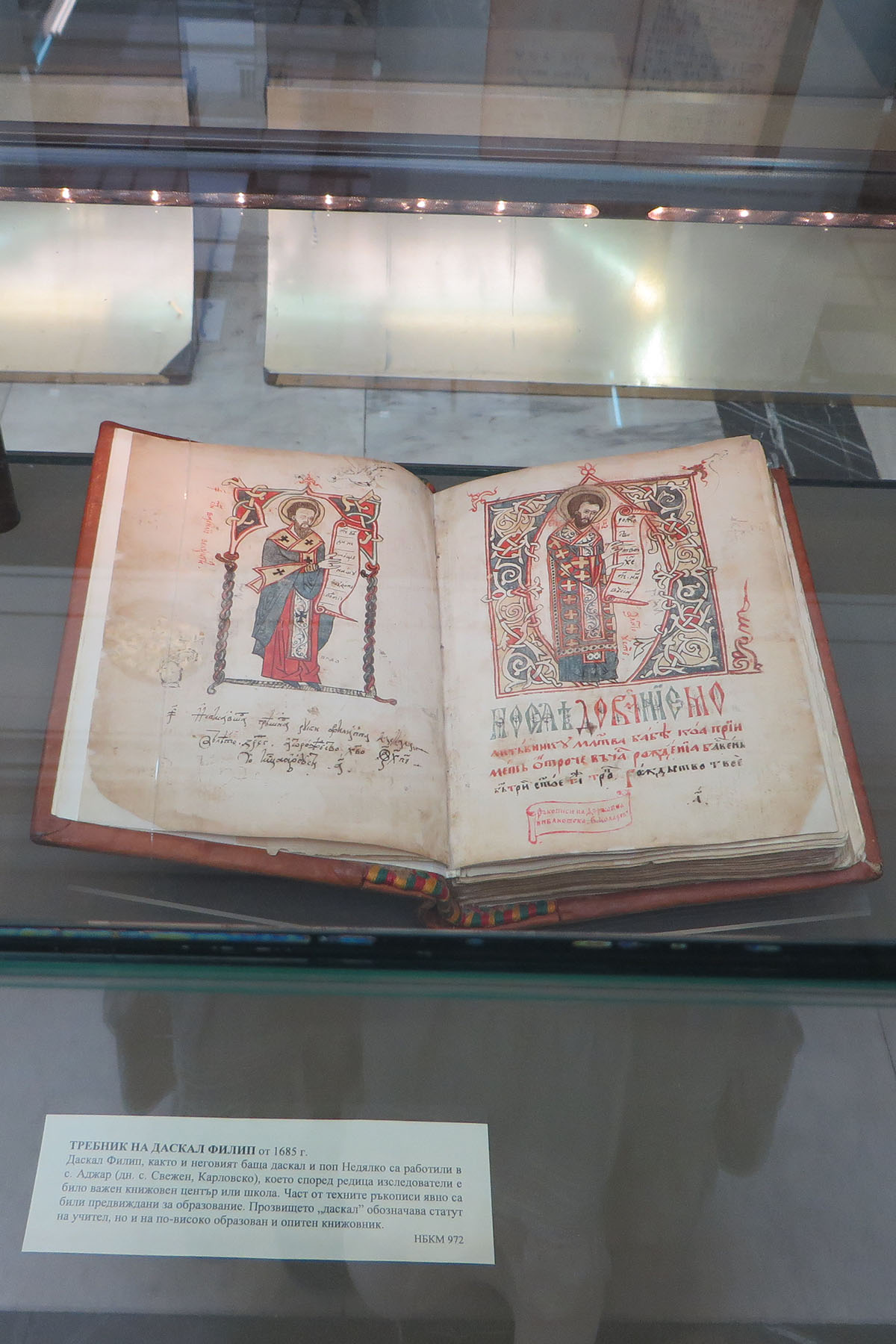
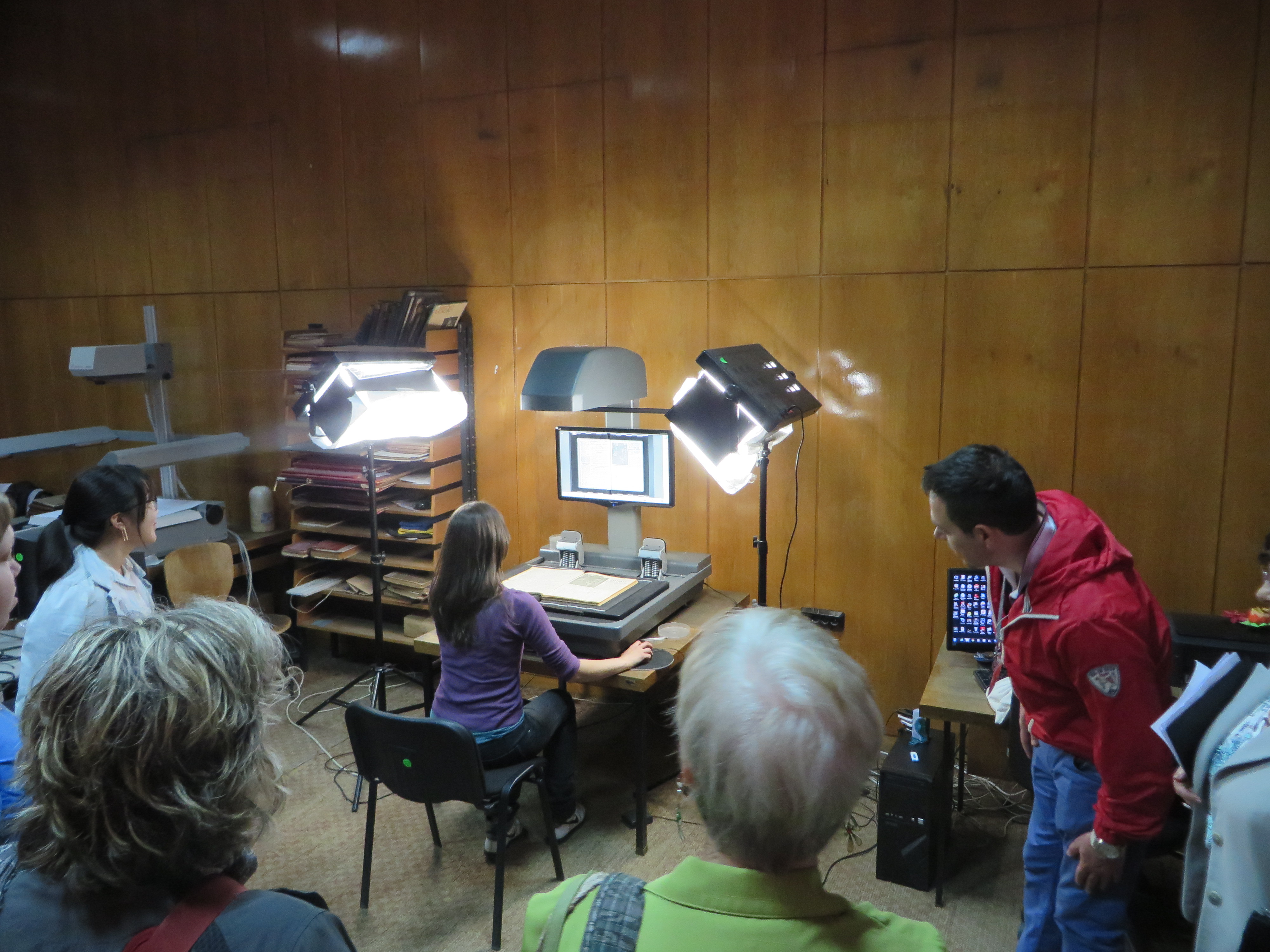
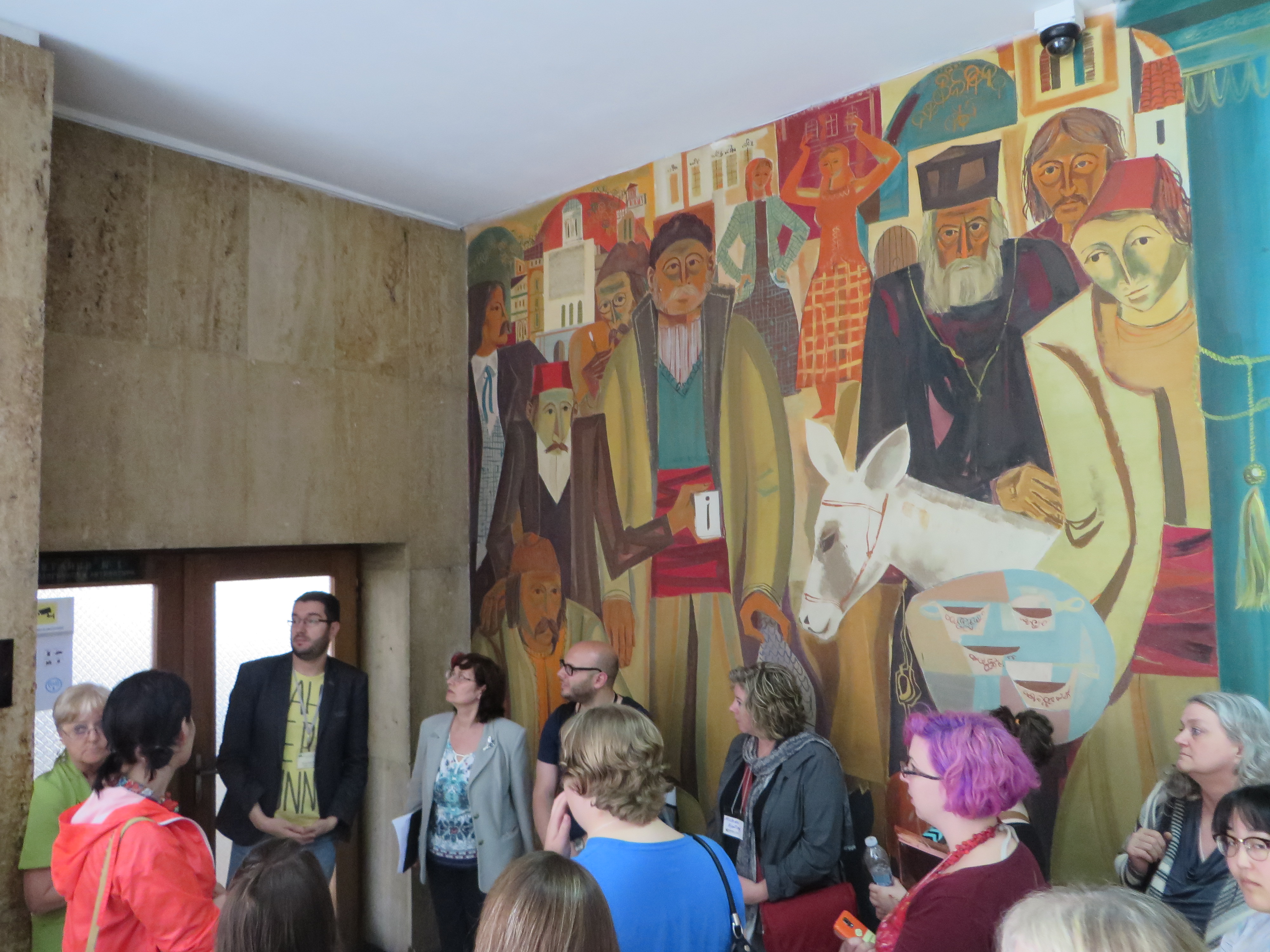
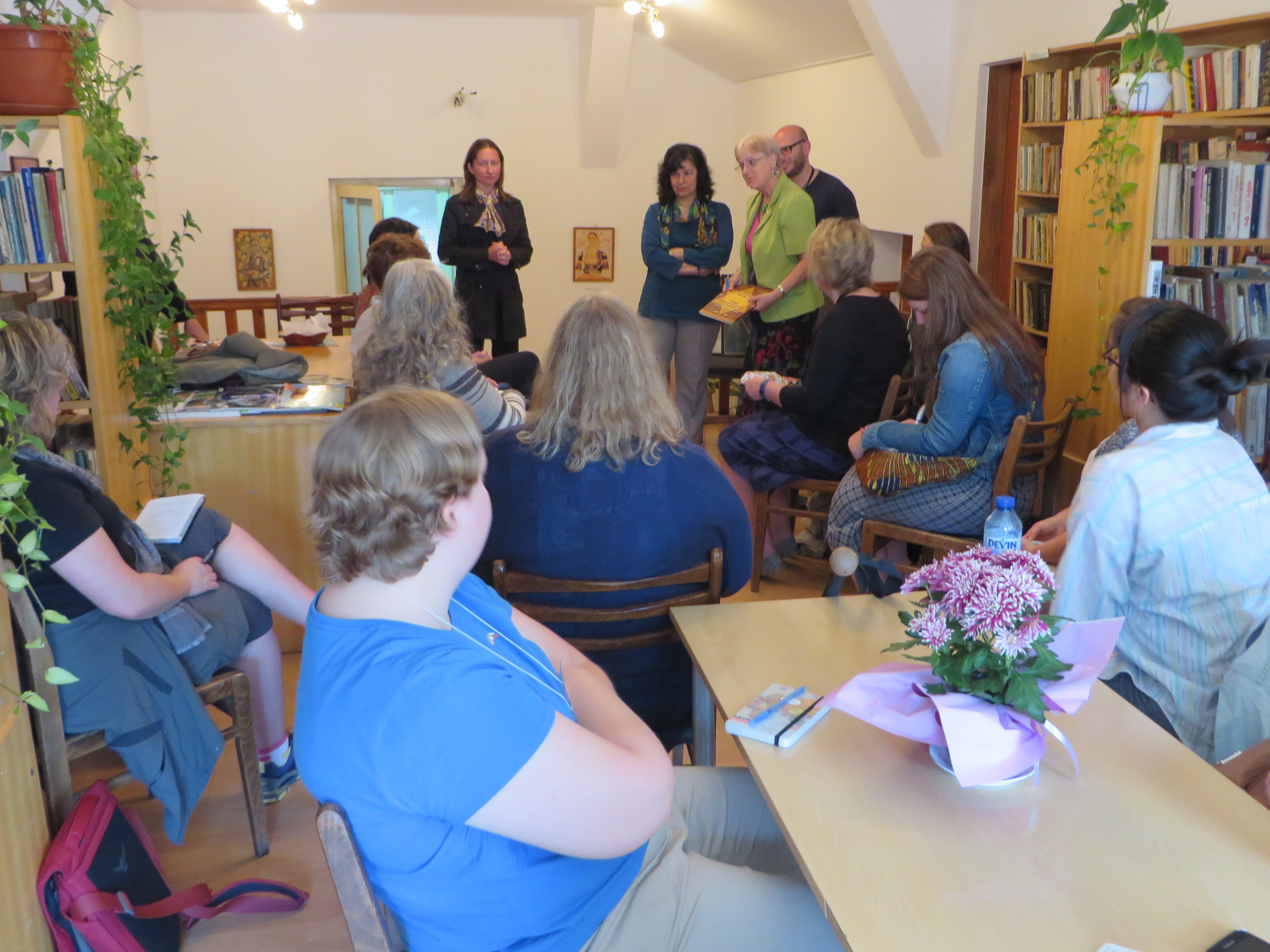
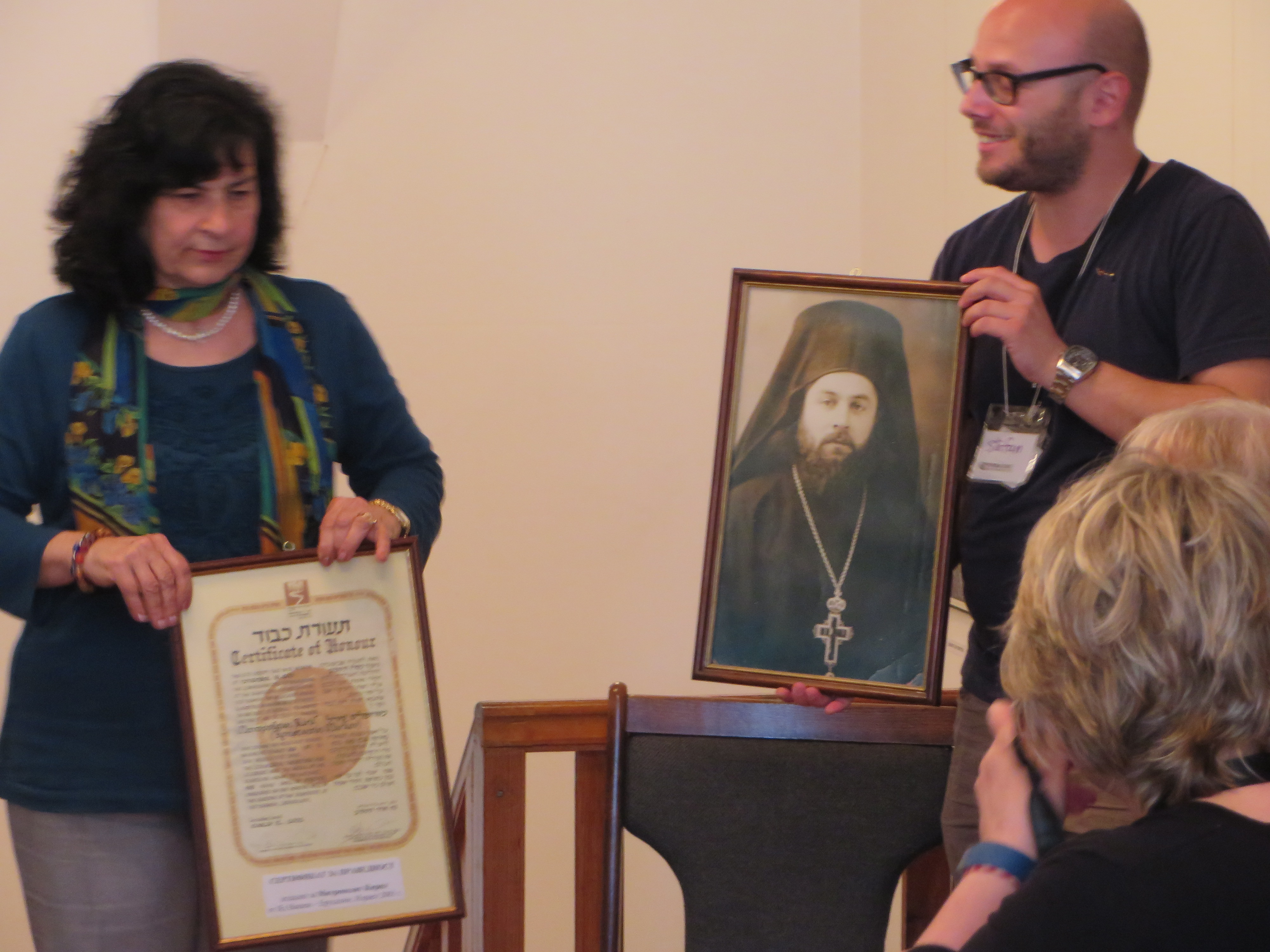
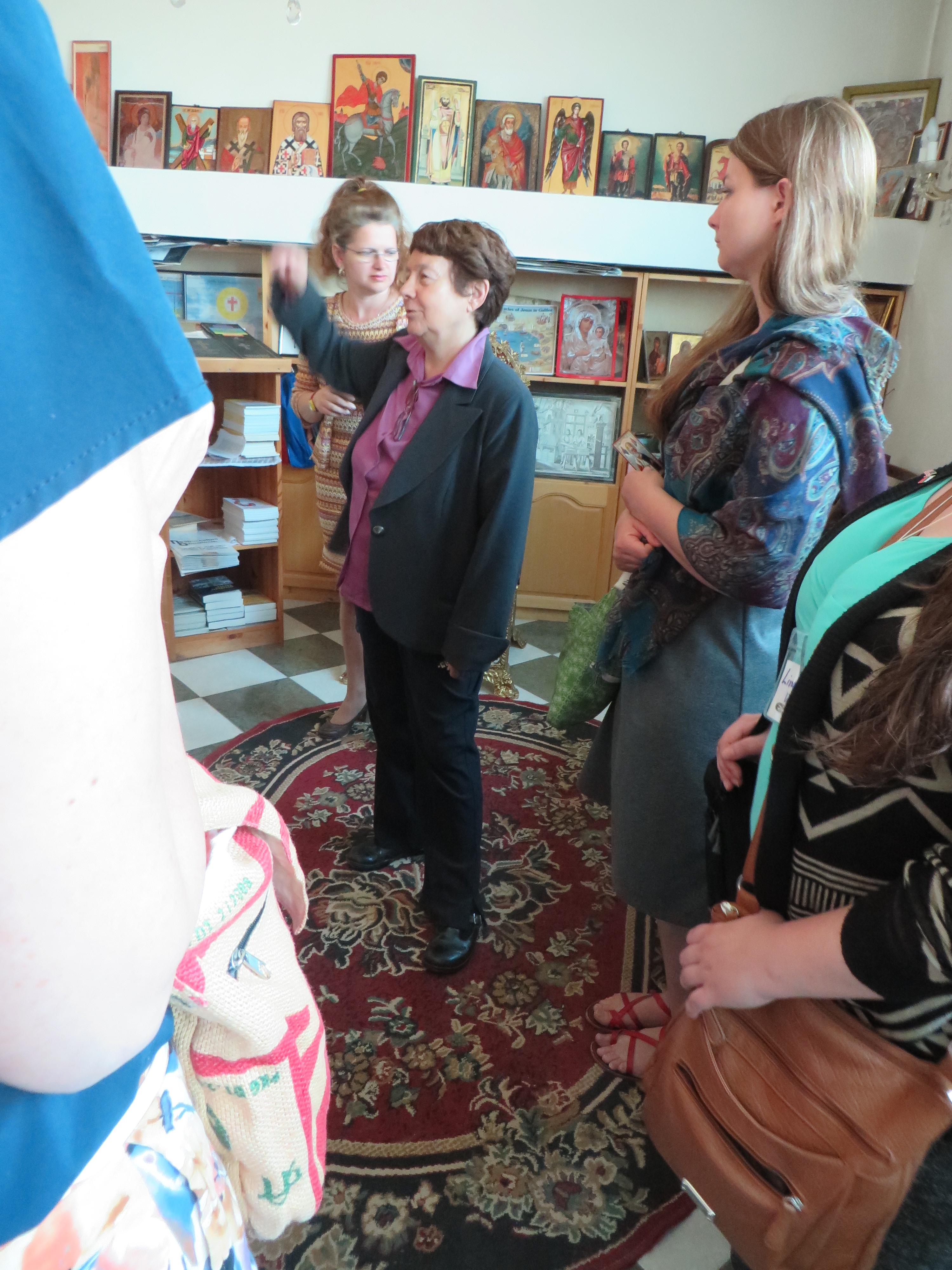
Experiences: National Library, opening celebration of National Library Week and laying of wreath at the memorial statue to St. Cyril and St. Methodius. Opening of exhibition of Bulgarian textbooks from National Library collection. Tour of preservation department.

Learning: Beautiful to be part of National Library Week celebration. The National Library has an impressive building and great spaces to display and access its collection. The preservation department on a top floor showed both room and personnel teams to address the needs of the collection. Team composition seemed related to age and skills/areas of experience. We were invited to the party of appreciation for the library employees: glasses were raised on this “day off” and treats were served in a portrait gallery hallway.

 Bulgaria Trip_MNS_5102015no2Bulgaria Trip_MNS_5102015.jpgno 3Bulgaria Trip_MNS_5102015no4Bulgaria Trip_MNS_5102015no5

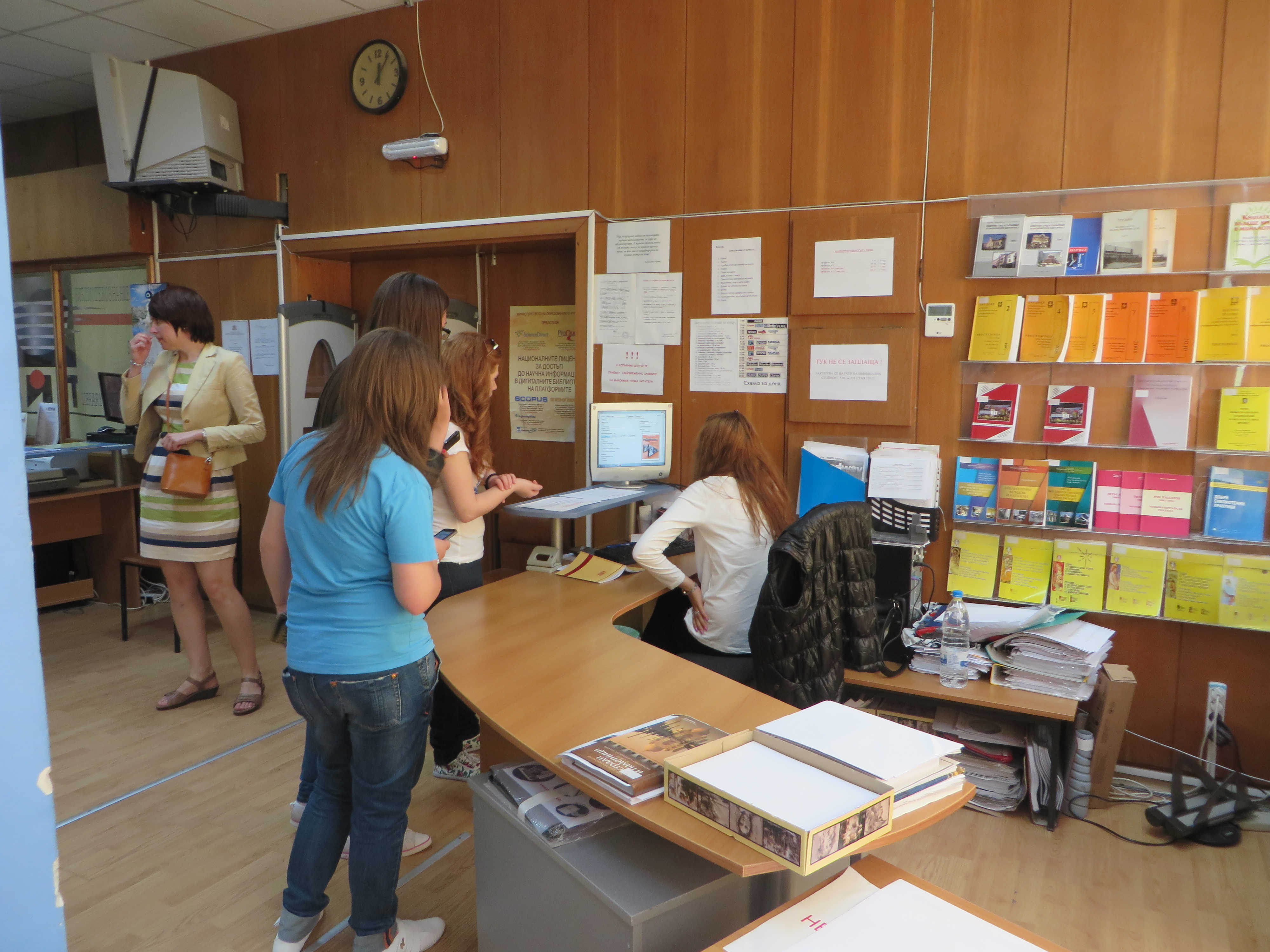
Library Profile: Sofia University, University Library St. Kliment Ohridski

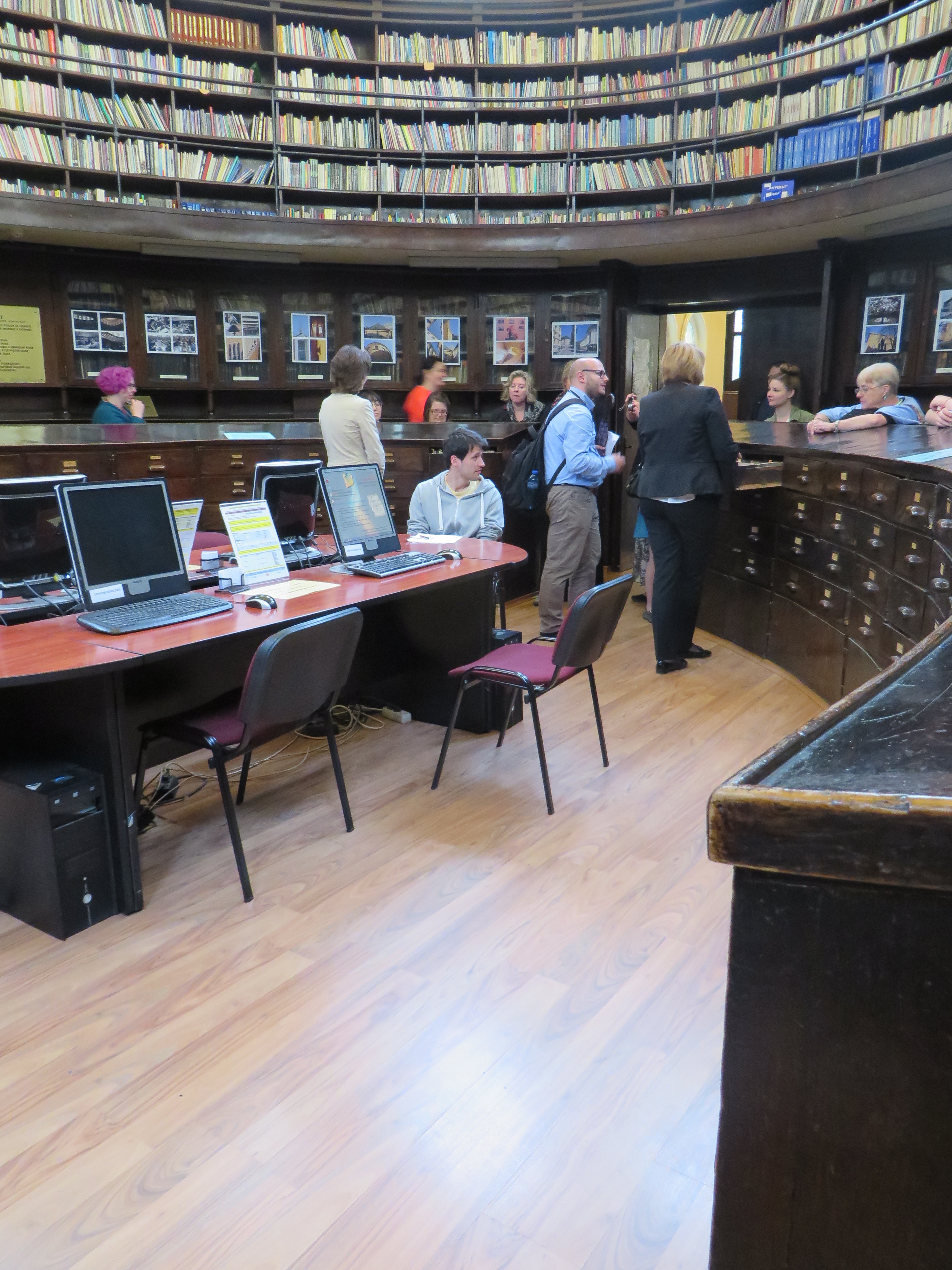
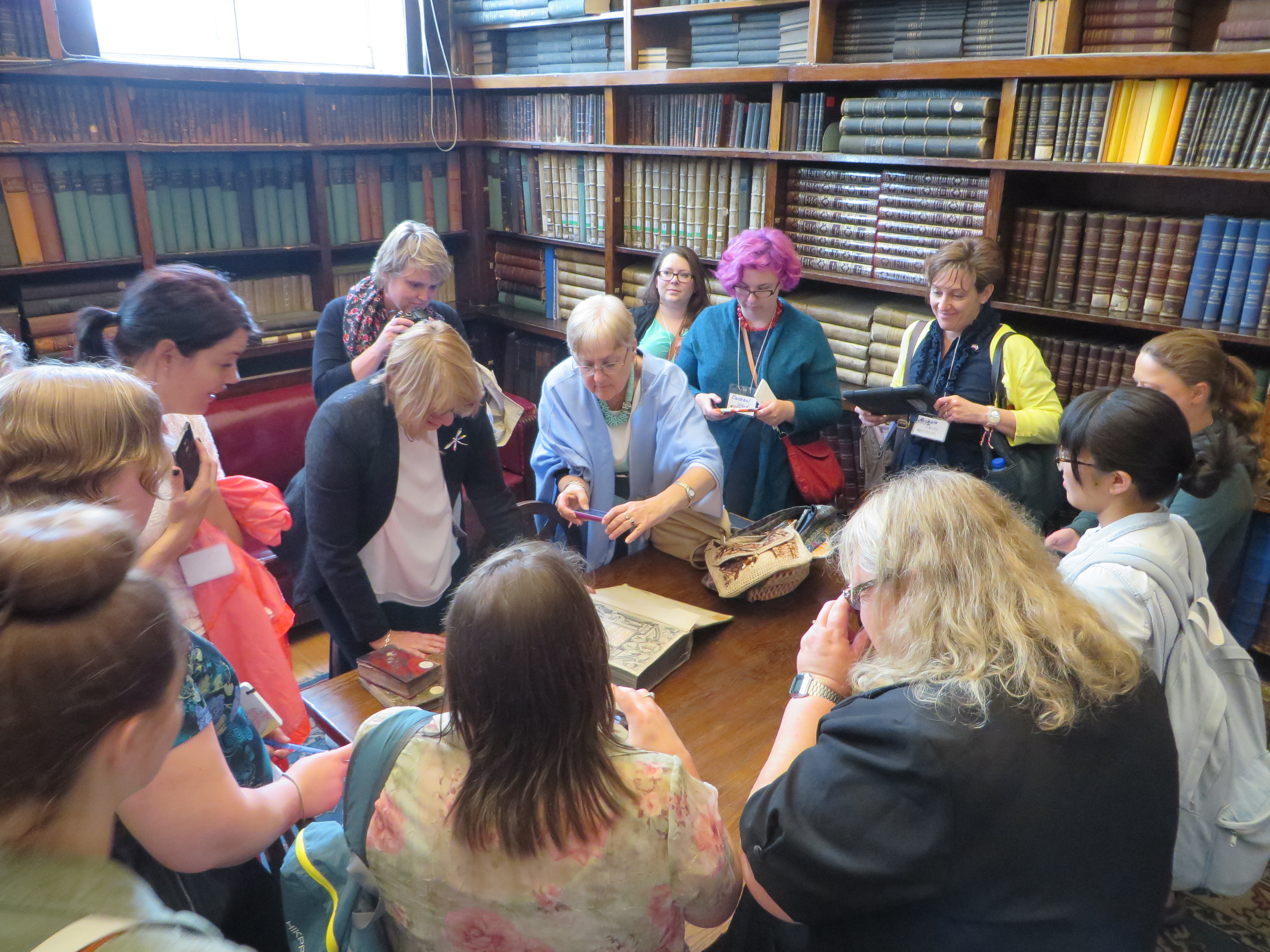
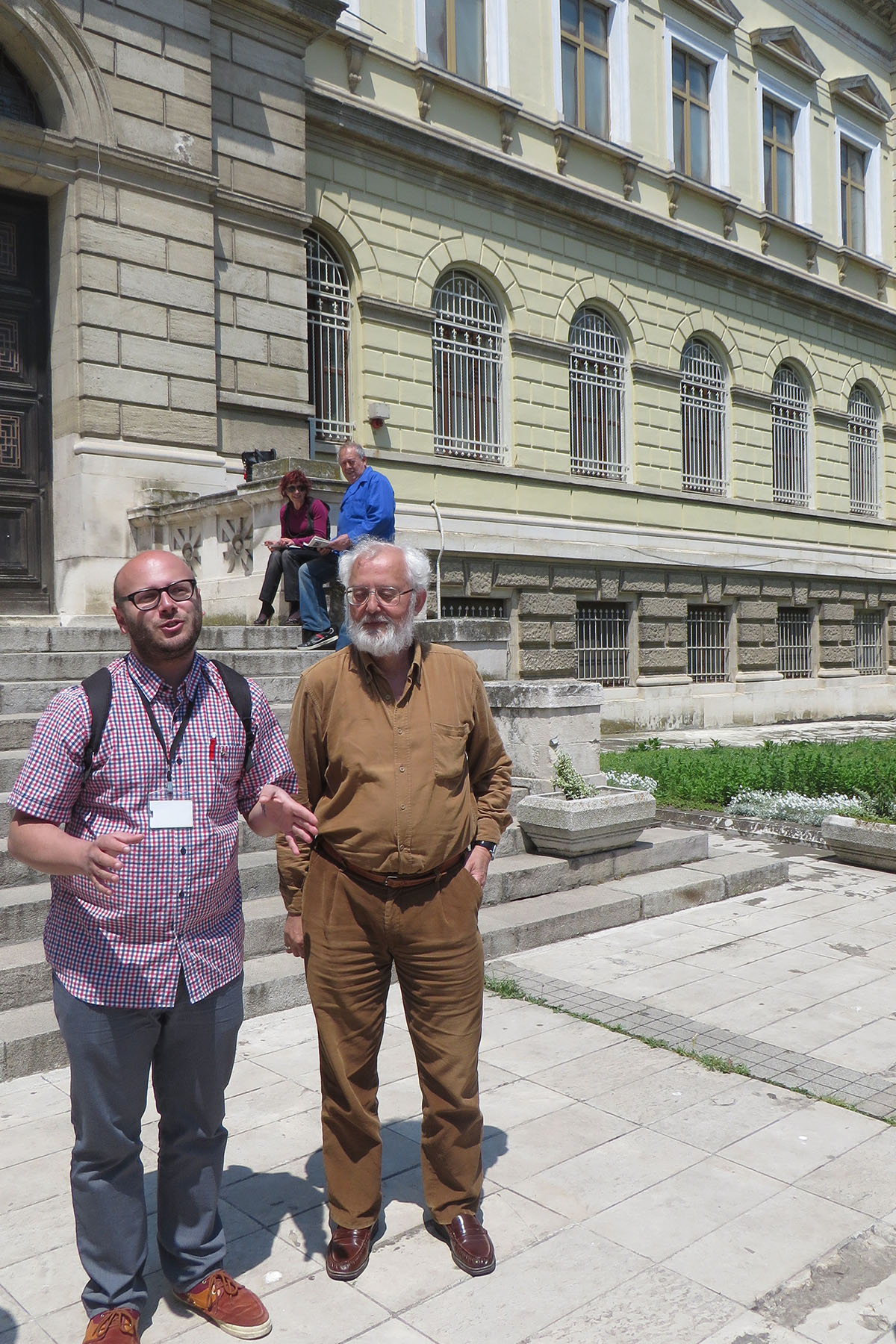
Experience: tour of central library services and holdings; presentation of services by Bilyana, Deputy Director; presentation of archive treasures (16th-19th centuries) by Dr. Anna Angelova, Director, in Reading Room “Studii”; and tour of Philological Library under dome, including view of digitized document. Cataloging system designed by director of 36 years, based on Belgian and Prussian systems.

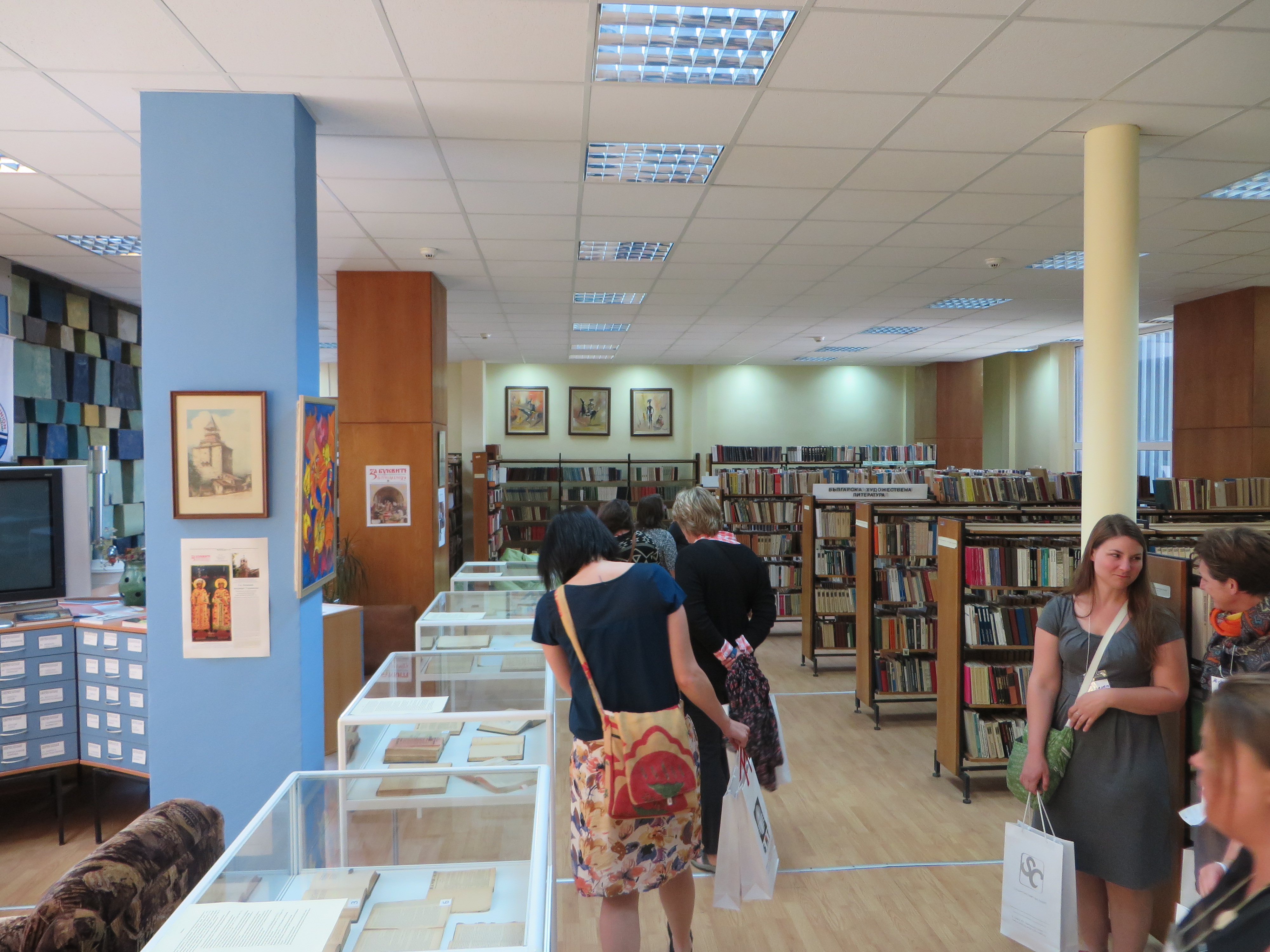
Learning: Sofia Central University Library is the biggest library system I have visited in my library studies besides visiting Kansas University libraries in Lawrence, Kansas. I am not sure how they compare in size, but Sofia University Library impresses me with its use of historic building space to manage 26 branch/subject libraries all over the campus buildings. We visited the beautiful and impressive Philological Library under the dome of the main building; and it included etched glass pillars representing the alphabets of the world’s major languages. The space illuminated the topic and taught me the meaning of the word “philology”, the study of languages in written historical sources.

Bulgaria Trip_MNS_5102015no6Bulgaria Trip_MNS_5102015no.7Bulgaria Trip_MNS_5102015no.8


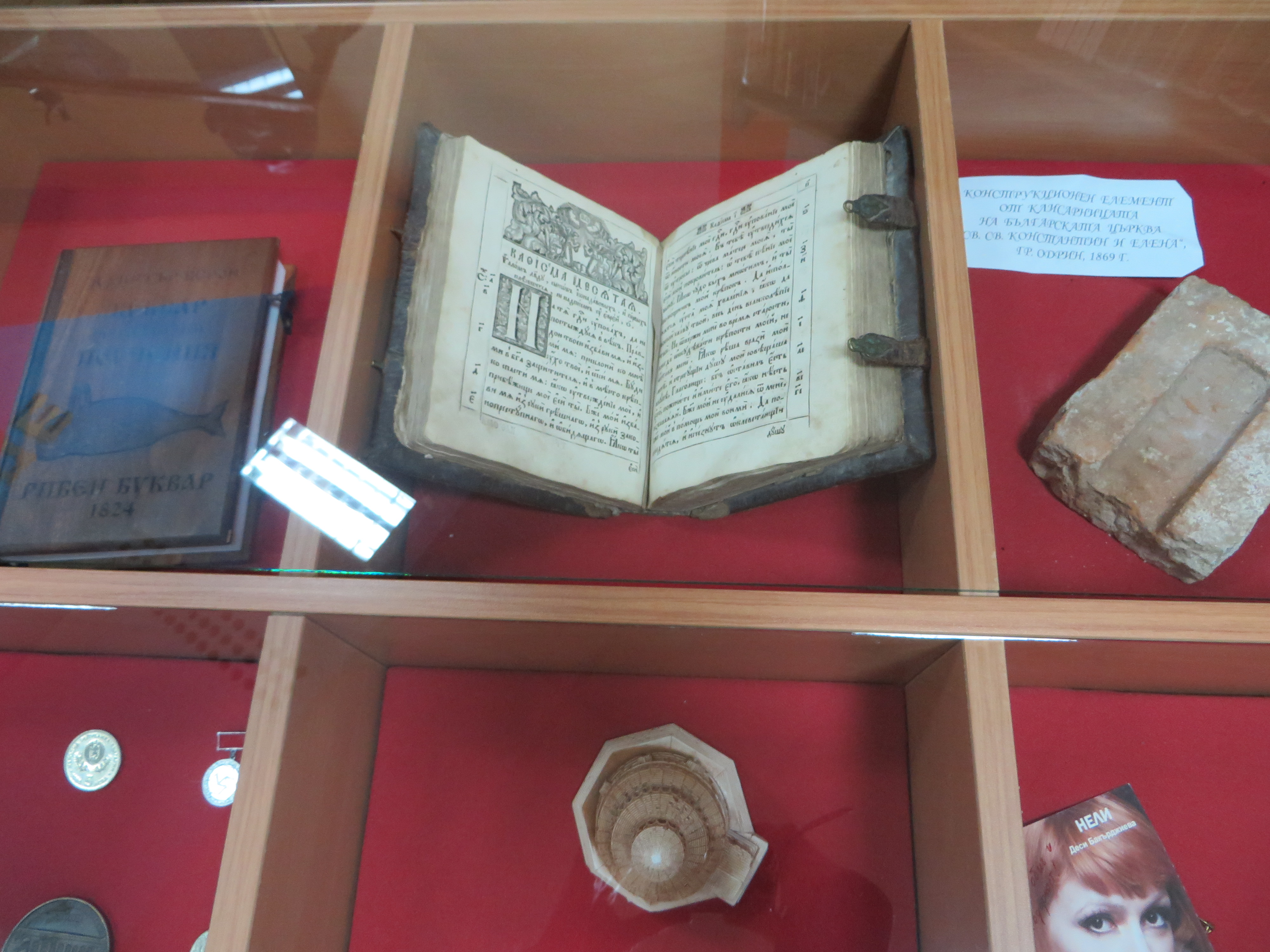
The materials provided to us by the library included a Guide in English, well organized to present the central university library and to describe each of the 26 branch libraries. Another beautiful color publication included folded cards describing rare items at the library, including photos of several pages, and a summary/abstract in English. Two examples are Archimedis operum editio princeps, the oldest mathematical book in Bulgaria (1544) and a work by the Czech scholar, philologist, and historiographer Josef Dobrovsky (1753-1828) who pointed out the relation between Old Bulgarian and the contemporary Slavonic languages, Institutiones linguae slavicae dialecti veteris (1822).
Website: It is possible to Google the Sofia University homepage, find the Education tab, and then the University Library listed in the Quick Links on the right. It may help to know that the full name of the library is University Library St. Kliment Ohridski. On my home computer, the web site appeared in English. The language switch buttons for the website are Bulgarian and British flags in the top right. I find the site very well organized and clearly presented. The open hours for all the branches are listed. I looked at the website for the Classics branch library; and although it took a little while for the English version to load, I was able to explore text and photographs about the collection and activities of this library at http://kkf.proclassics.org/index-eng.php
Experience: Library Week Official Celebration with awards to librarians and remarks by Nancy Bolt
 

Learning: The theme of National Library Week 2015 is “Lifelong Learning.” Like the United Nations, Iimagine, we use headsets that treat us to translation of the Bulgarian presentations into our own language. The partnerships represented are inspiring, as is the art for the materials. Several officials are not present, but the event is well attended and most award winners are present. The reception format is high small tables with food to gather around for small group conversations.
 

Drive to Plovdiv, Dinner

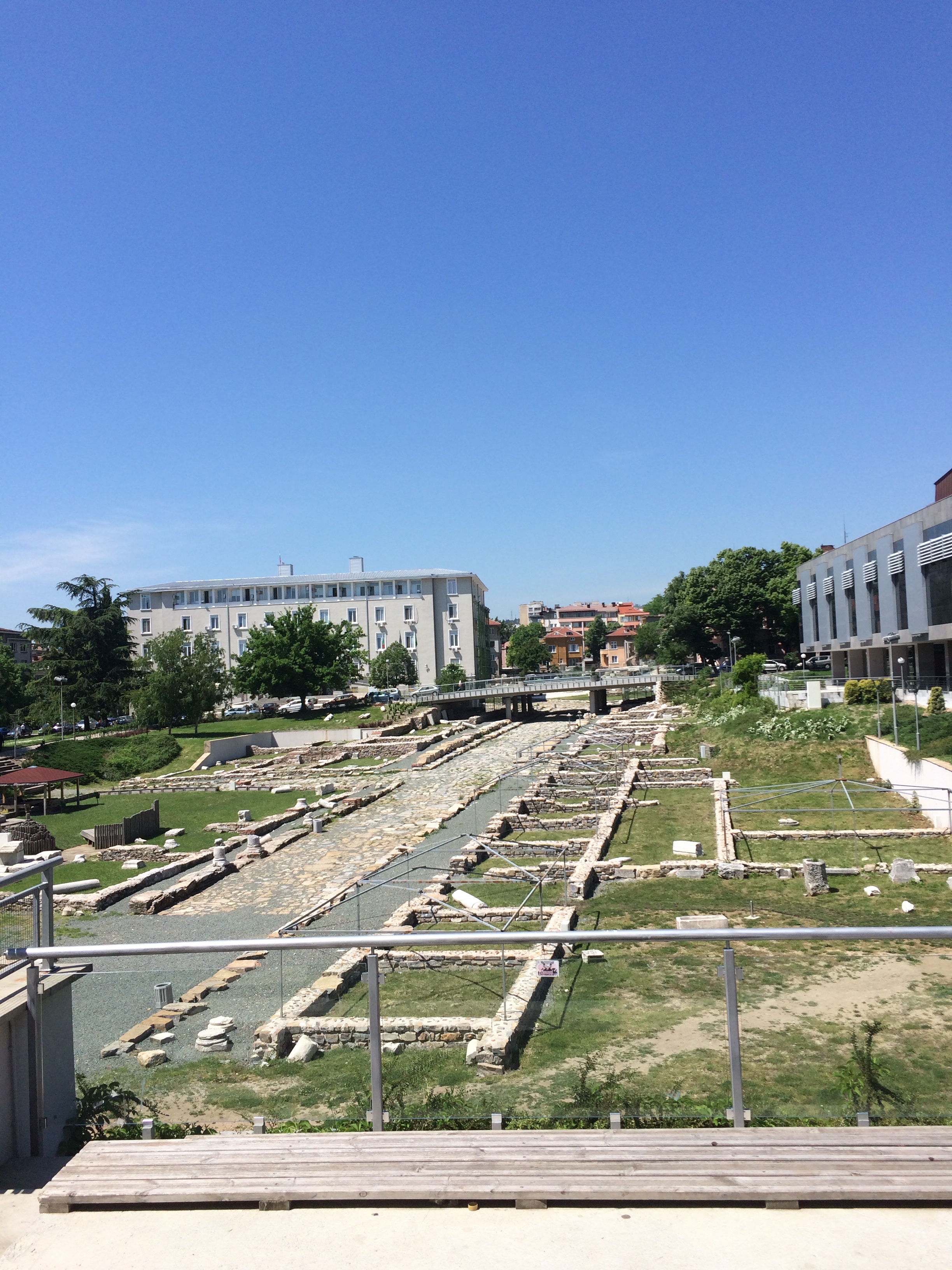
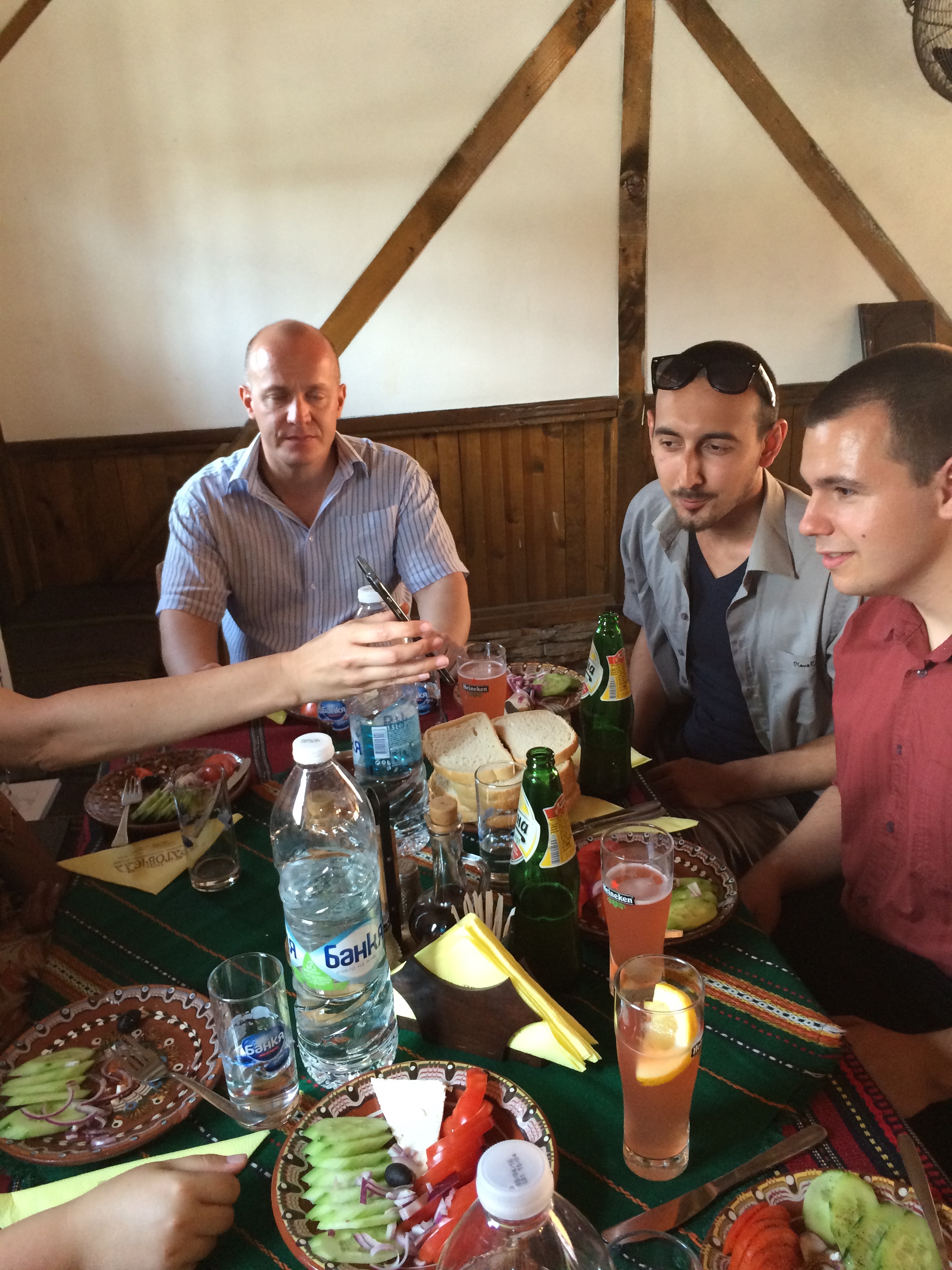
Culture: In a spectacular finish to our momentous first day, we walked to dinner across a plaza quite similar to Roman plazas, with large squares of smooth stone, with archeology digs in process on our left and our right, hills with trees and homes rise nearby. Our tour guide Stefan had chosen a restaurant to help us appreciate Bulgarian hospitality. The traditional cloth and the open beamed room with a wood fired oven in a visible, but enclosed, room nearby helps us appreciate the warmth of traditional food and conversation among new friends. We also help Stefan celebrate his birthday: he buys us each a drink of rakia and we raise a glass to him. He also gets to see some friends who drive from Sofia to see him at the restaurant. We left them there after our dinner to celebrate further among old friends.

Tuesday, May 11, 2015

Experience:

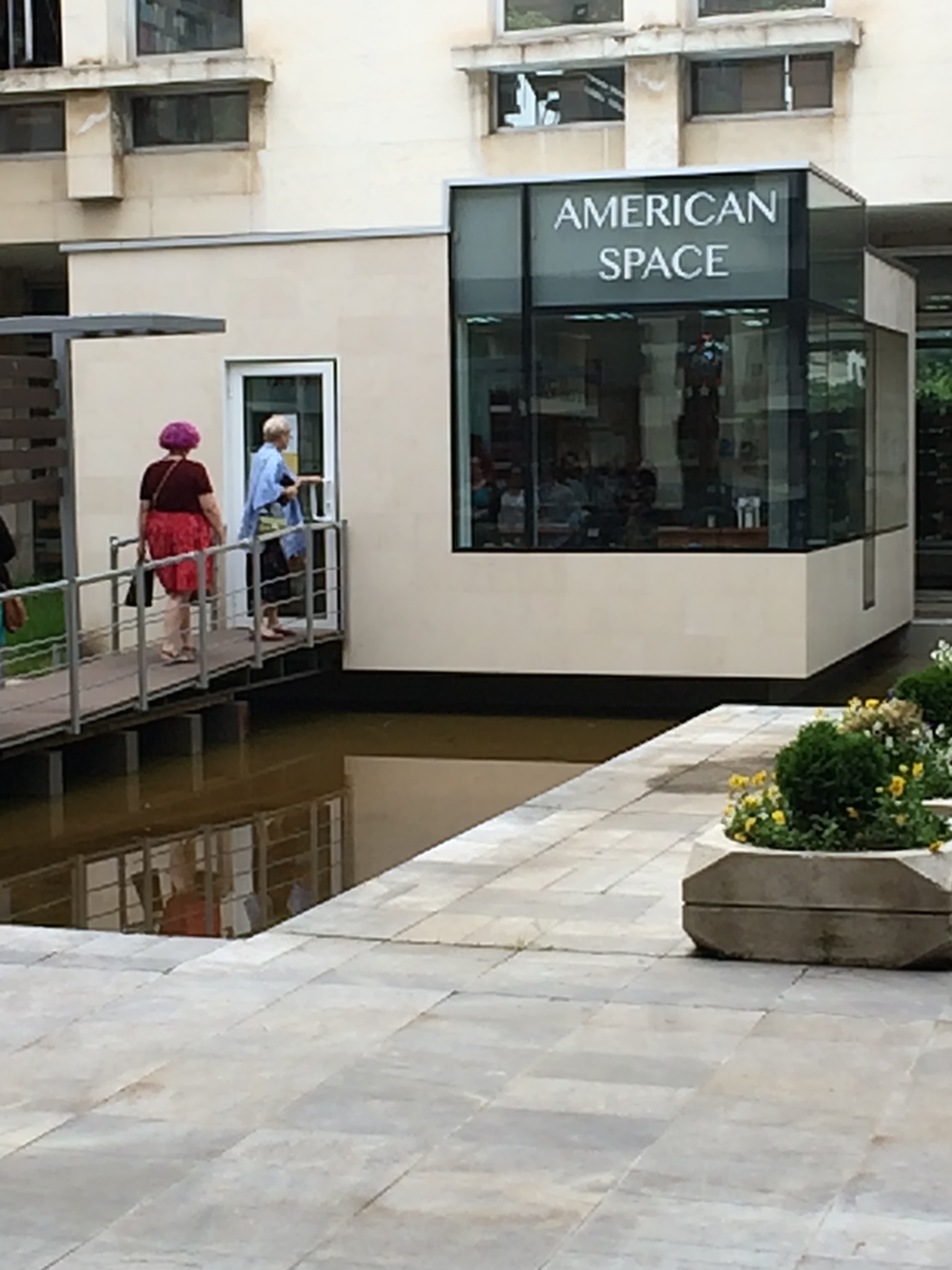
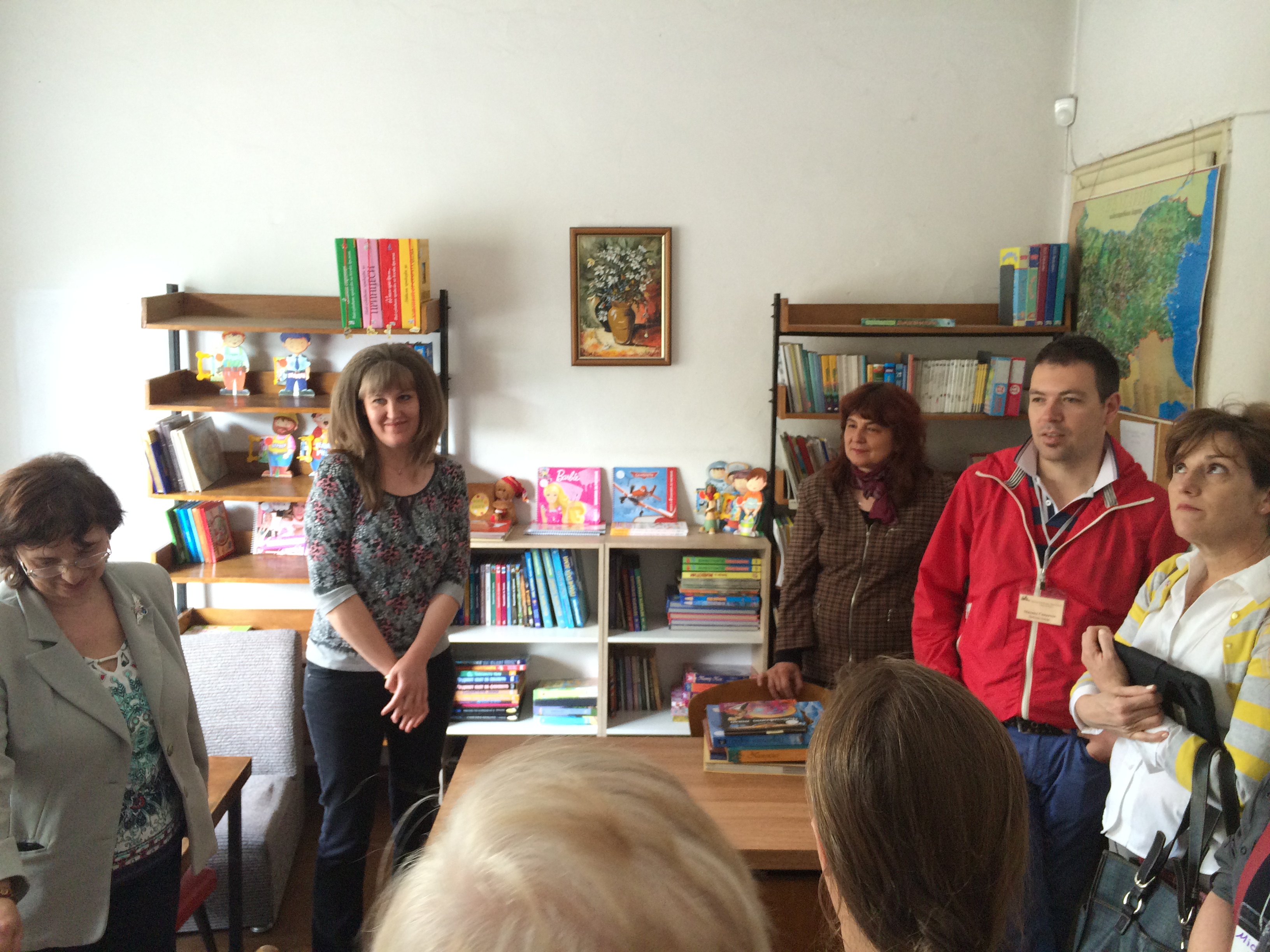
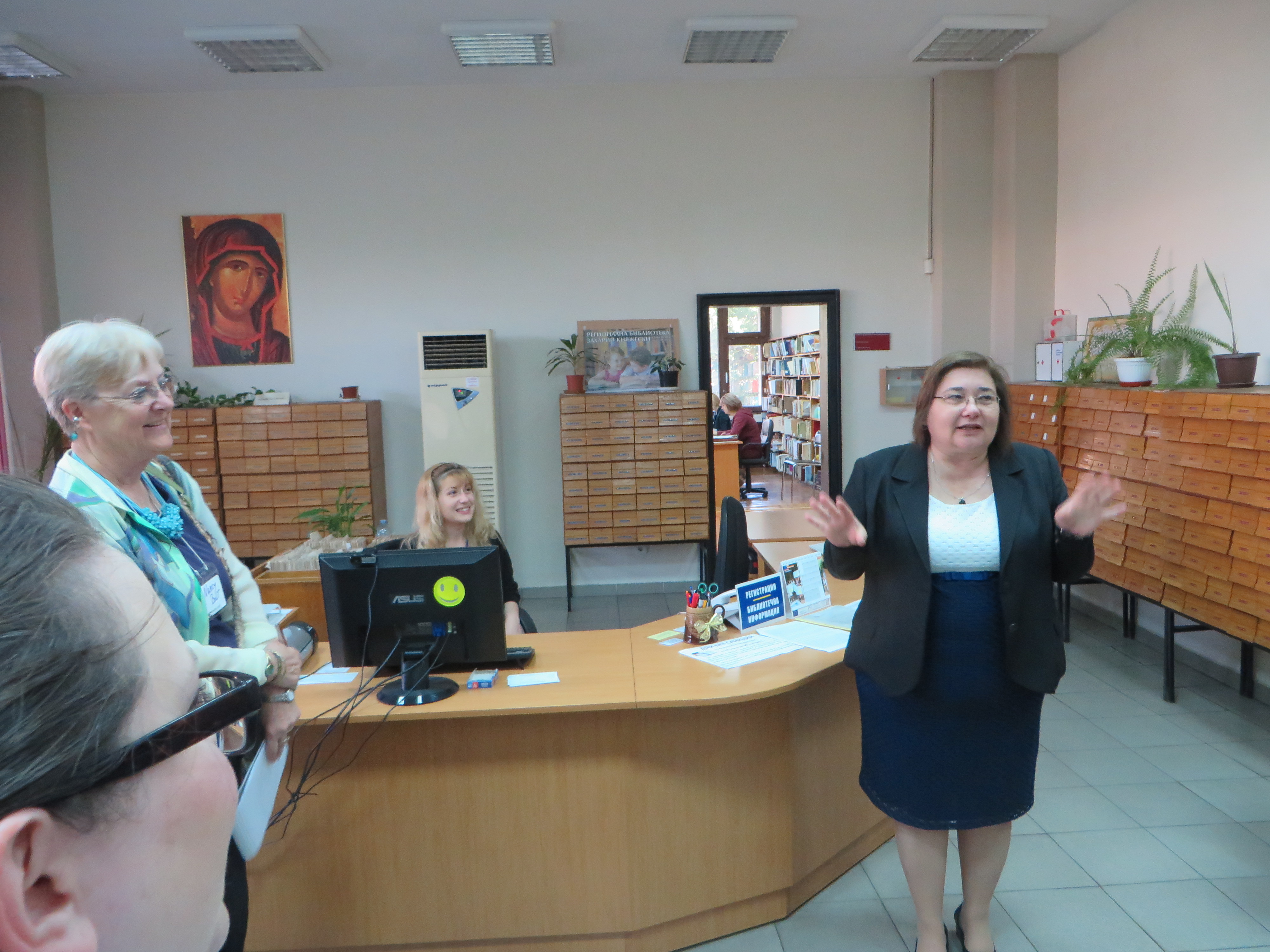
Regional Library Ivan Vazov, Plovdiv, American Space on grounds (A.S. Librarian had been to Panama Beach, FL for a summer) and Children’s Department in separate building two blocks away Digitizing workroom and archive collection development space.


Learning: The library building here is a legacy from communist days as a Party office building. The director apologized that it has the most doors to nowhere of any library she knows. The library’s collections are divided into departments; and most of the collection is only accessible to staff. How long will it take to find an alternative use for these office cells and find more open and welcoming spaces for library resources? Perhaps entrepreneurship incubator activities that would provide spaces to small business start ups?


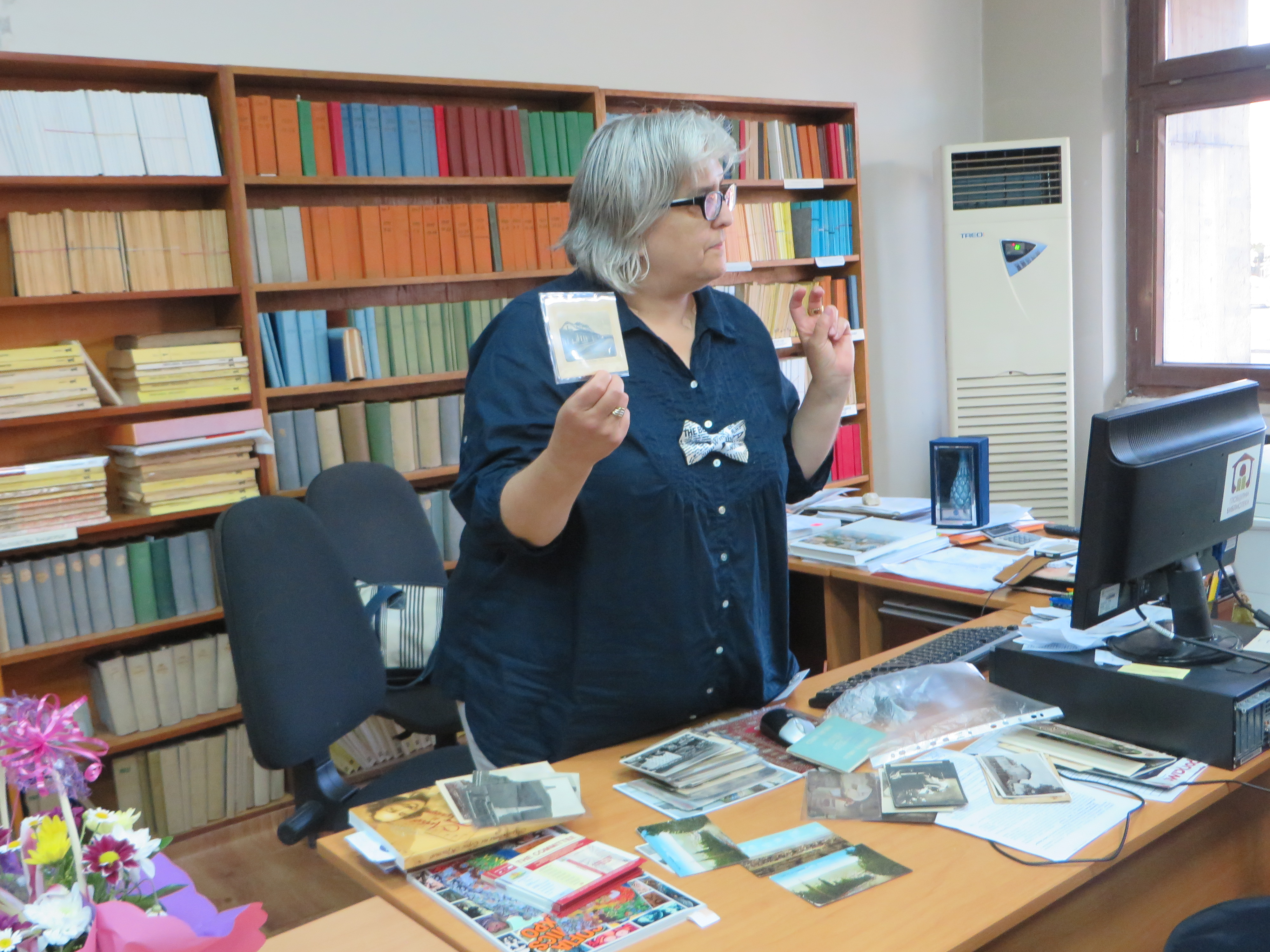
The digitizing workroom is spacious and inviting for attracting students from the nearby university to work part-time to complete the scanning work. The archives reading room and collection development space provides access and processes the digitized archives materials. We saw the oldest photograph known in Bulgaria; and an older man was working with a younger one to combine efforts in identification of materials.

Bulgaria Trip_MNS_5102015no.9Bulgaria Trip_MNS_5102015no.10Bulgaria Trip_MNS_5102015.no.11Bulgaria Trip_MNS_5102015.no.12


Experience: Chitaliste Shalom Alem in old part of Plovdiv: Kapana


Learning: Moving stories of both successful job transition for the library director Nancy knows and the successful intervention in Bulgaria on behalf of the World War 2 Jews gathered the same day as Chistalnacht told by a member of Shalom Alem who spoke about her parents neighbors throwing their windows open and asking, “What can we do?” The Bulgarian Patriarch met the Jews at the train station and persuaded Czar Boris to prevent the Jews’ deportation. I feel lucky to have been present in person for this telling of the story. We all shared matzo offered as a welcome to our group.

Bulgaria Trip_MNS_5102015 (1)no.15Bulgaria Trip_MNS_5102015 no. 16Bulgaria Trip_MNS_5102015 17Bulgaria Trip_MNS_5102015 18


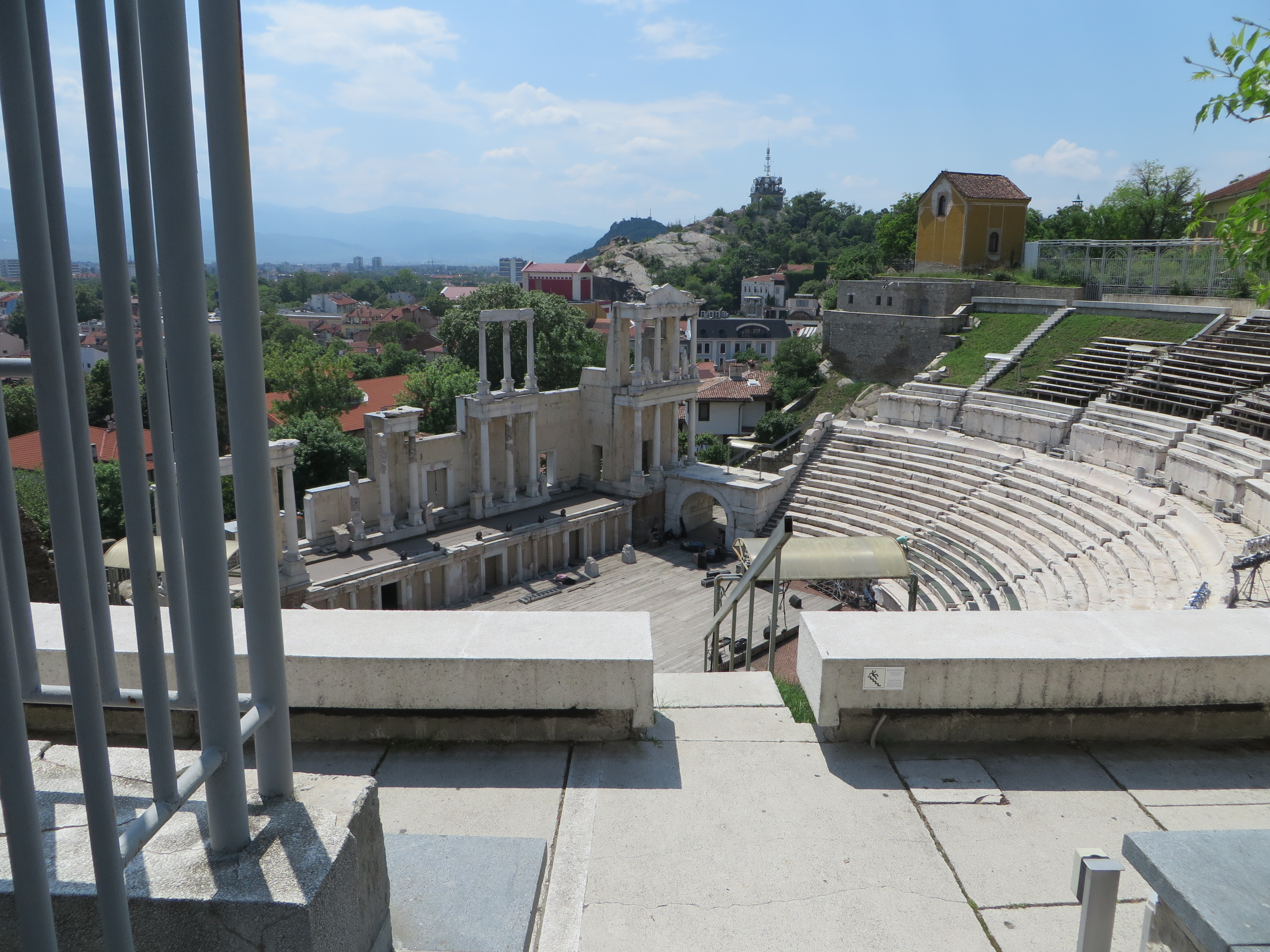
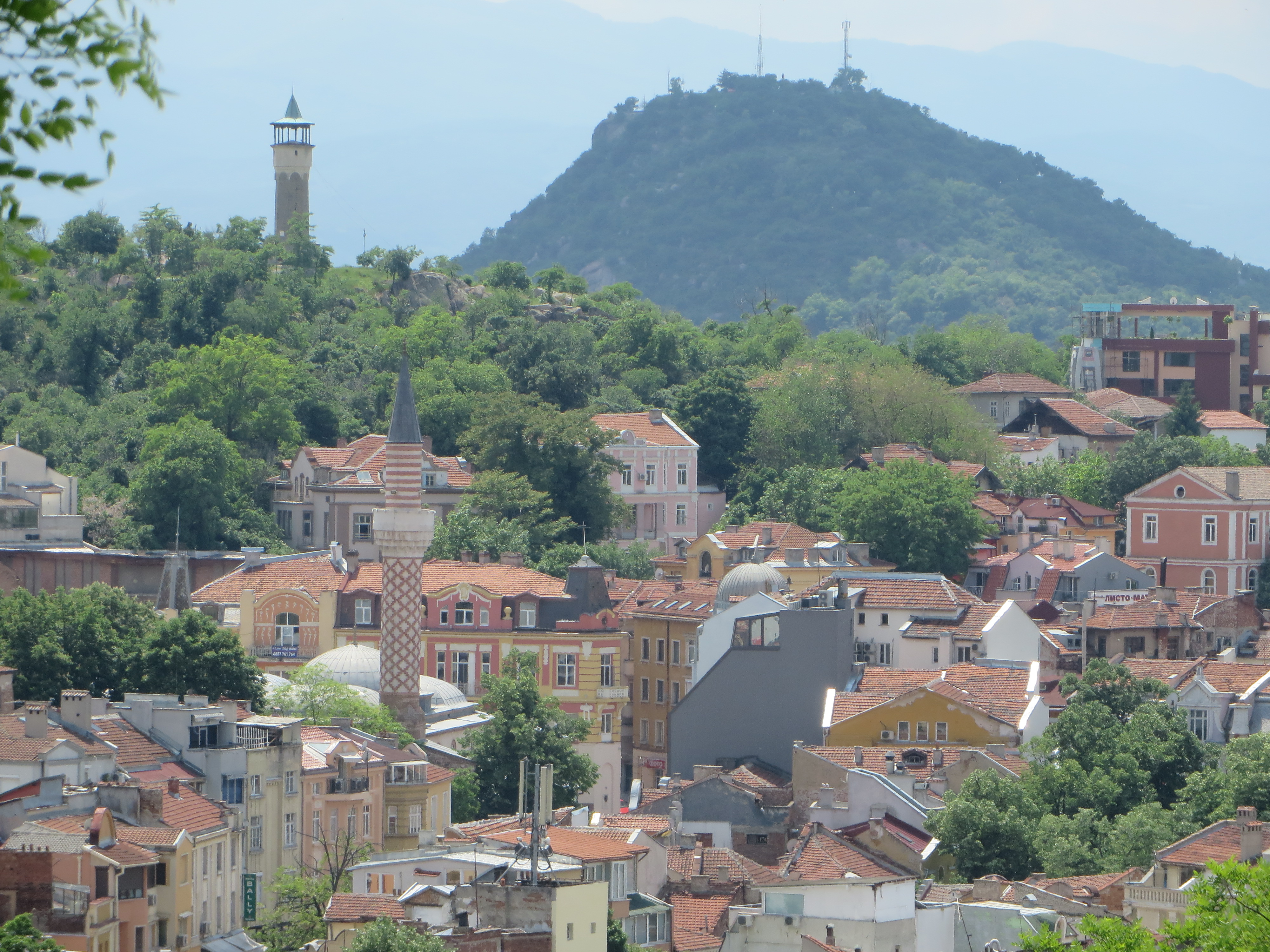
Experience: We walk in old part of Plovdiv to Roman Amphitheater near music school

Culture: The hill we walked has a music and art school near the amphitheater. The value of cultural education is felt everywhere we go. The EU has awarded Plovdiv the distinction of cultural capital of 2015 for its varied cultural events. Stefan has said that a “brain drain” has been hard on Bulgarian life with so many people emigrating. Perhaps the art schools will be raising up the students with the ideas and persistence to invest in life in Bulgaria.


Drive to Kazanlak (Our tour director, Stefan’s home town)

Wednesday, May 12, 2015

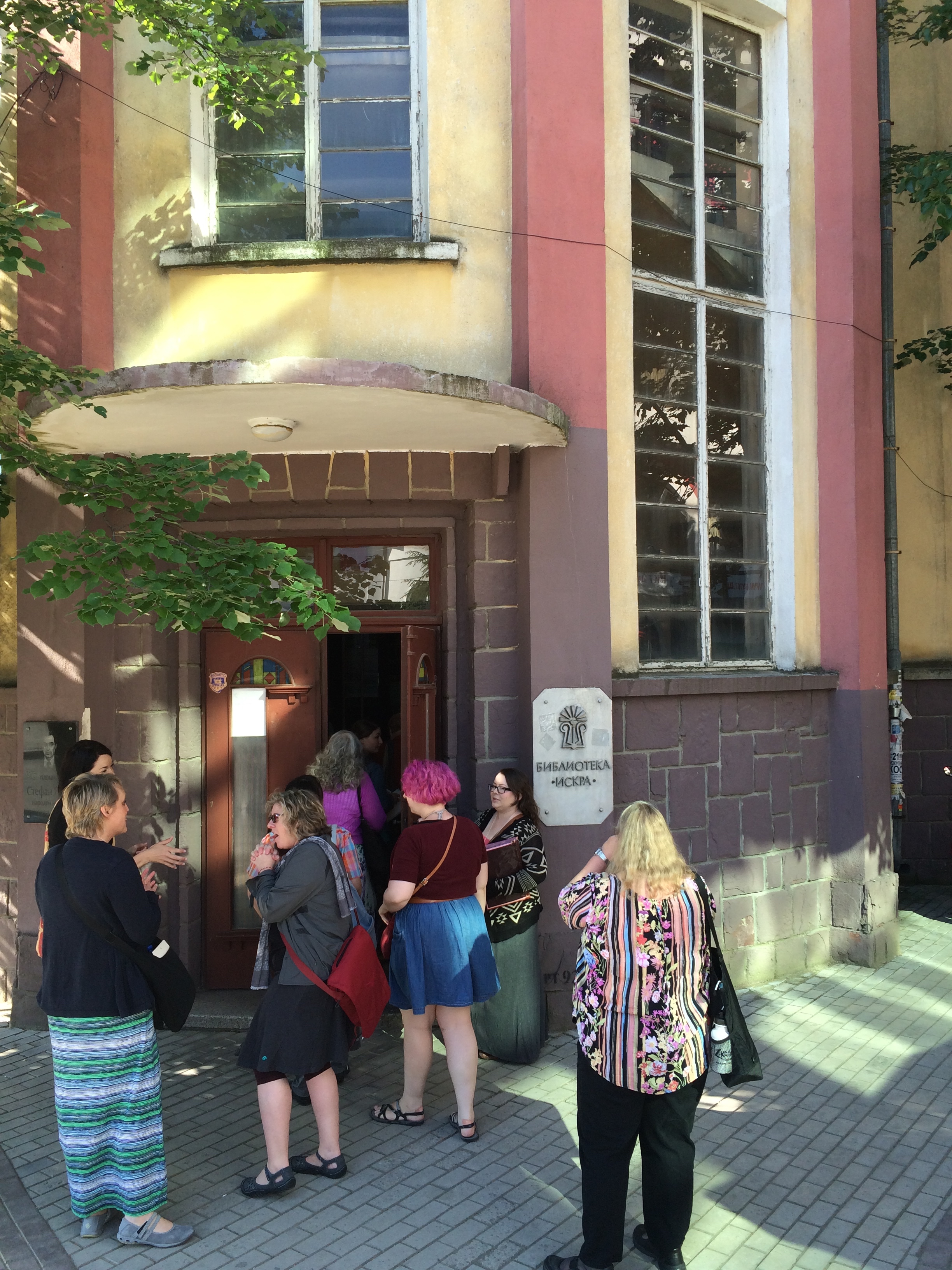
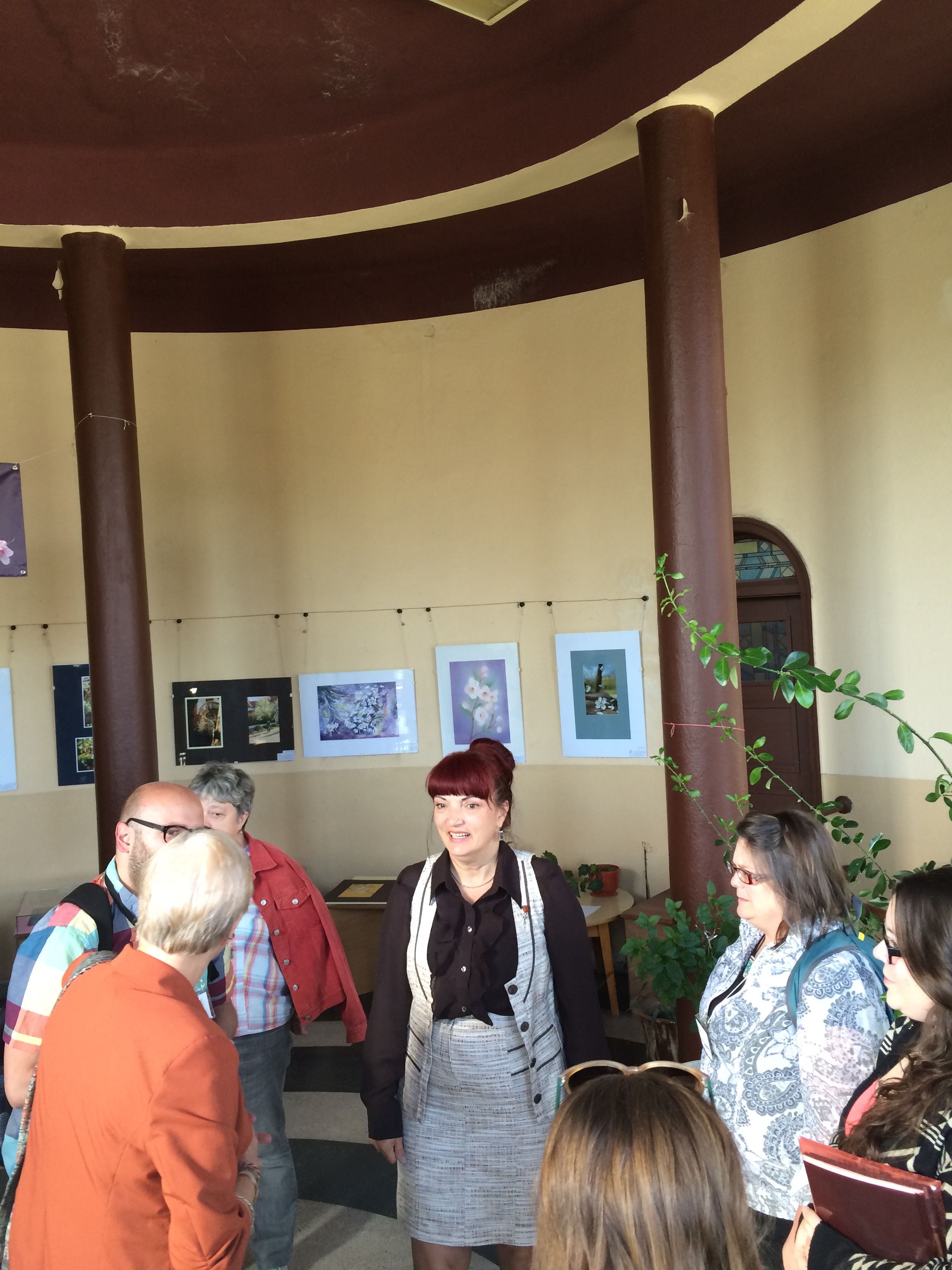
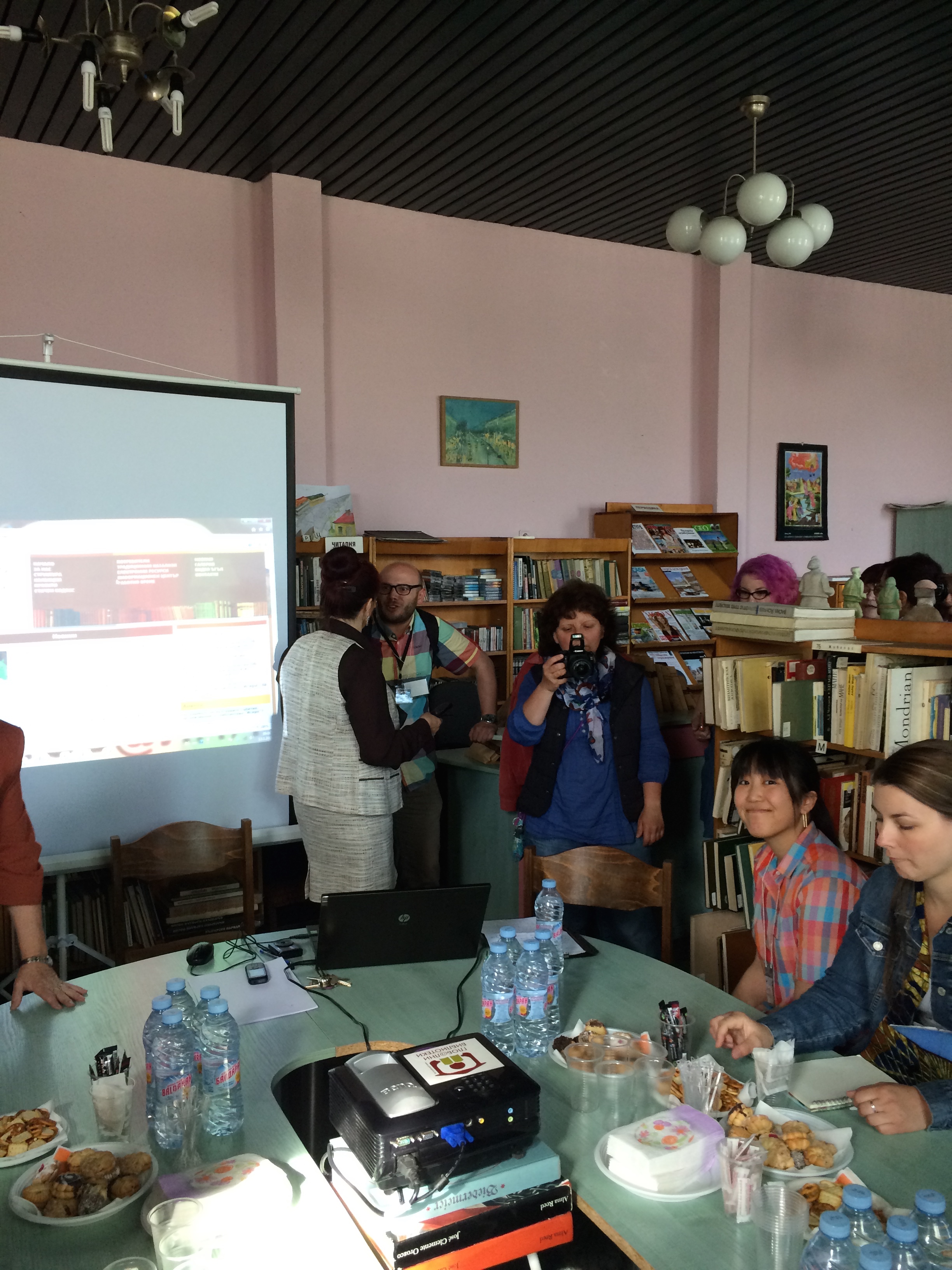
Experience: Municipal Library Iskva, Anna Kozhuharova, Director

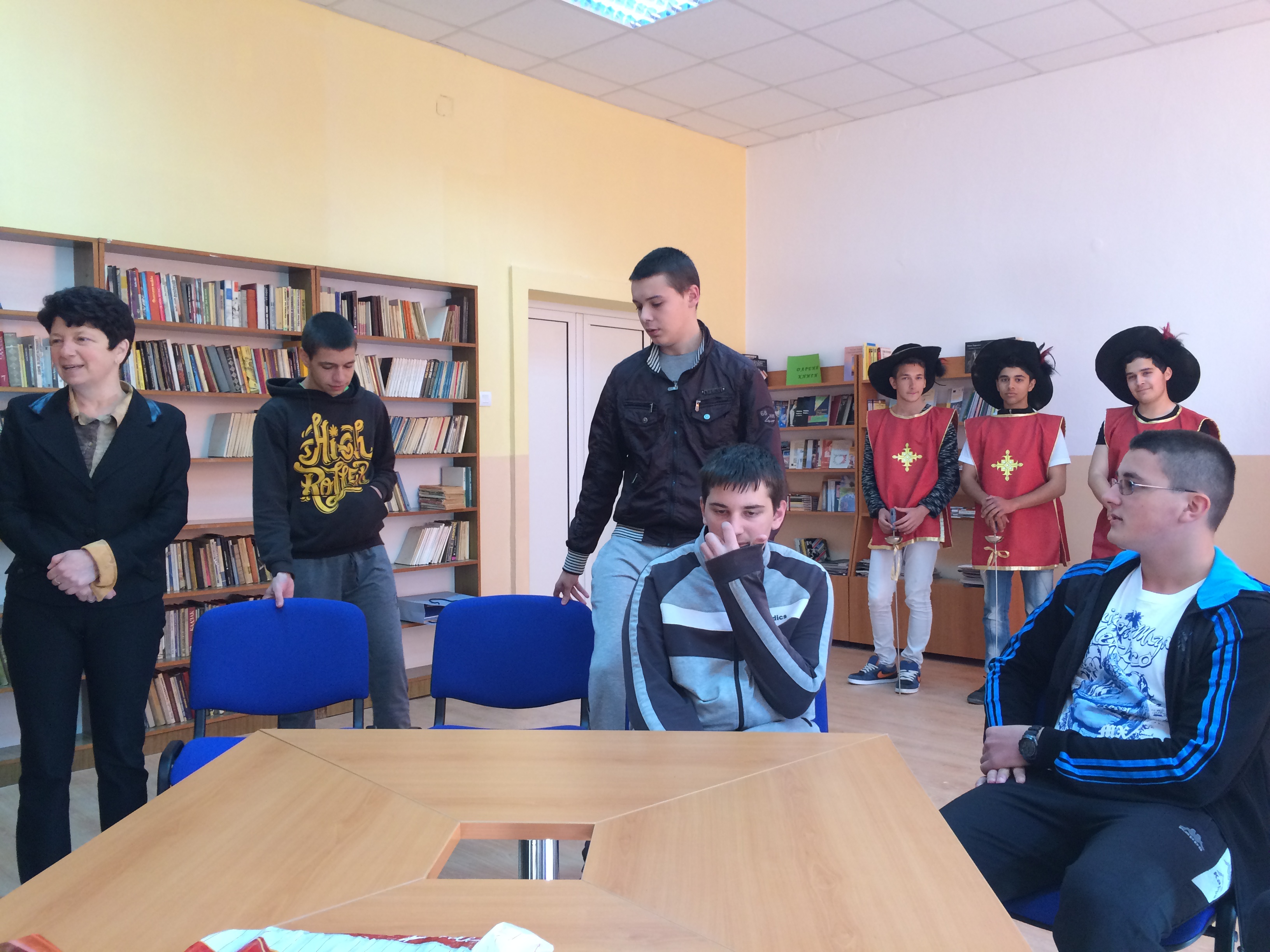
Technical School library, Bulgarian teacher and English teacher

Bulgaria Trip_MNS_5102015 19 Bulgaria Trip_MNS_5102015 20Bulgaria Trip_MNS_5102015 21Bulgaria Trip_MNS_5102015 22Bulgaria Trip_MNS_5102015 23

Learning: The Library Director here has a proactive approach to building relationships with the municipal government and community for library programs. After our tours of the libraries, she invited us to a gallery show of student photographs. We added our bids to the silent auction form. I was part of a group to visit the technical school library. Recently finished renovations to the school included a library space with enough room for computers; and they are working on finding grant money to develop their collection and services. The school’s Bulgarian language teacher and English language teacher both presented students we could speak with. We asked questions they each answered about their program and interests. One graduating student was introduced as “advanced” and she spoke to us about her interests in graphic design and history. We asked her what she was reading. She said she enjoys Fantasy fiction, and is currently reading a vampire series (not Twilight).

Bulgaria Trip_MNS_5102015 24 Bulgaria Trip_MNS_5102015 25Bulgaria Trip_MNS_5102015 26

Bulgaria and the U.S.: My thoughts about the school and the students were similar to those I have for students I have worked with in the U.S.: the school experience is part of the students’ development. Relationships and approaches to learning influence their choices and energy to pursue fulfilling work. The English teacher’s training included specialization in alternative active learning methods; and she seemed well suited to prepare the students with positive, satisfying experiences that guide them in their development and pursuit of their dreams and dream jobs.
 

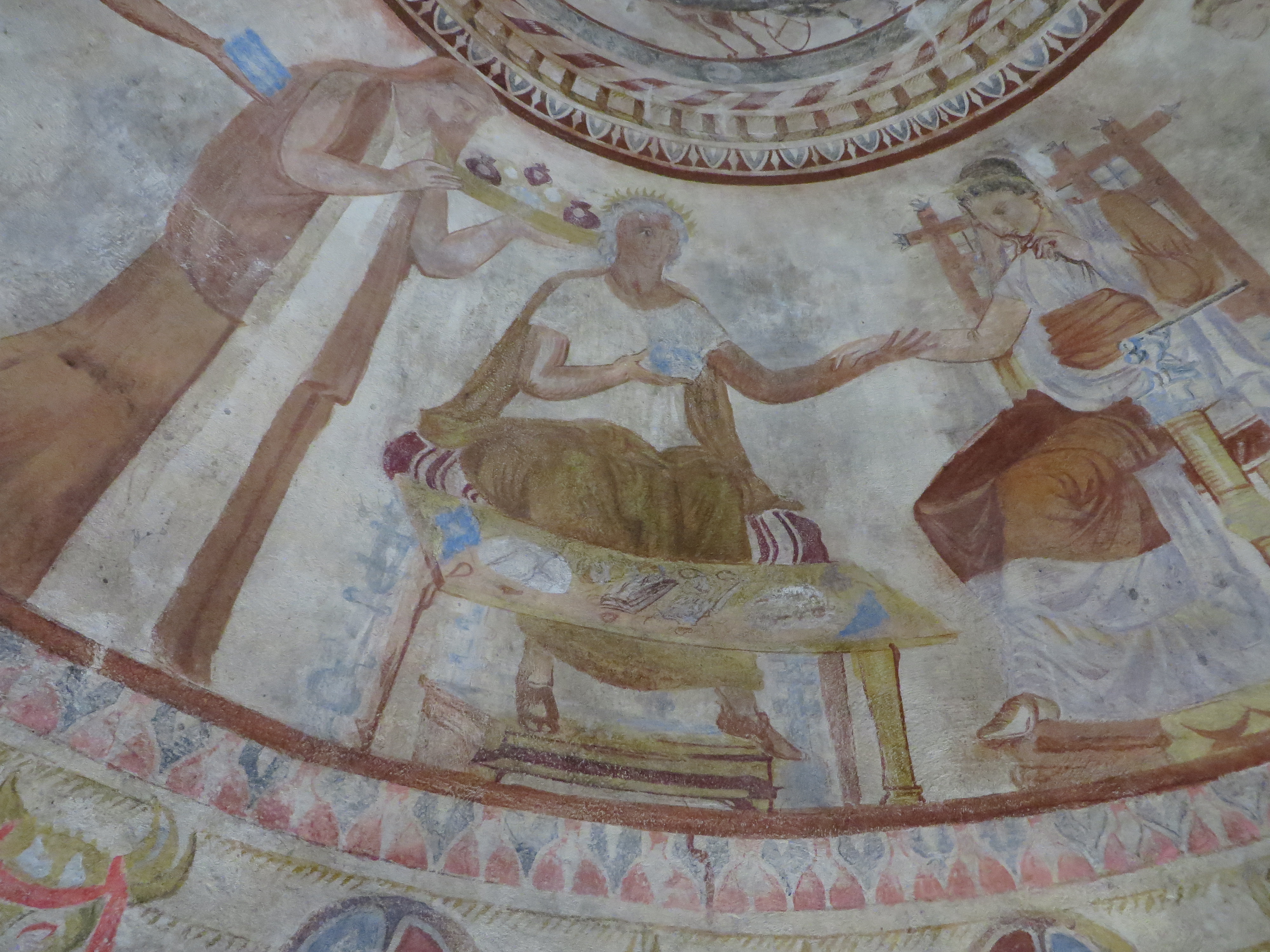
History: Tour of Thracian tombs: horses and lady accompanying man in paintings honoring him.

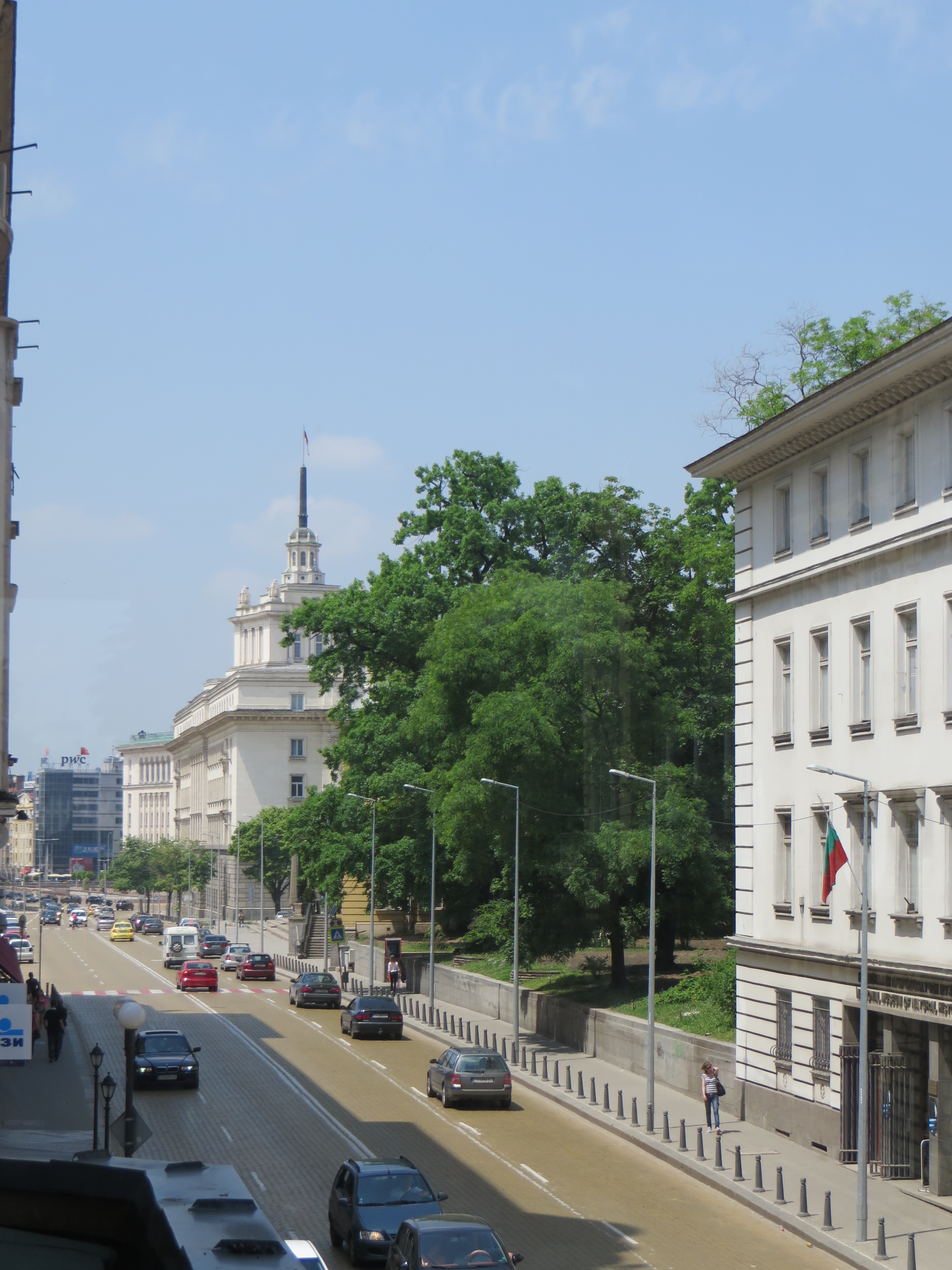
Experience: Free afternoon in Kazanlak: walk through downtown neighborhood homes, plaza, grocery store. I appreciate seeing the flags of the countries in the EU in an arrangement on the plaza. This is the place of the annual Rose Festival festivities. There is a Rose Festival Queen chosen for the occasion.

Thursday, May 13, 2015

Stara Zagora Regional Library and Archeology Museum (ground floor)

Bulgaria Trip_MNS_5102015 27Bulgaria Trip_MNS_5102015 28Bulgaria Trip_MNS_5102015 29Bulgaria Trip_MNS_5102015 30Bulgaria Trip_MNS_5102015 31Bulgaria Trip_MNS_5102015 32Bulgaria Trip_MNS_5102015 33Bulgaria Trip_MNS_5102015 34Bulgaria Trip_MNS_5102015 35Bulgaria Trip_MNS_5102015 36


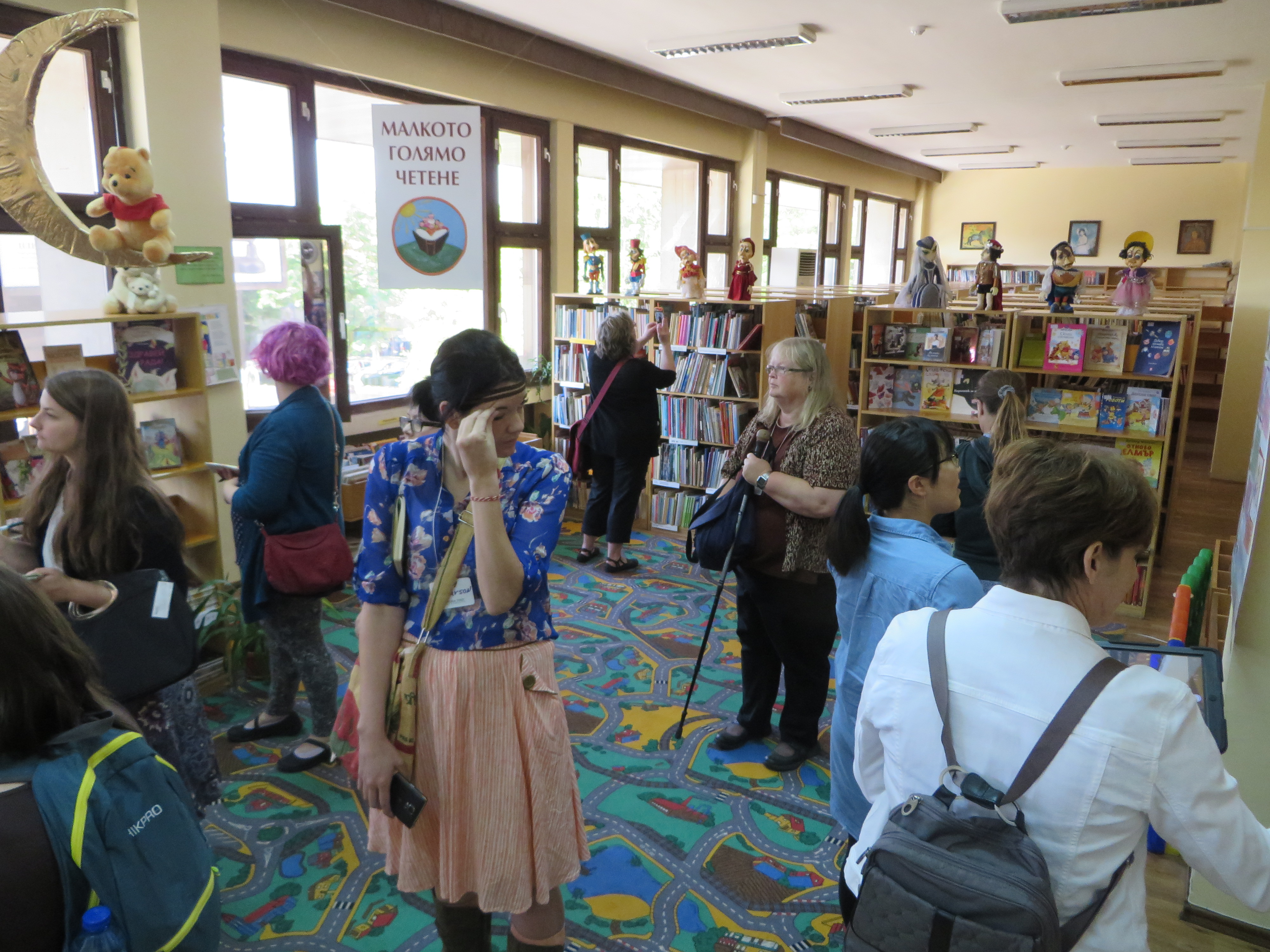
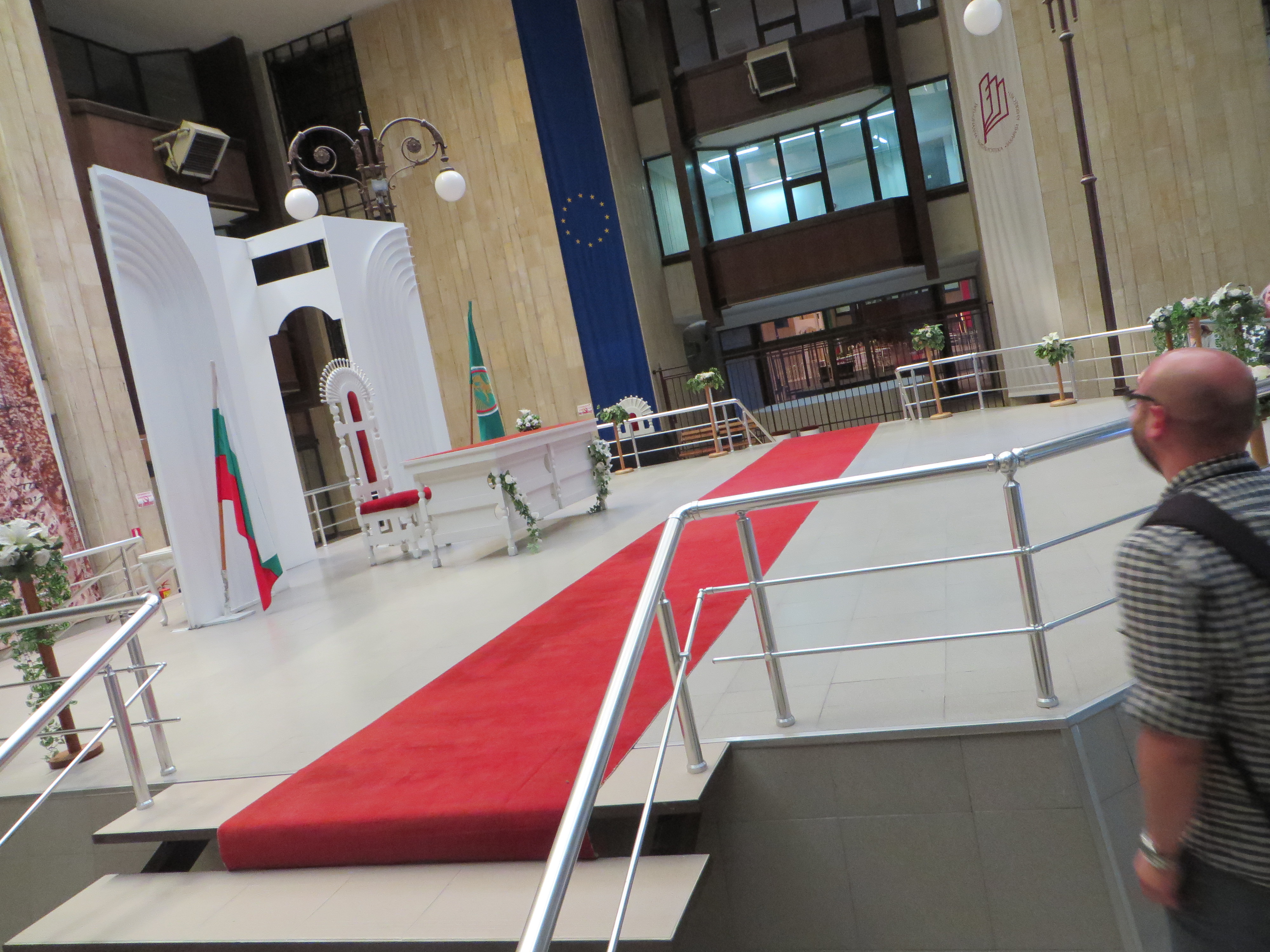
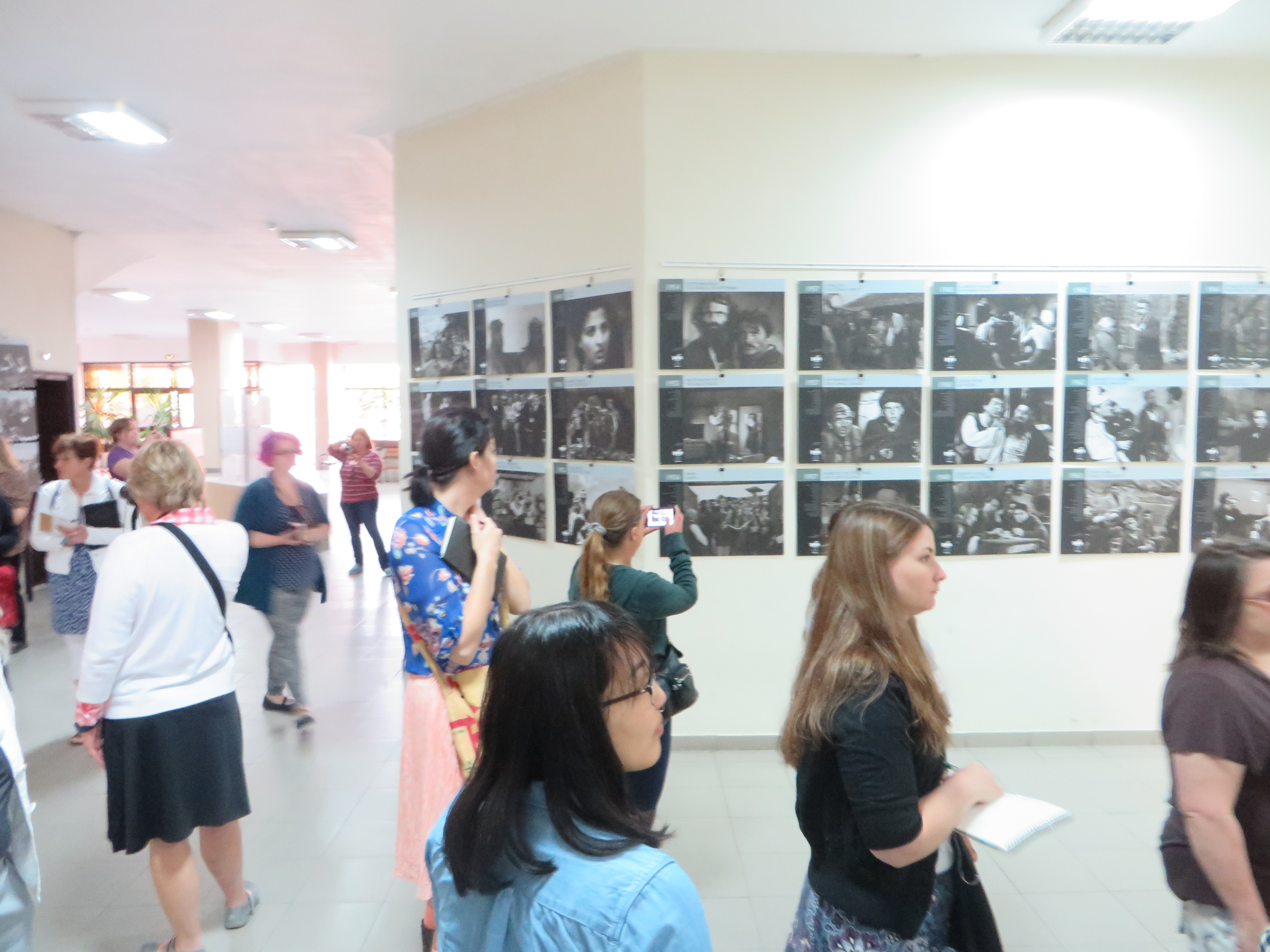
Learning: Stara Zagora’s library is one of several cultural centers surrounding a large portion of exposed Roman road lined with shop foundations. The other centers include the Opera. The library shares its spaces with whichever group or cultural institution that can use them. We saw at least three exhibits: a Sofia Comic Expo, a Bulgarian 100 years of filmmaking, and a youth art show using a technique similar to stained glass design. On an upper floor of the building is a stage used for all wedding ceremonies, unless the bride and groom pay for officials to come to another place. Church weddings follow the civil ceremony. The building had been designed for Party headquarters, so the departments of the library were separated, but the spaces were large and had lots of natural light. The children’s section seemed comparable to our own libraries in the U.S. and the various activities in the building seemed like an amplification of what our libraries offer. The special place of Regional libraries as leaders and support for smaller libraries in Bulgaria made this seem normal.
 

Culture/History: The archeology museum was unusual to us in the open displays of pottery on raised platforms. This was exciting and baffling to us who are used to lots of cases in museum settings. The artifacts included amazingly detailed small figures the size of action figure toys and a replica of the most important artifact found in Bulgaria (now on display in the Louvre, Paris, France): the nearly two foot high bronze head of an Hellenic ruler with inset stones for eyes from the tomb of Seuthes III, looking a lot to me like impressive works representing Neptune, the sea god. Along with the head were precious ritual objects made of silver,bronze, and gold including a gold head ornament wreath and a gold drinking cup inscribed with the ruler’s name.


Learning: The project brochure lists the organizations who partnered to finance the opening of the tomb: Thracian Expedition for Tumulus Research on behalf of the Archaeology Institute and Museum at the Bulgarian Academy of Science, the European Foundation, “Horizont”, the Central Board of Bulgarian Academy of Science, and Regional Historical Museum “Iskra” Kazanlak, the VIFOR company, Kazanlak, and the State Forestry Board at the town of Kazanlak. For me, this was an example of the cooperation and interest of other European countries in the historical heritage of Bulgaria. The entities mentioned most often were France, Germany, and the EU organization.


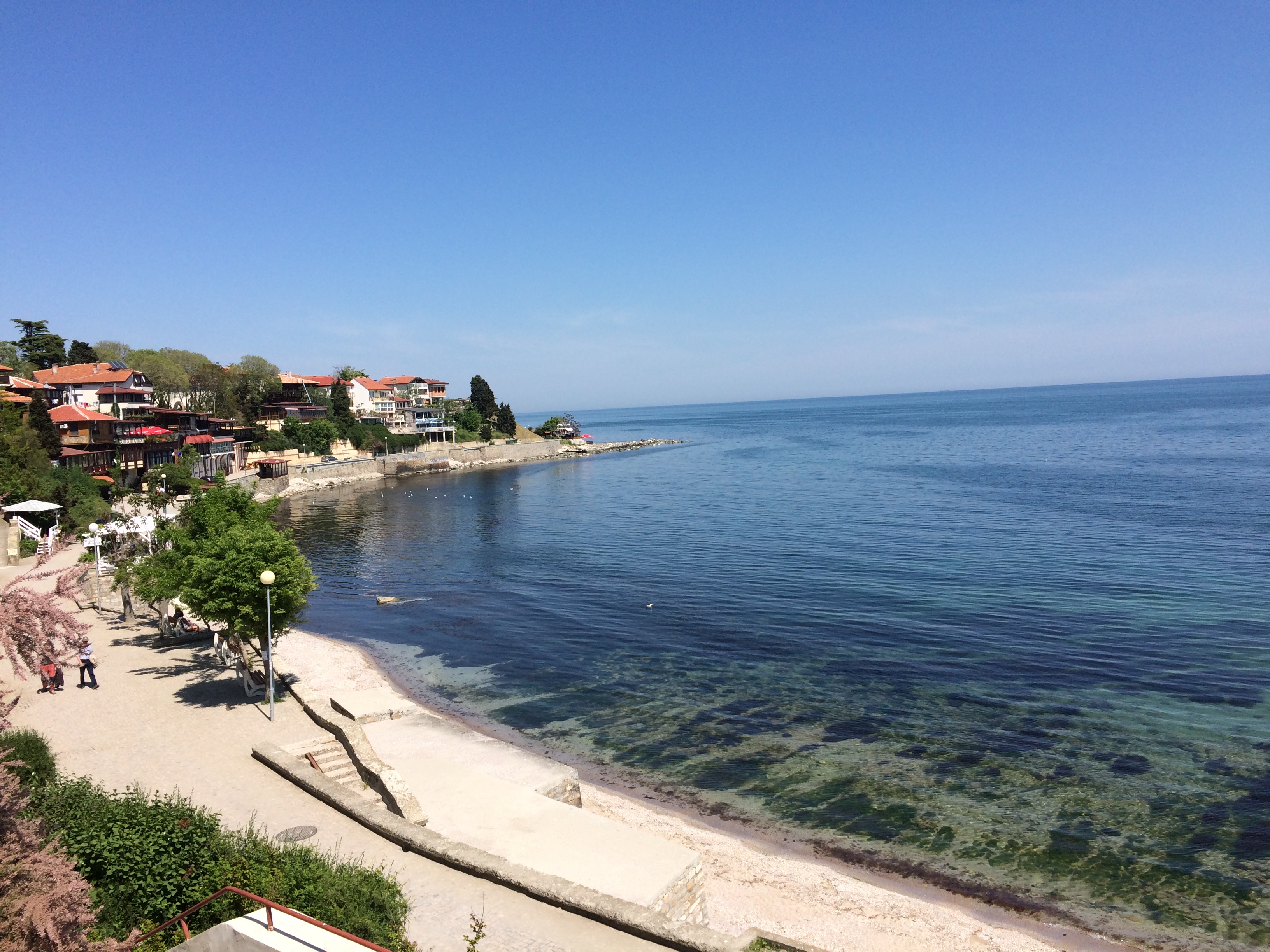
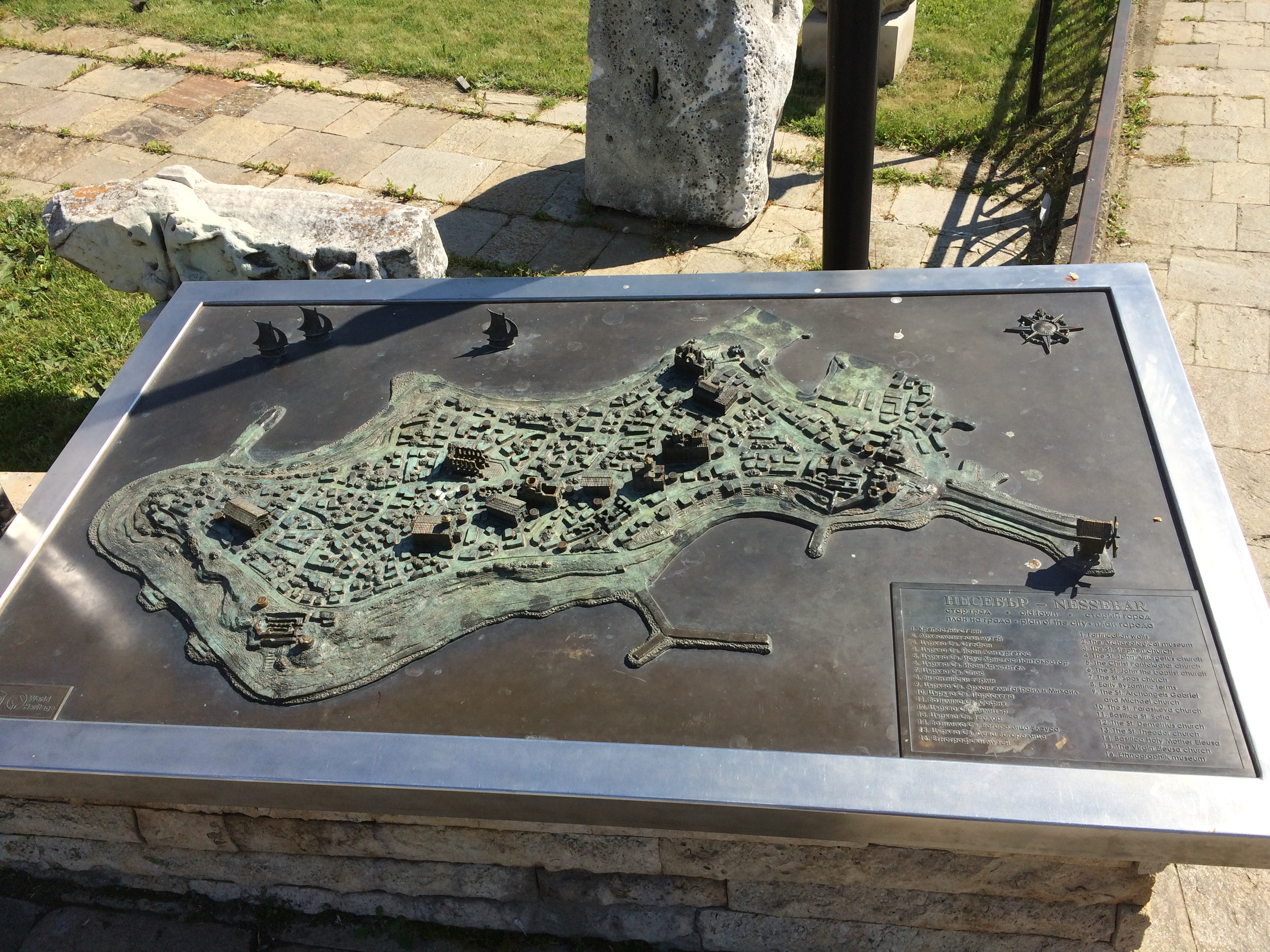
Experience: Lunch and walk on Nessebar, a peninsula within a bay on the Black Sea

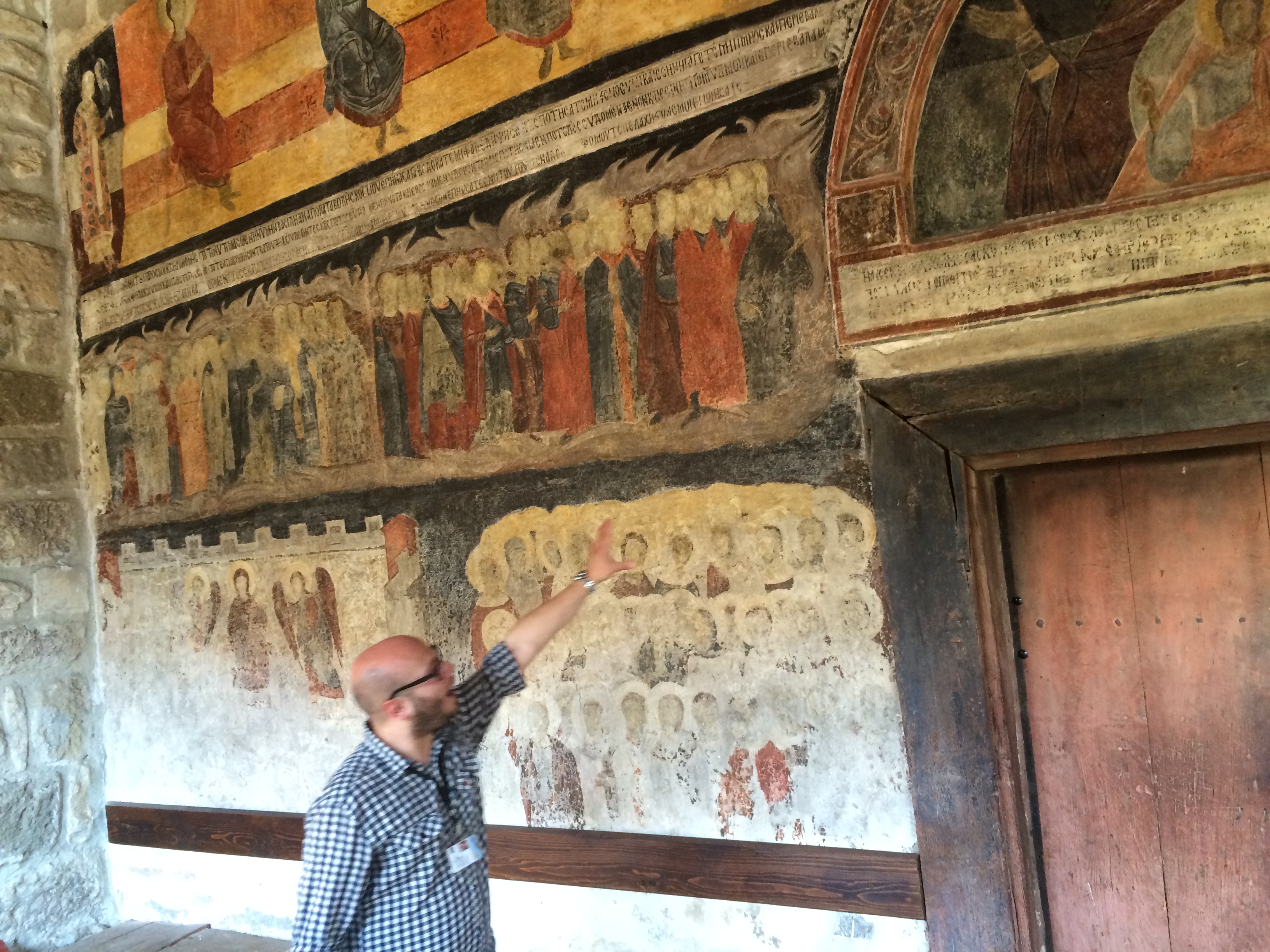
St. Stefan church and St. Sophia church

Learning: Different eras of history in fortification structure: Medieval, Roman, Greek

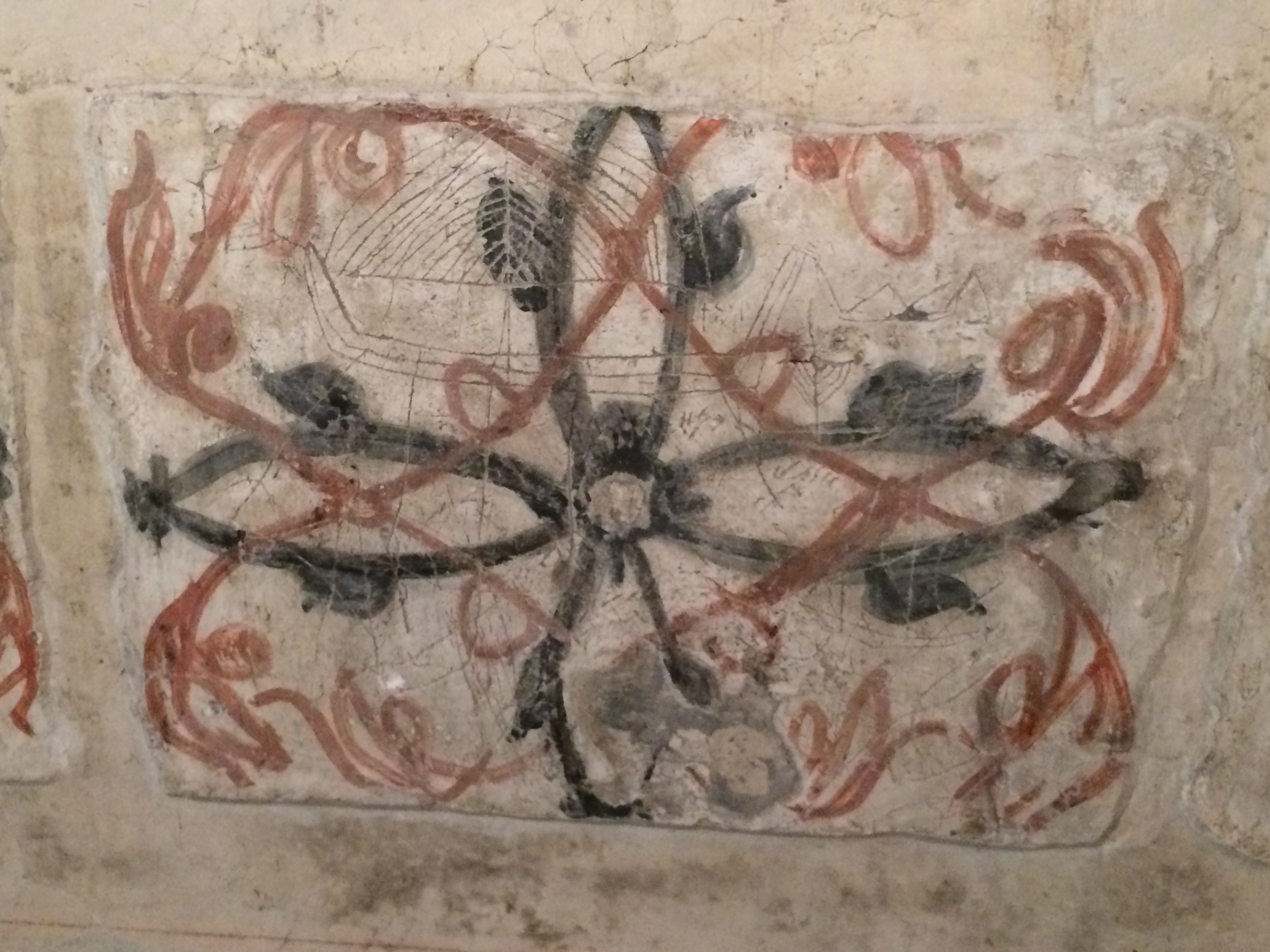
History/Culture: The Turkish reign has lasting reminders in the churches. Details of the faces in the frescoes here at St. Stefan were rubbed out since human representation was not allowed in sacred spaces. This may be just one of many motivations for Bulgarians interest and enjoyment of their culture heritage. The churches are mostly skeletons, but St. Stefan is enclosed, secured, and has frescoes which are being protected. “Prayers” for ships were line drawings of particular ships scratched into the decorative plaster tiles in the rear of the church.

Bulgaria Trip_MNS_5102015 37Bulgaria Trip_MNS_5102015 38Bulgaria Trip_MNS_5102015 39Bulgaria Trip_MNS_5102015 40Bulgaria Trip_MNS_5102015 41Bulgaria Trip_MNS_5102015 42

Friday, May 14, 2015

Varna Free University

 Bulgaria Trip_MNS_5102015 43Bulgaria Trip_MNS_5102015 44Bulgaria Trip_MNS_5102015 45Bulgaria Trip_MNS_5102015 46

Experience/Learning: Varna Free University has a new library building, from 2005. Not only do they offer digital resources and automated check out, they also do some of their own indexing. They have a great multilingual website. After our library tour, we visited an enthusiastic director of digital studies who is eager to have international and business contact meetings through Skype, and to cooperate with student exchange and study programs like ERASMUS. Her fluency in English suggests that she communicates regularly with international business leaders.


Experience: City of Varna on the way to the museum

 Bulgaria Trip_MNS_5102015 47 Bulgaria Trip_MNS_5102015 50 Bulgaria Trip_MNS_5102015 49 Bulgaria Trip_MNS_5102015 48

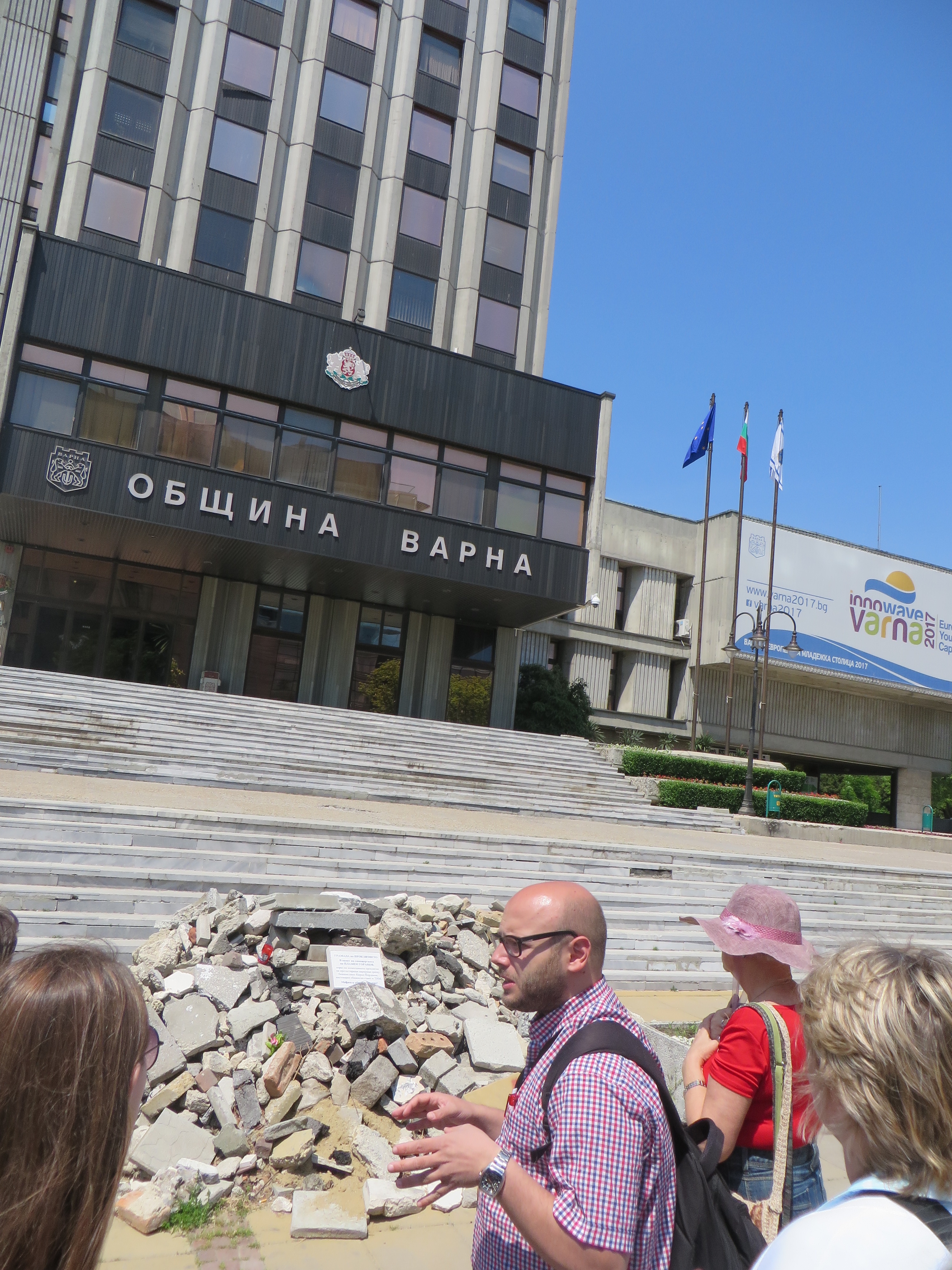
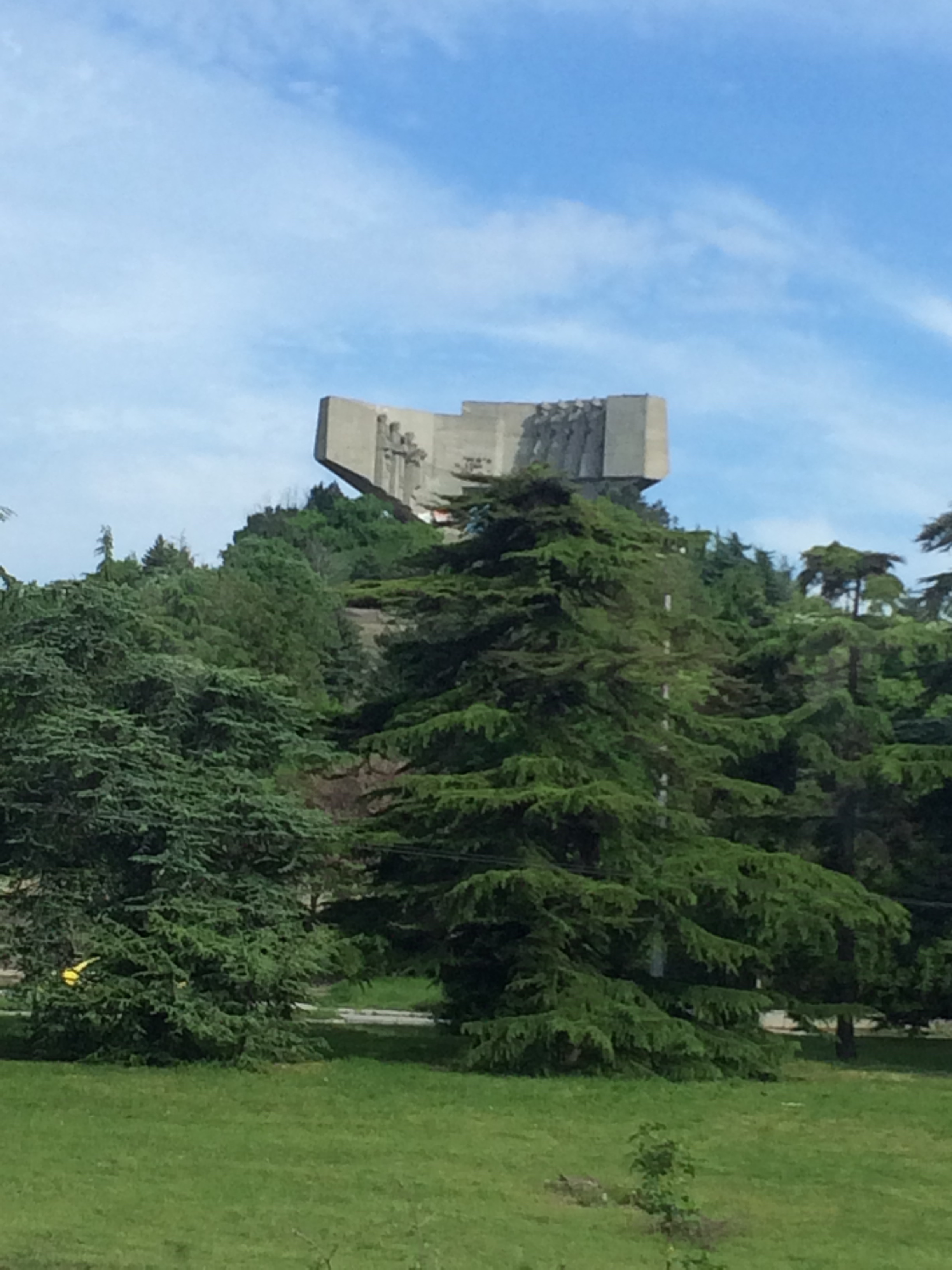
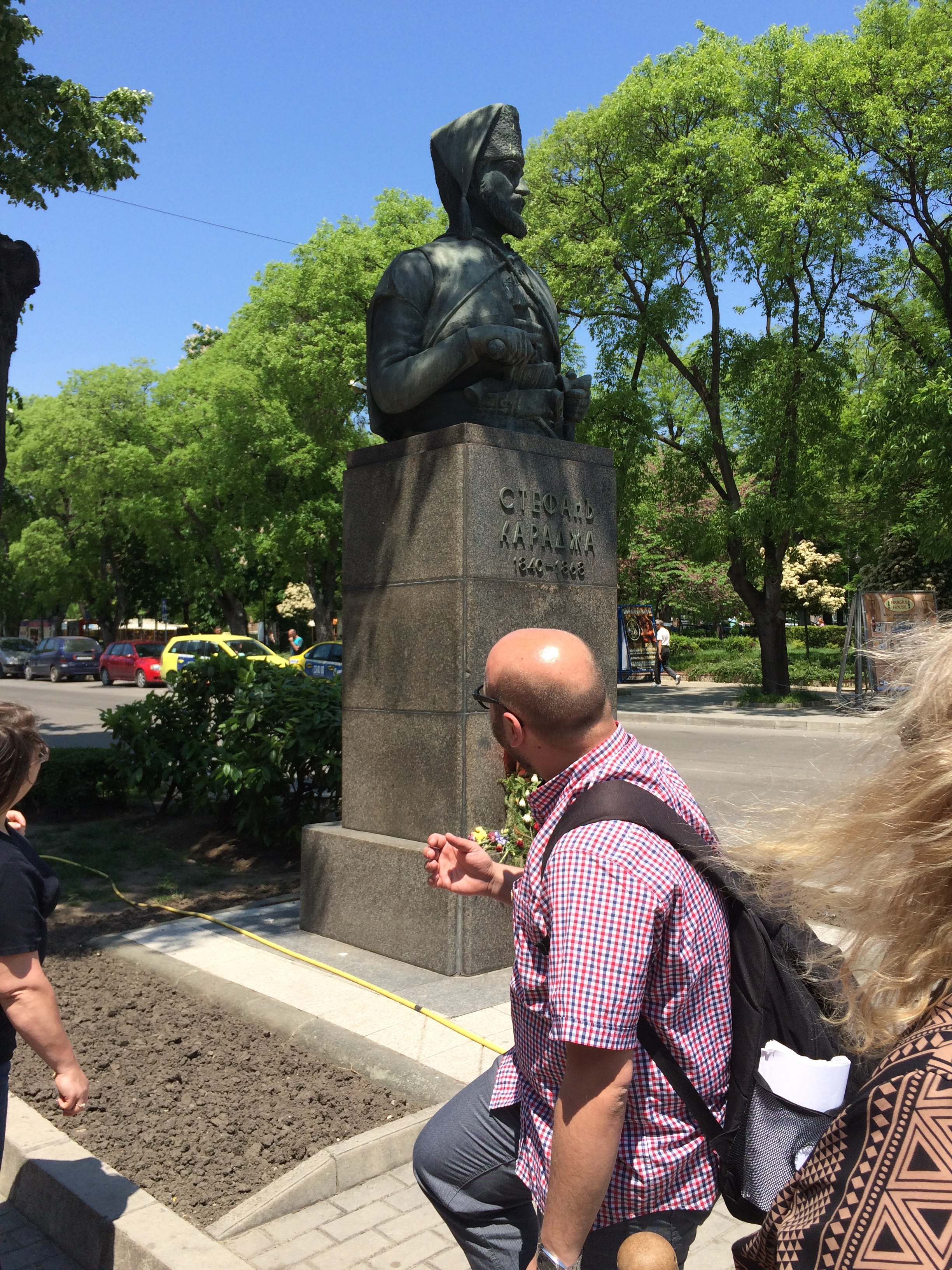
Learning/History/Bulgaria and the U.S.: The city tour of Varna was eye opening to the stark realities of politics in Bulgarian life and the resilience of Bulgarians through humor. The monument to Stefan Karadzha is a testament to his courage in attempting an invasion of his own country under Turkish rule at the time and his sacrifice by execution when it failed to return the government to Bulgaria. The rectangular monument on a mound of stones in front of Varna City Hall tells a story equally stark and far more recent: after the apathetic mayor of Varna refused to resign after public request, including a curse in the form of stone on top of stone put by individual citizens, a young man Plamen Goranov set himself on fire in desperate protest. He died in his hospital bed days later, but achieved his goal: the mayor resigned and city projects began again. This was three years ago, in 2012. The mound remains after an attempt to remove it erupted in protest. As for resilient Bulgarian humor, the monolithic cement monument to Bulgarian Soviet friendship during World War 2 on a hill outside Varna is referred to as “Grannies Panties,” for Tsola Dragoicheva, a female active in Party membership into her 90s.

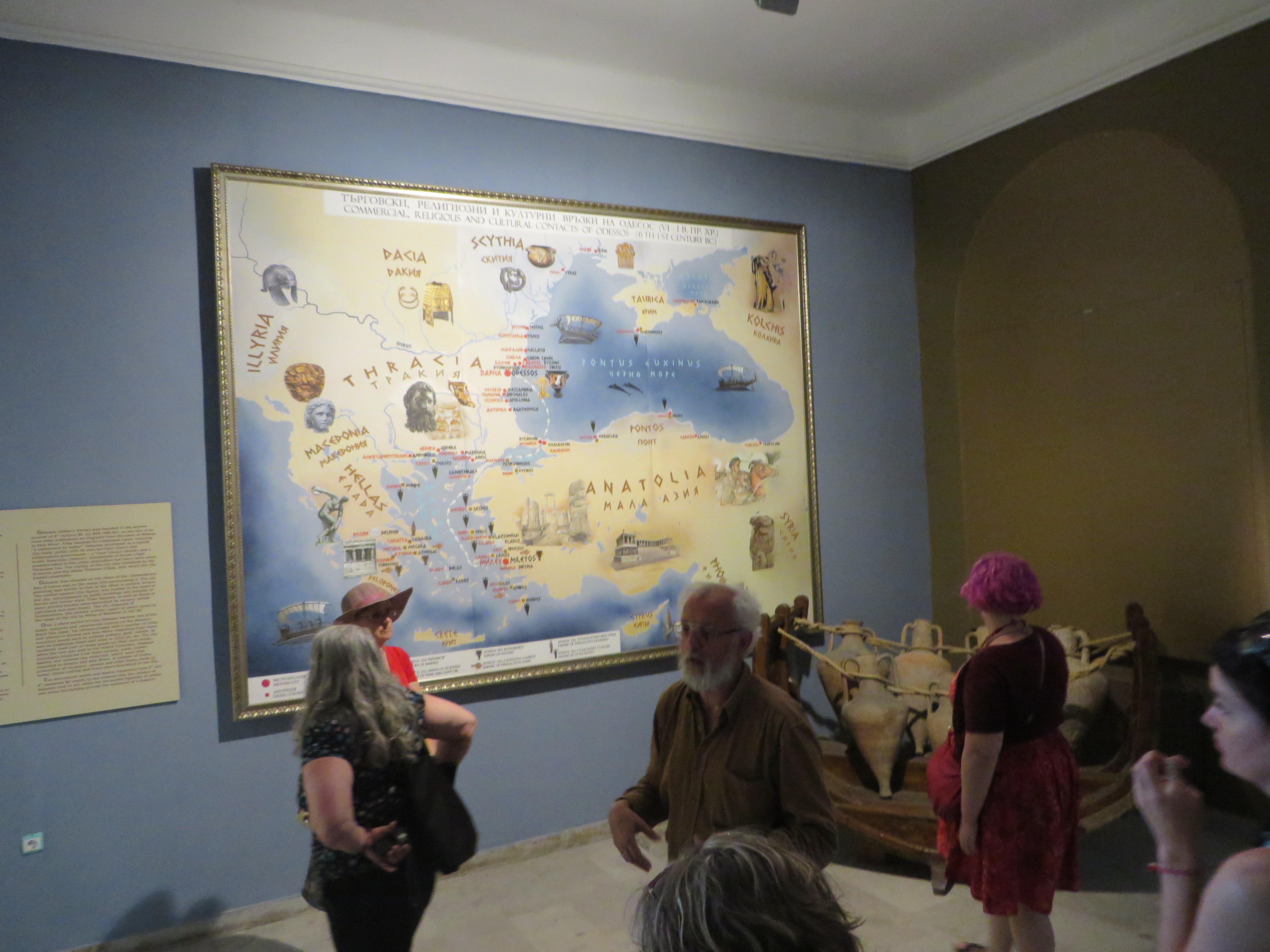
Archeology Museum with Dr. Alexander Minchev

 Bulgaria Trip_MNS_5102015 51 Bulgaria Trip_MNS_5102015 52 Bulgaria Trip_MNS_5102015 53 Bulgaria Trip_MNS_5102015 54 Bulgaria Trip_MNS_5102015 55 Bulgaria Trip_MNS_5102015 56 Bulgaria Trip_MNS_5102015 57 Bulgaria Trip_MNS_5102015 58

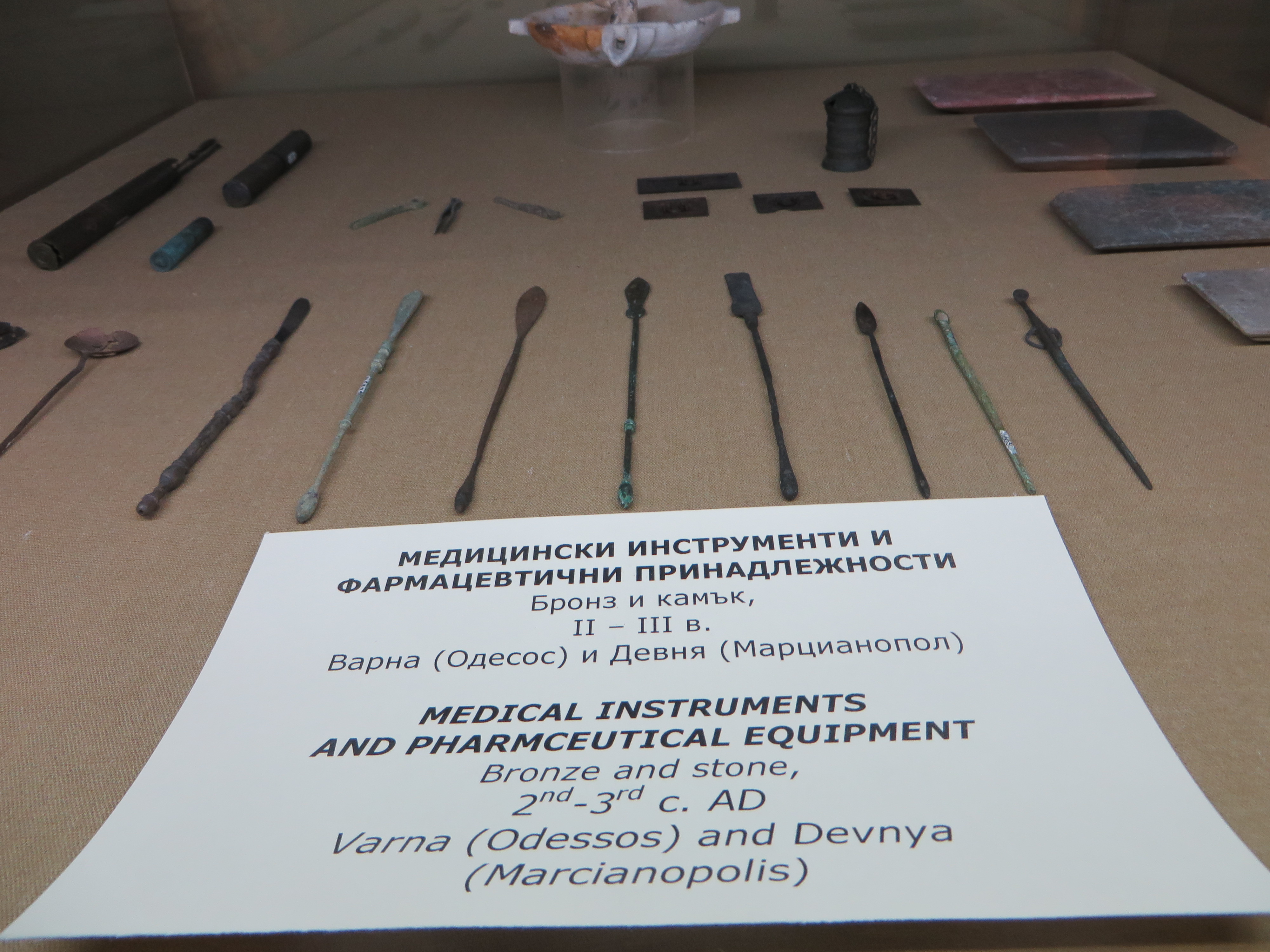
Experience: The Varna Archeology Museum was, for many in our group, the highlight of the whole trip. Besides looking similar to Seethes III himself, Dr. Alexander Minchev is a generous host of an education and research institution who needs no interpreter, but is at home in the world introducing interested parties to the world’s treasures found in Bulgaria.


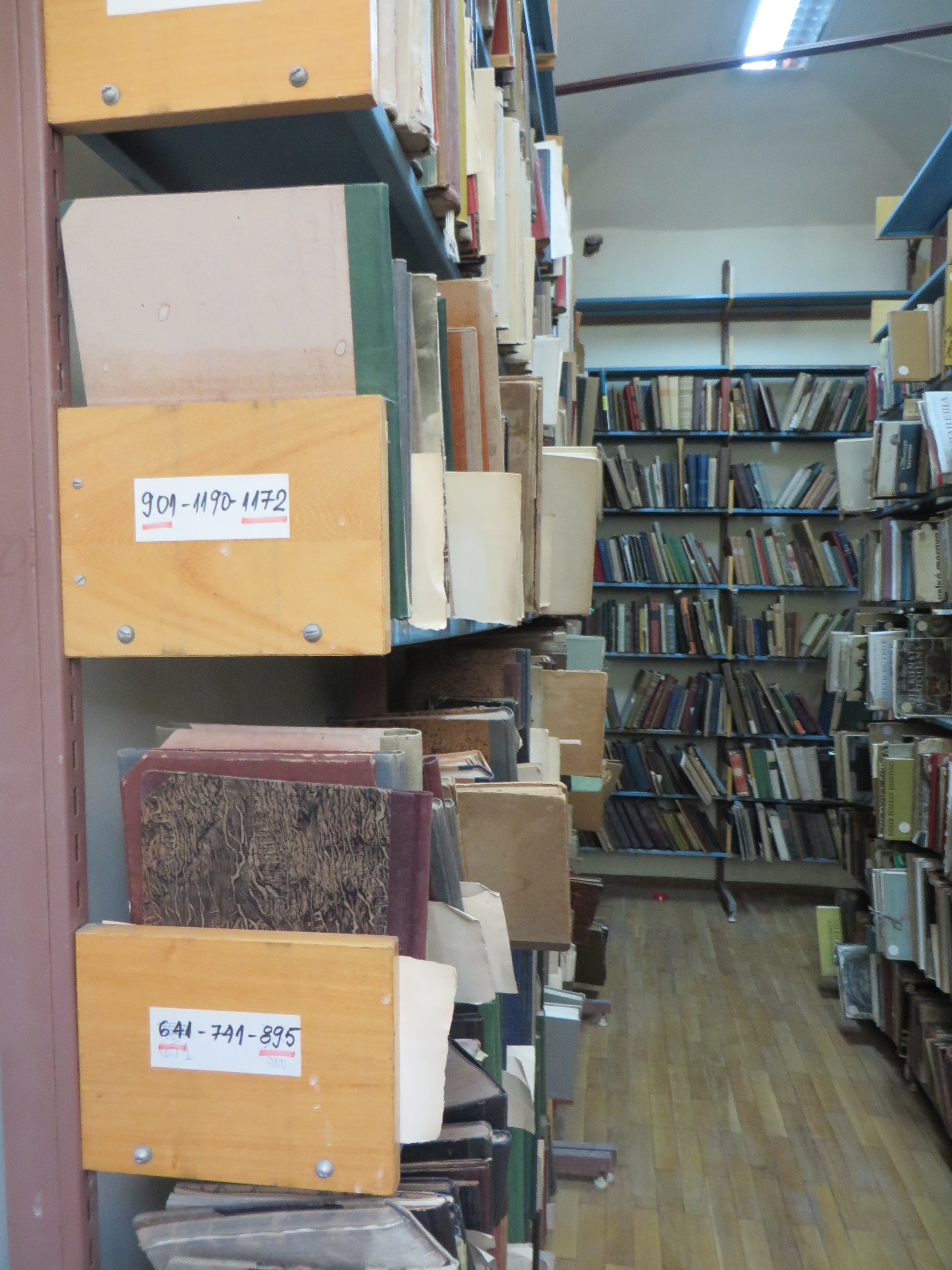
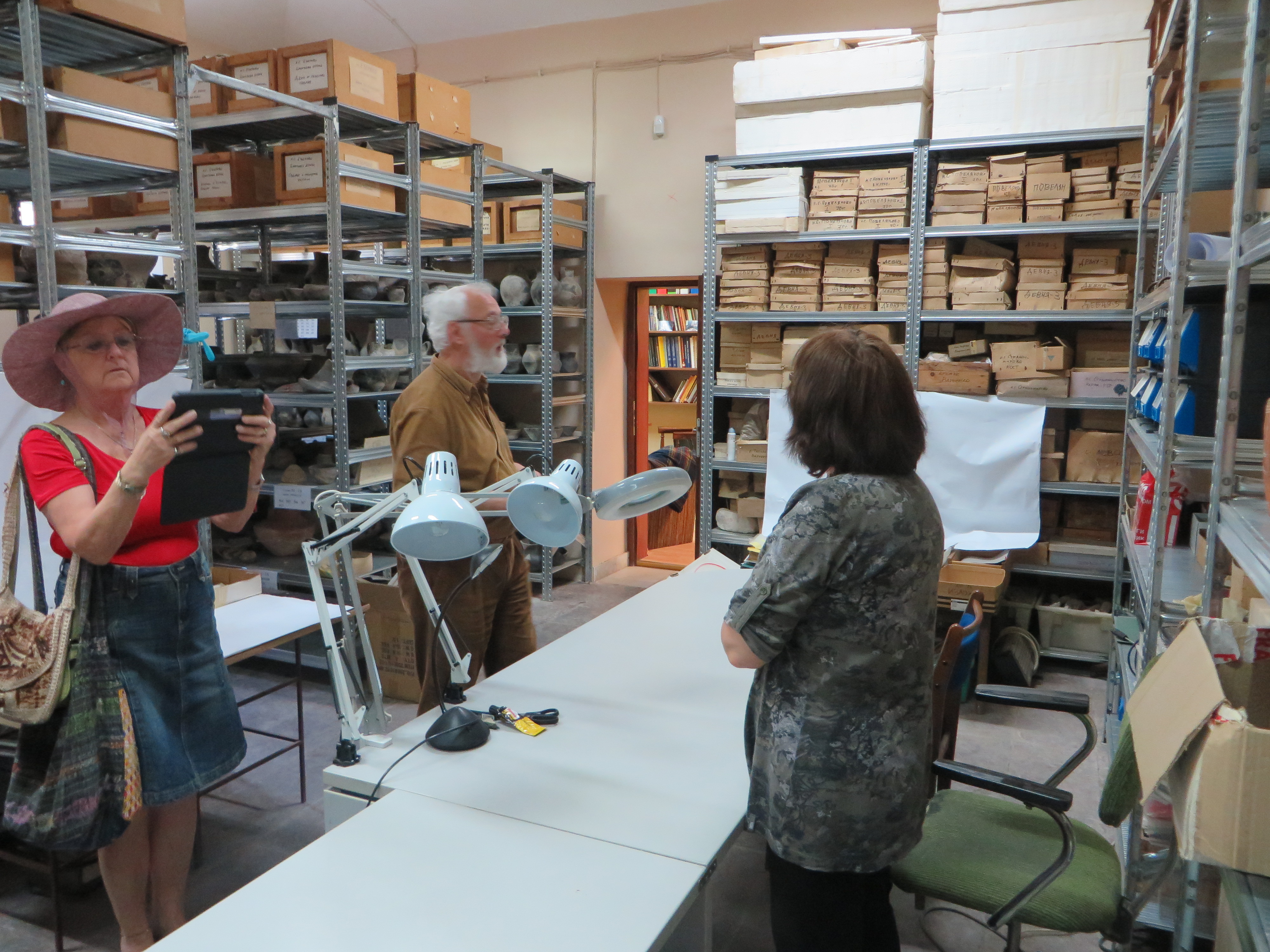
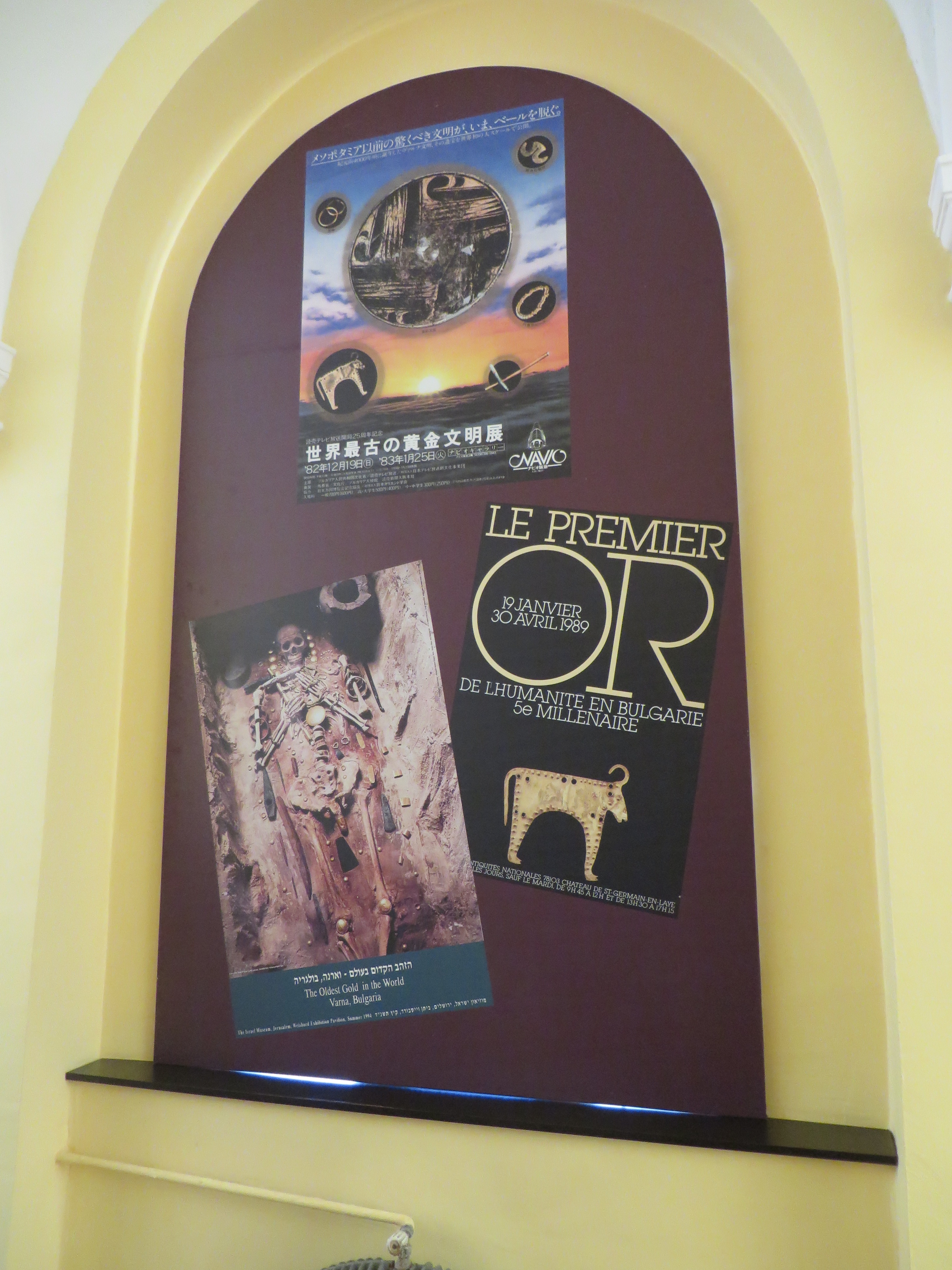
Learning: The Museum library is vast and houses information sorted by place. We got to see an area which both houses the collection not on display and serves as the place for restoring/repairing items. The display rooms are lively in colors, professional in display, multilingual, and educational. Perhaps the best example is the backlit display of objects in a grid by era. A testament to the worldly value of the collection is a collection of posters from exhibits of museum items around the world.

Saturday, May 16, 2015

Veliko Tornovo Municipal Library and Branch Library

Children’s librarian had studies in Panama Beach, FL for a year

Bulgaria Trip_MNS_5102015 62 Bulgaria Trip_MNS_5102015 61 Bulgaria Trip_MNS_5102015 63 Bulgaria Trip_MNS_5102015 60 Bulgaria Trip_MNS_5102015 59 Bulgaria Trip_MNS_5102015 64

Experience: The Veliko Tarnovo Municipal Library and Branch Library was a tour of personal history led by the director to the branch library where she started her library service. The Municipal Library had the feeling of a promoter of the arts and music. We saw a highly professional illustration exhibit and stained glass windows representing art and music. A librarian played the piano for us as we gathered in a great room to exchange gifts. I gathered that although the municipal library rooms themselves were not presented, they were functional and well used.


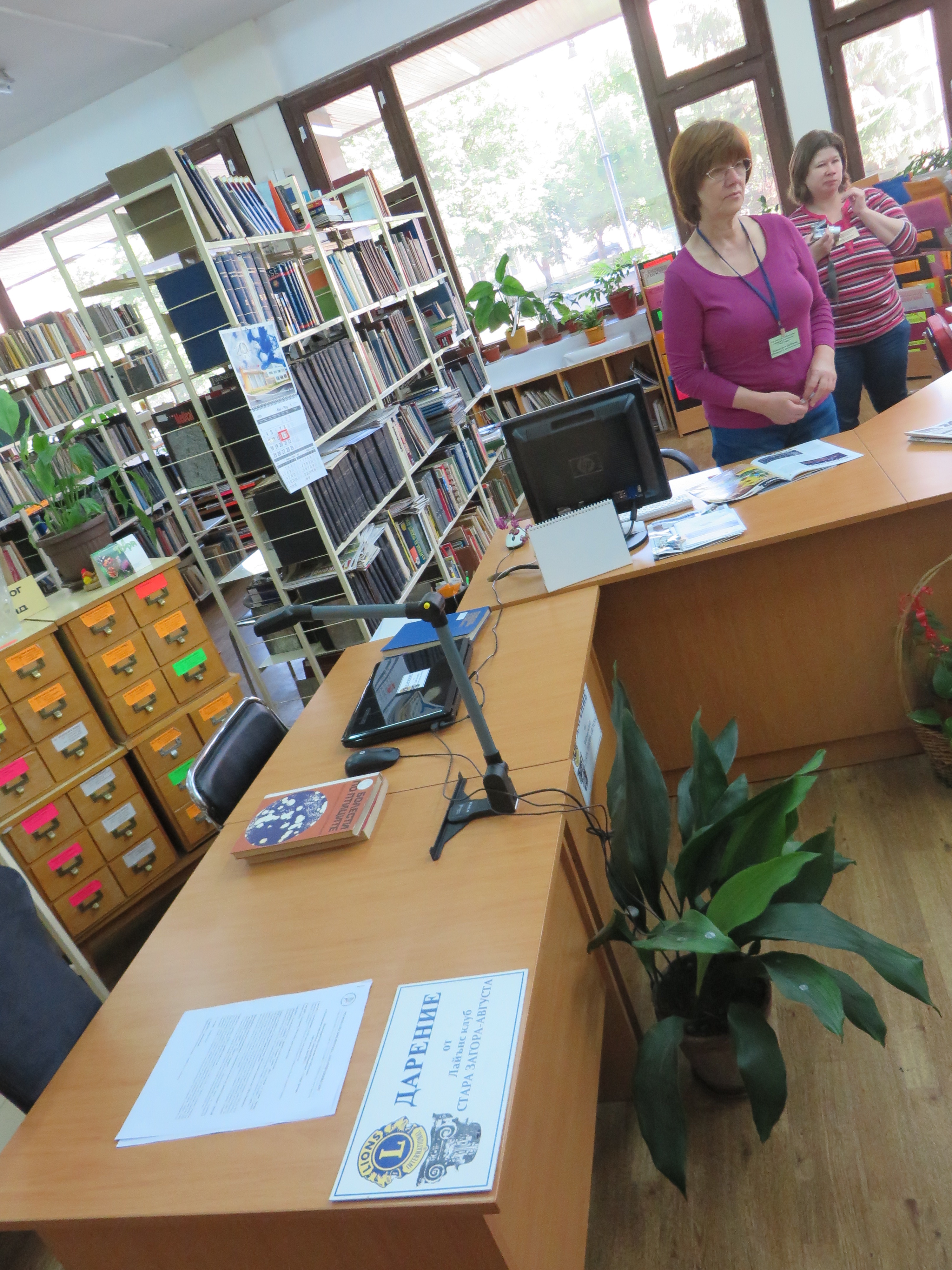
Experience/Culture: At the branch library, we were warmly welcomed in the traditional style, with bread and salt, and other refreshments. The branch library is positioned well to serve a population of 7,000 surrounding it. The spaces of the library felt open and inviting both to adults and children. I was pleased to see the desk areas of the librarians and staff as well as the meeting and classroom area integrated with the collection of resources. The feeling of service and meeting the community were palpable. Both here and in Stara Zagora, we saw Lions Club support for technology to support reading by Braille and we saw Global Libraries computers.


Lunch and walk to Veiliko Tarnovo’s fortress ruins complex

 Bulgaria Trip_MNS_5102015 65 Bulgaria Trip_MNS_5102015 66 Bulgaria Trip_MNS_5102015 67

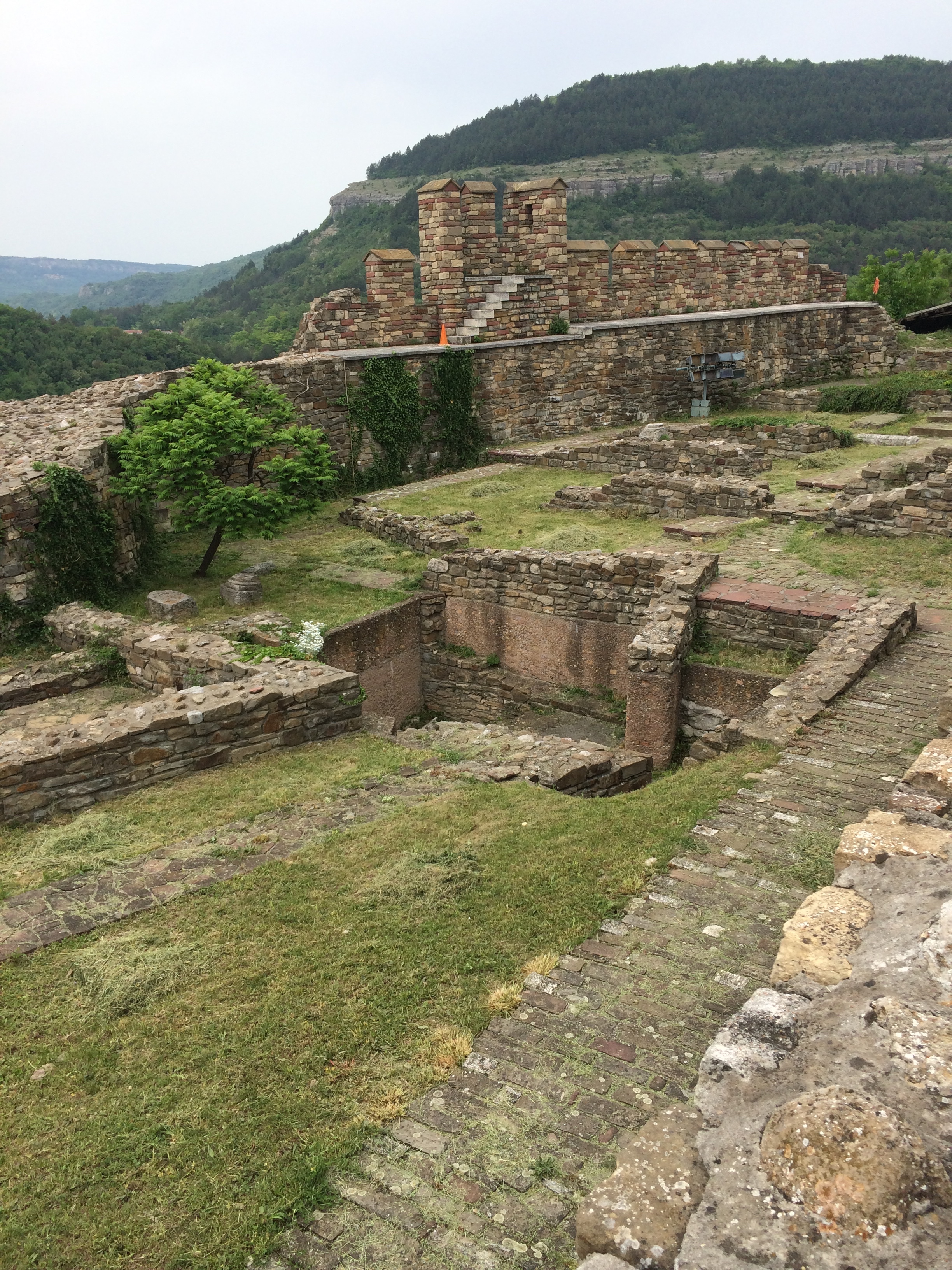
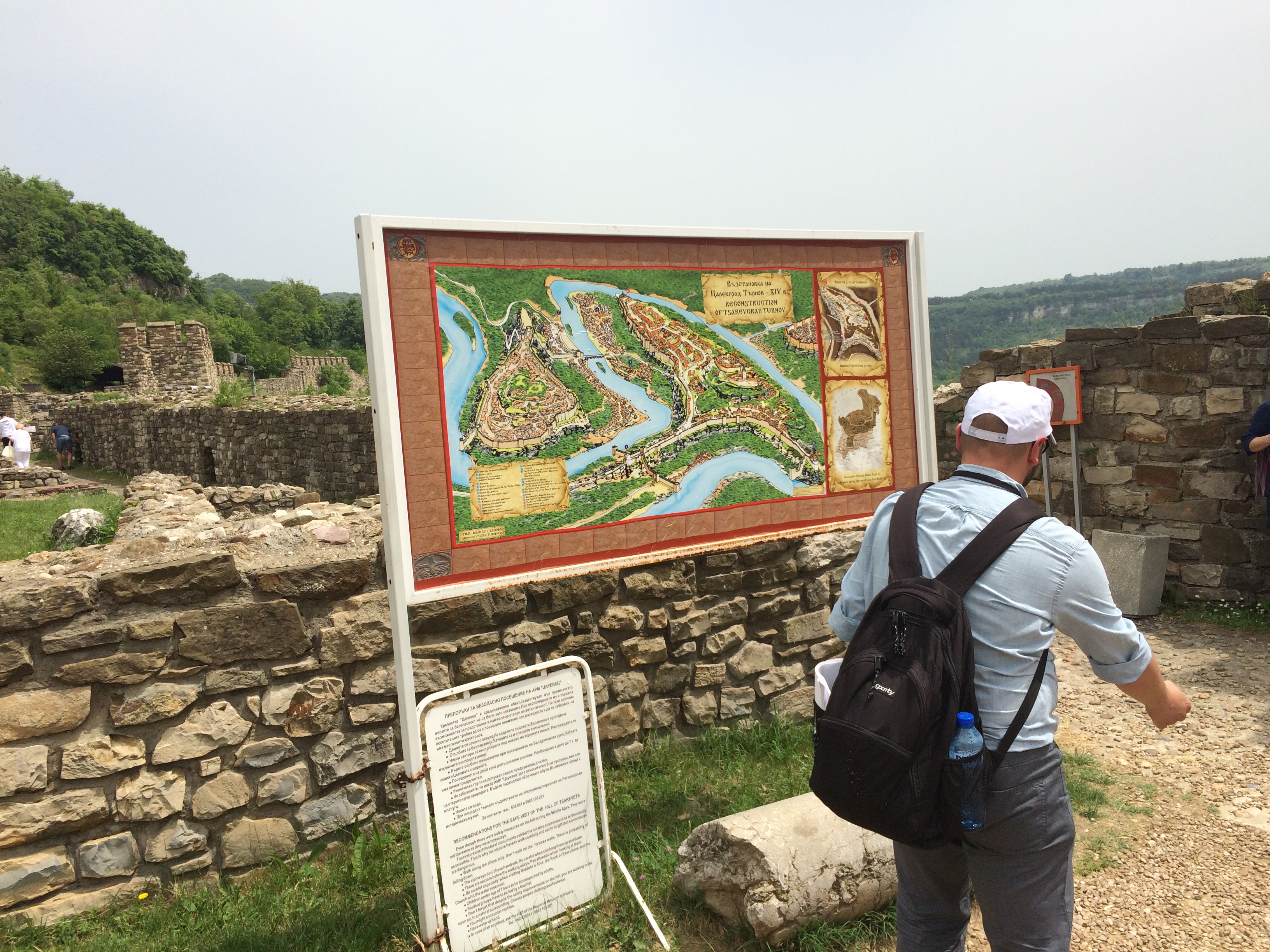
Experience: Veiliko Tarnovo’s fortress ruins complex is amazing in its scale and position in the landscape. However, there are some drawbacks: piped in music at the main sites interferes with listening to a guide (and a guide’s thoughts), and replica structures built on top of the older foundations interfere with our imaginations and further interpretation.

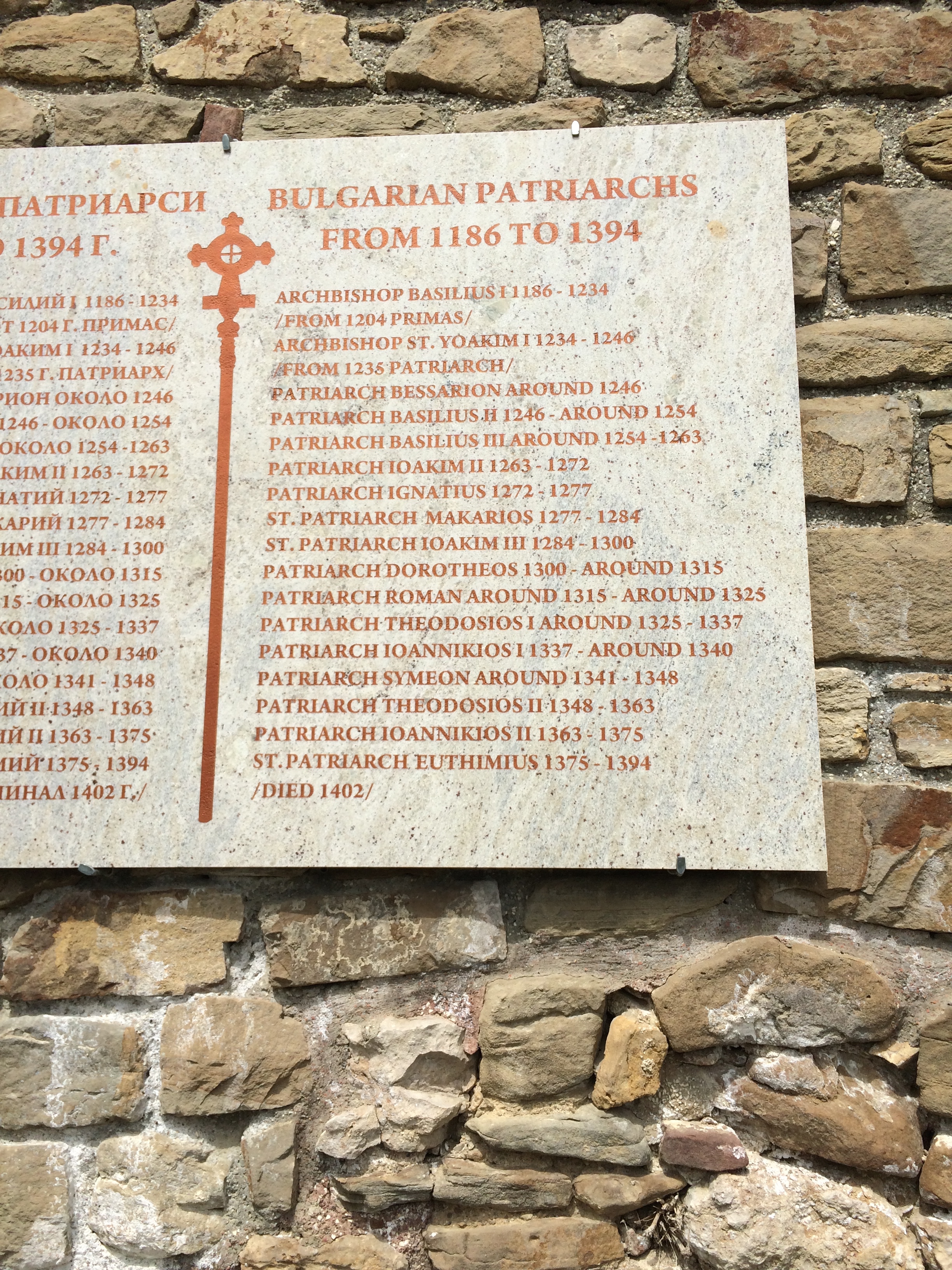
Learning: One curatorial marker I really appreciated was on the side of the church at the top of the fortress: a list of all the Bulgarian patriarchs. Part of Bulgaria’s rich cultural history is its independent Orthodox church, neither Russian nor Greek, but Bulgarian. We saw religious icons in many of the municipal libraries we visited, and it appears that the church is an integral institution in Bulgaria.

Madara: Big Cave, Horseman

 Bulgaria Trip_MNS_5102015 68 Bulgaria Trip_MNS_5102015 71 Bulgaria Trip_MNS_5102015 69Bulgaria Trip_MNS_5102015 73Bulgaria Trip_MNS_5102015 72

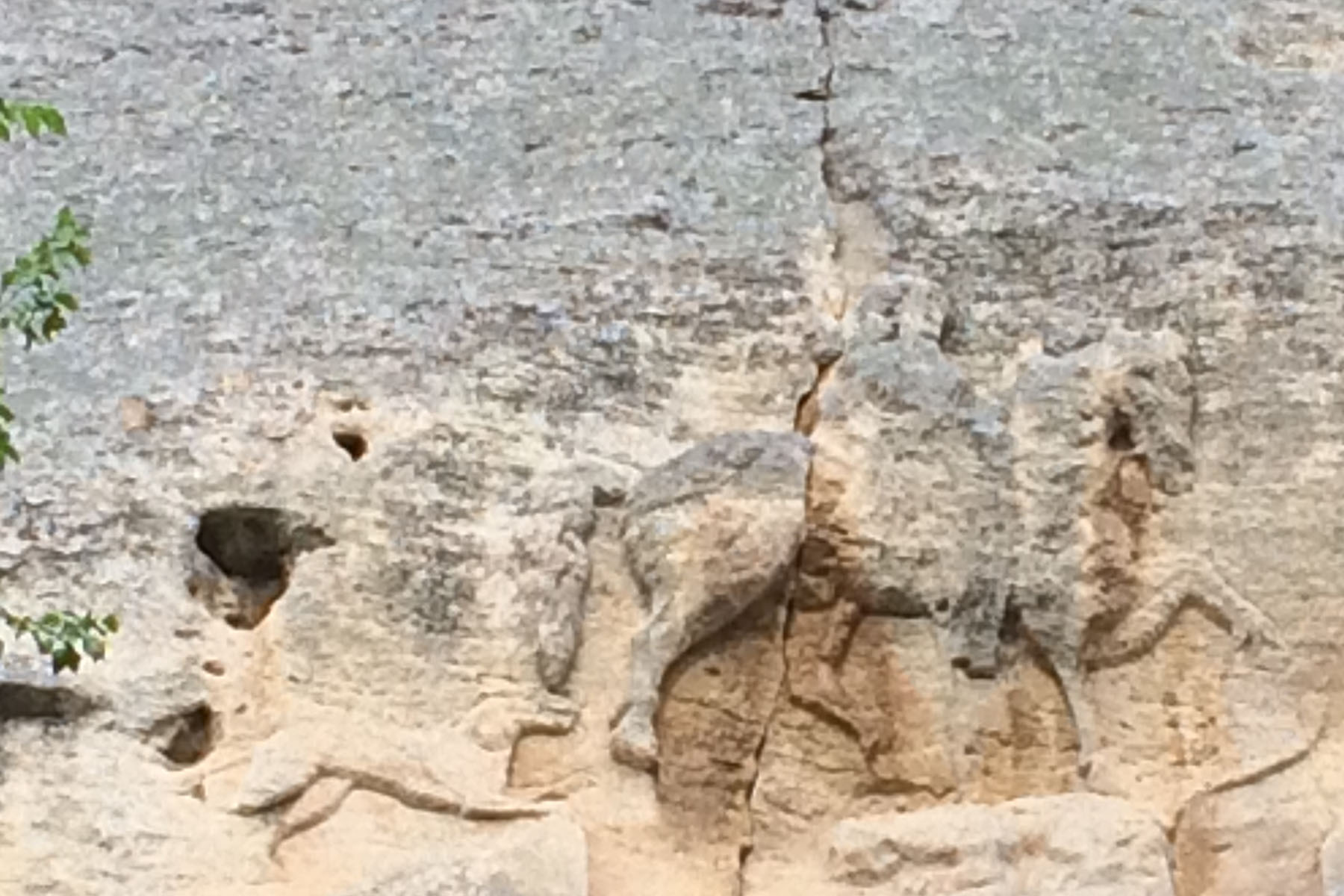
Experience/Learning: The Thracian Horseman on the huge rock face of Madera is deteriorating in the weather, but I got to see a replica that had been made years ago in the Archeology Museum in Sofia. The detail there is quite clearly a horse and rider with a hound and a lion beneath. The birds calls as we walked through the trees were unusual to me. The space under the mass of rock seemed to offer special protection and cool rest while we stopped there. We learned that it had been used over time by different groups of people.


Shipka: Sanctuary Monument to Bulgarian-Soviet friendship in battle against the Turks

 Bulgaria Trip_MNS_5102015 74 Bulgaria Trip_MNS_5102015 75 Bulgaria Trip_MNS_5102015 76 Bulgaria Trip_MNS_5102015 77 Bulgaria Trip_MNS_5102015 79 Bulgaria Trip_MNS_5102015 80

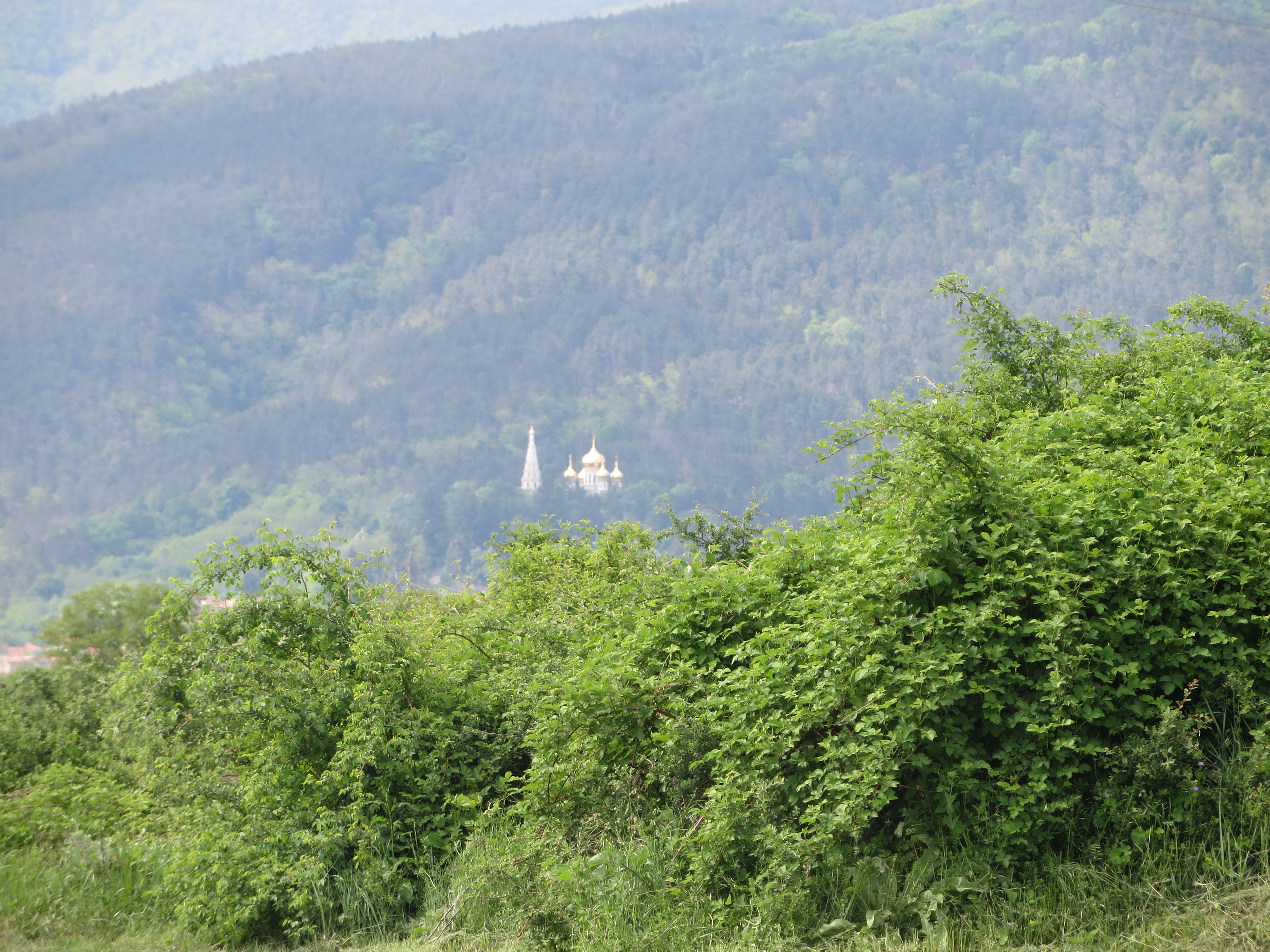
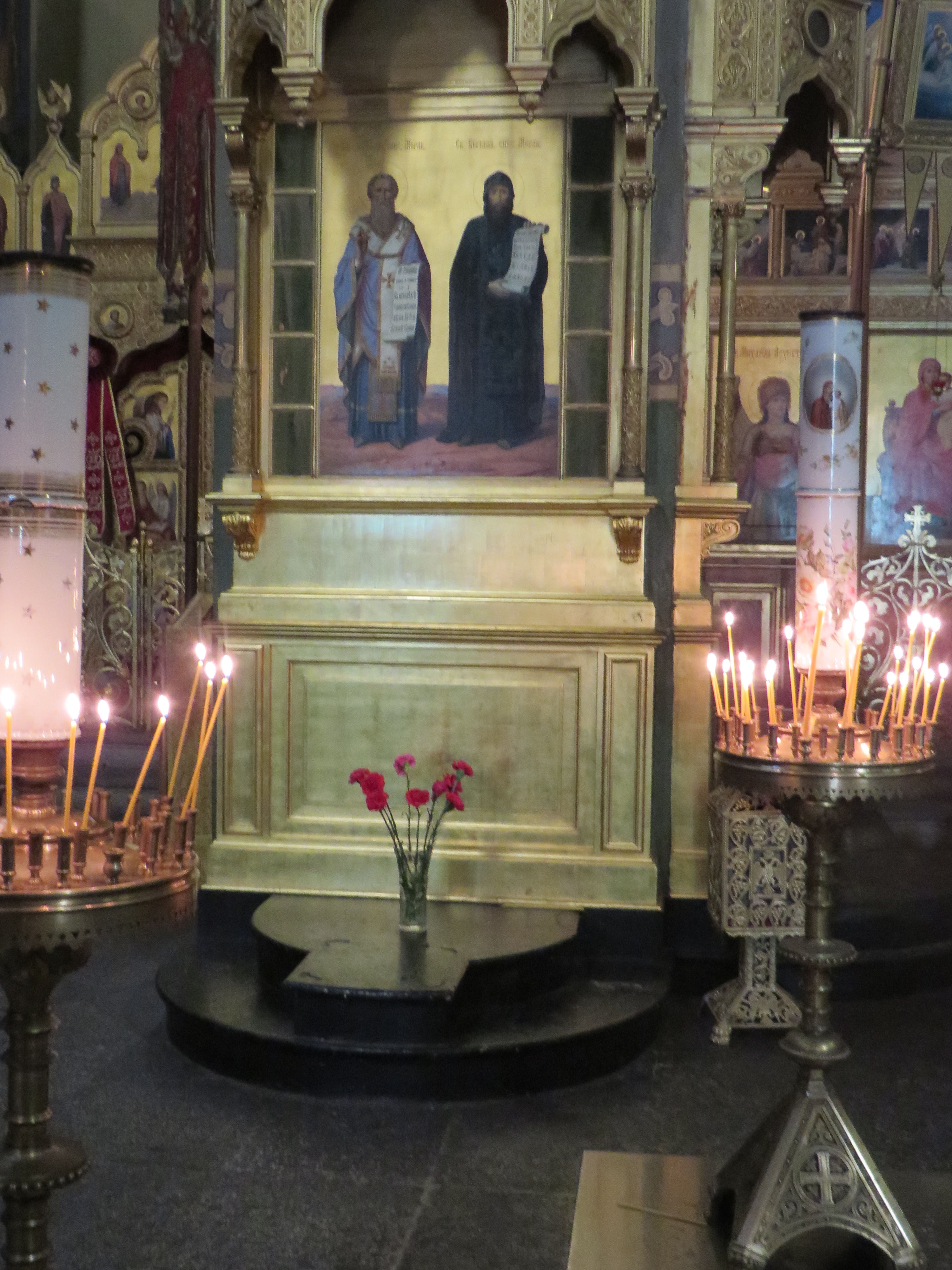
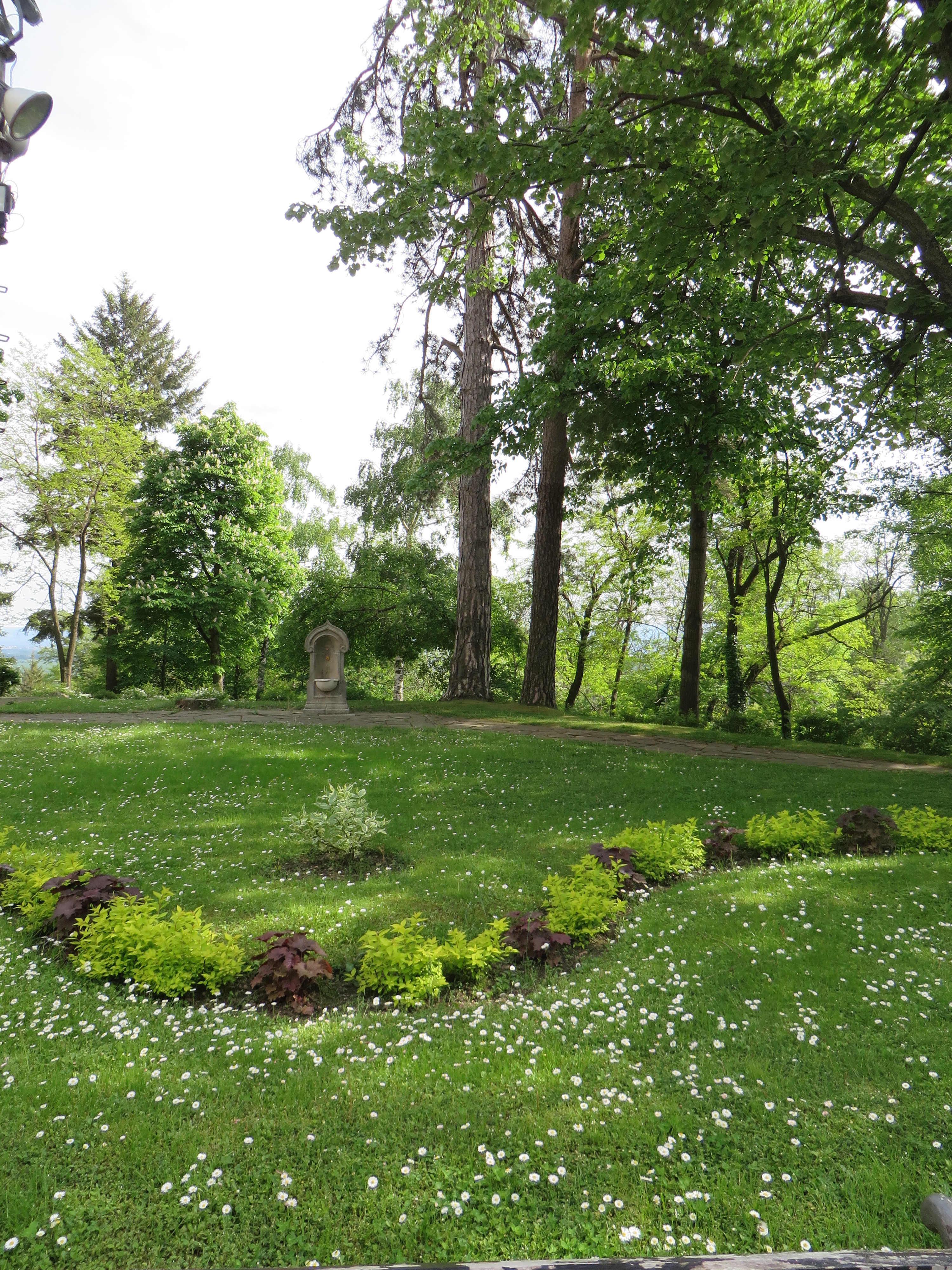
Experience/History: Shipka also offered a peaceful, coolness in the trees on a steep hillside. Walking the grounds behind the chapel, a monastery building could be seen through the trees. I could imagine escape to a community life of discipline as another alternative vision to my travels lasting forever. At this point, the monastery has been used for other things since it was first established, but the church has been restored and made active as a church again.

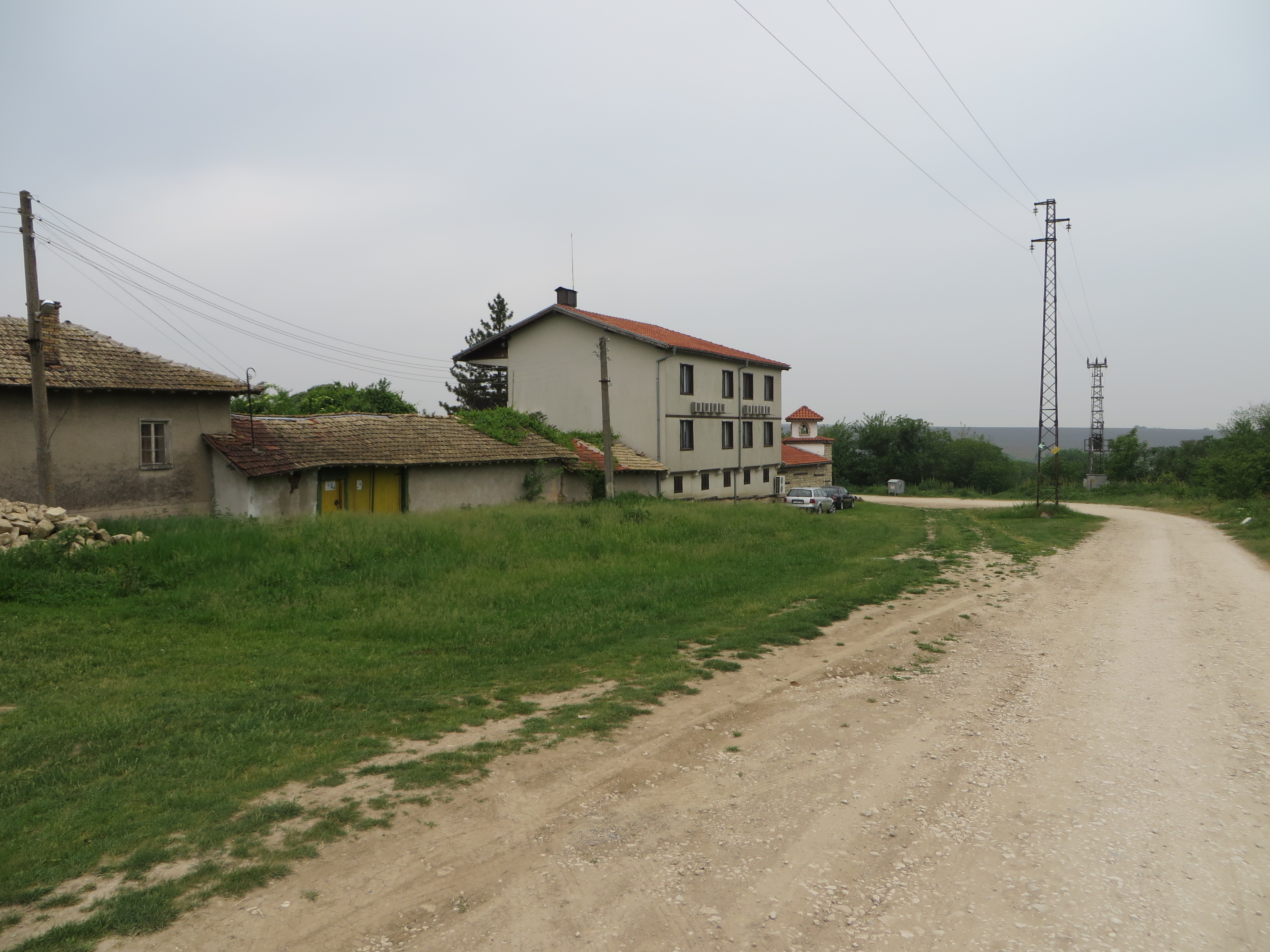
Eco Hotel “Villa Bulgara” at Kyulevcha

 Bulgaria Trip_MNS_5102015 81 Bulgaria Trip_MNS_5102015 82 Bulgaria Trip_MNS_5102015 83 Bulgaria Trip_MNS_5102015 84 Bulgaria Trip_MNS_5102015 85 Bulgaria Trip_MNS_5102015 86 Bulgaria Trip_MNS_5102015 87 Bulgaria Trip_MNS_5102015 88 Bulgaria Trip_MNS_5102015 89

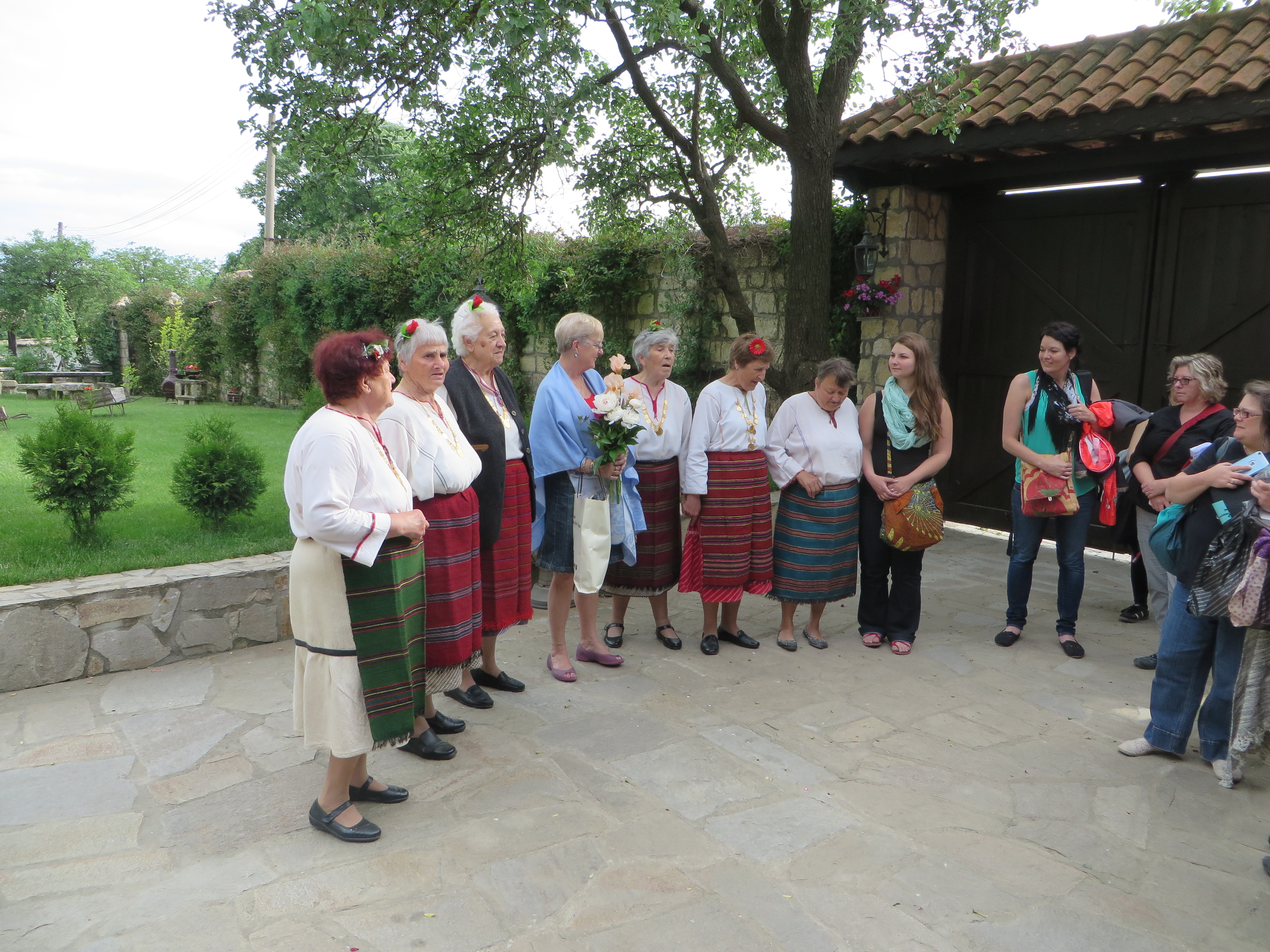
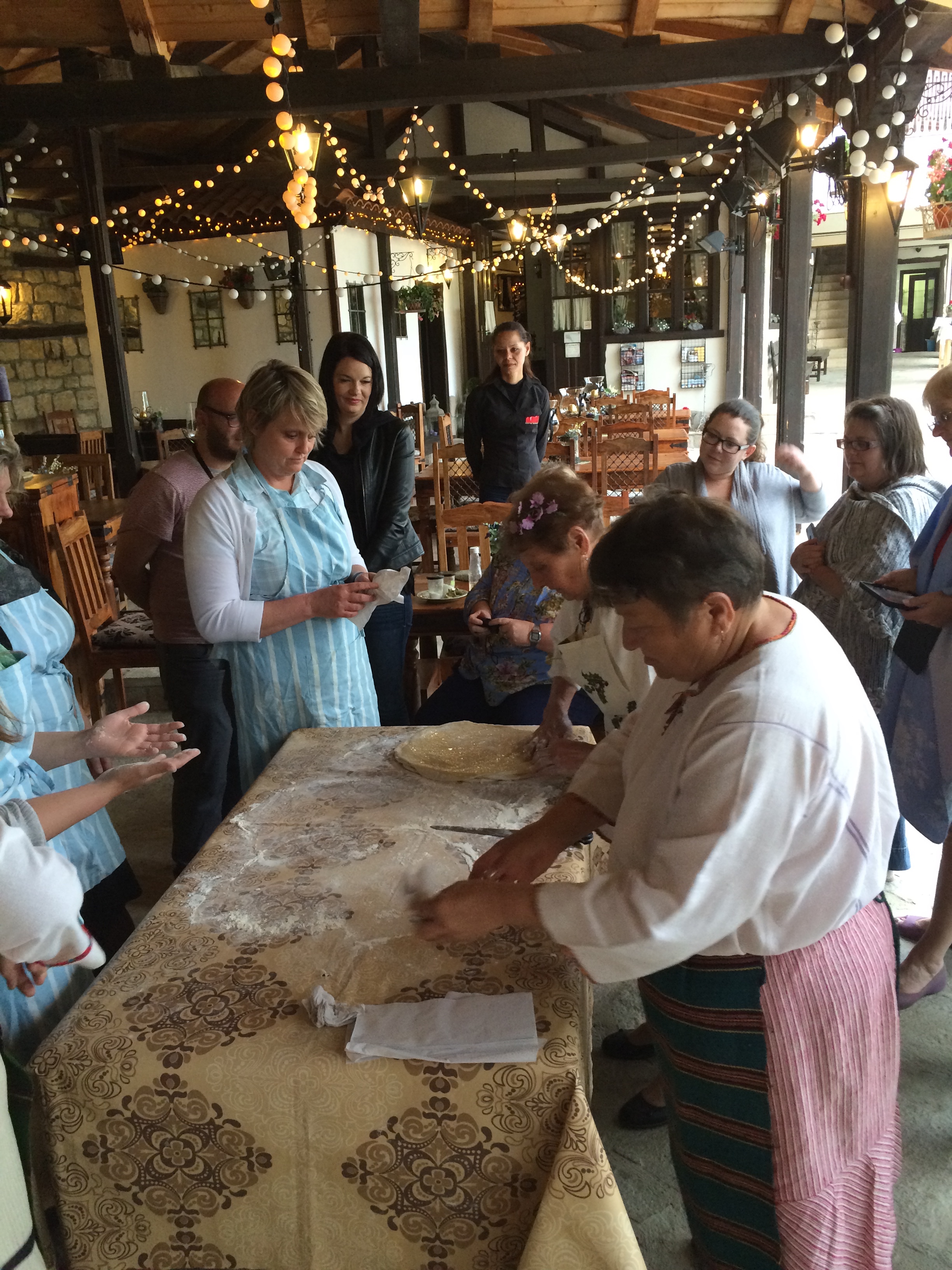
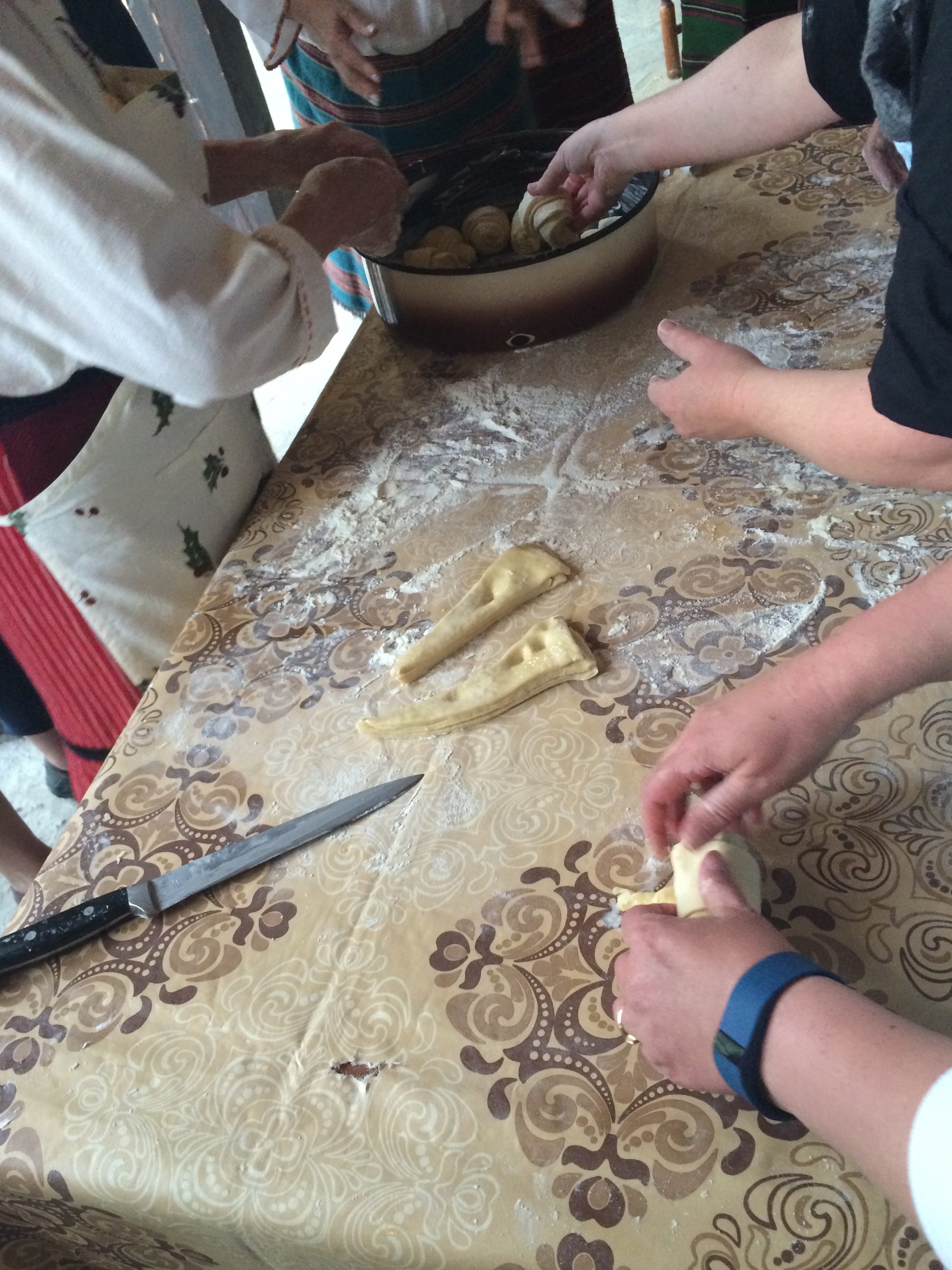
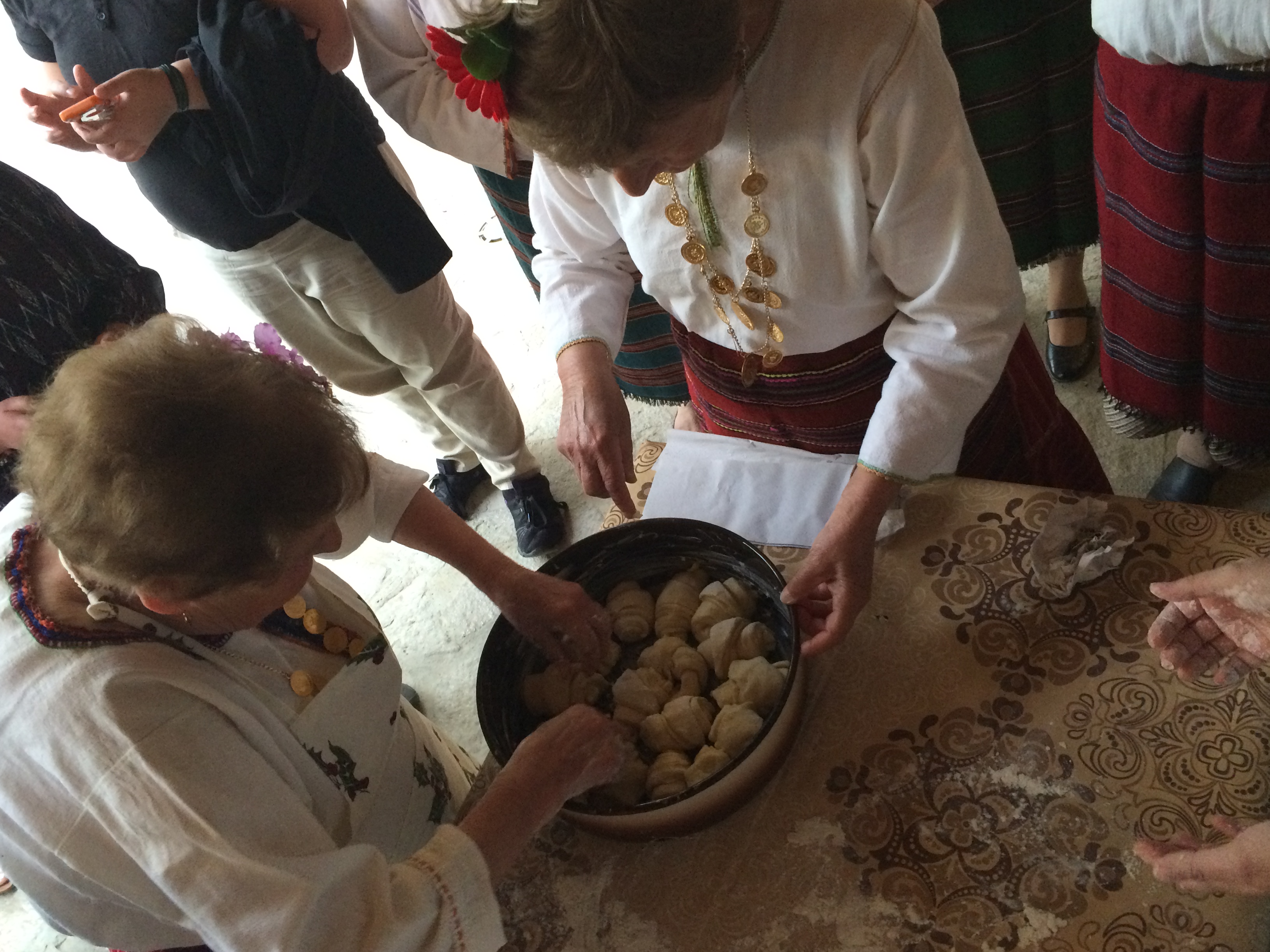
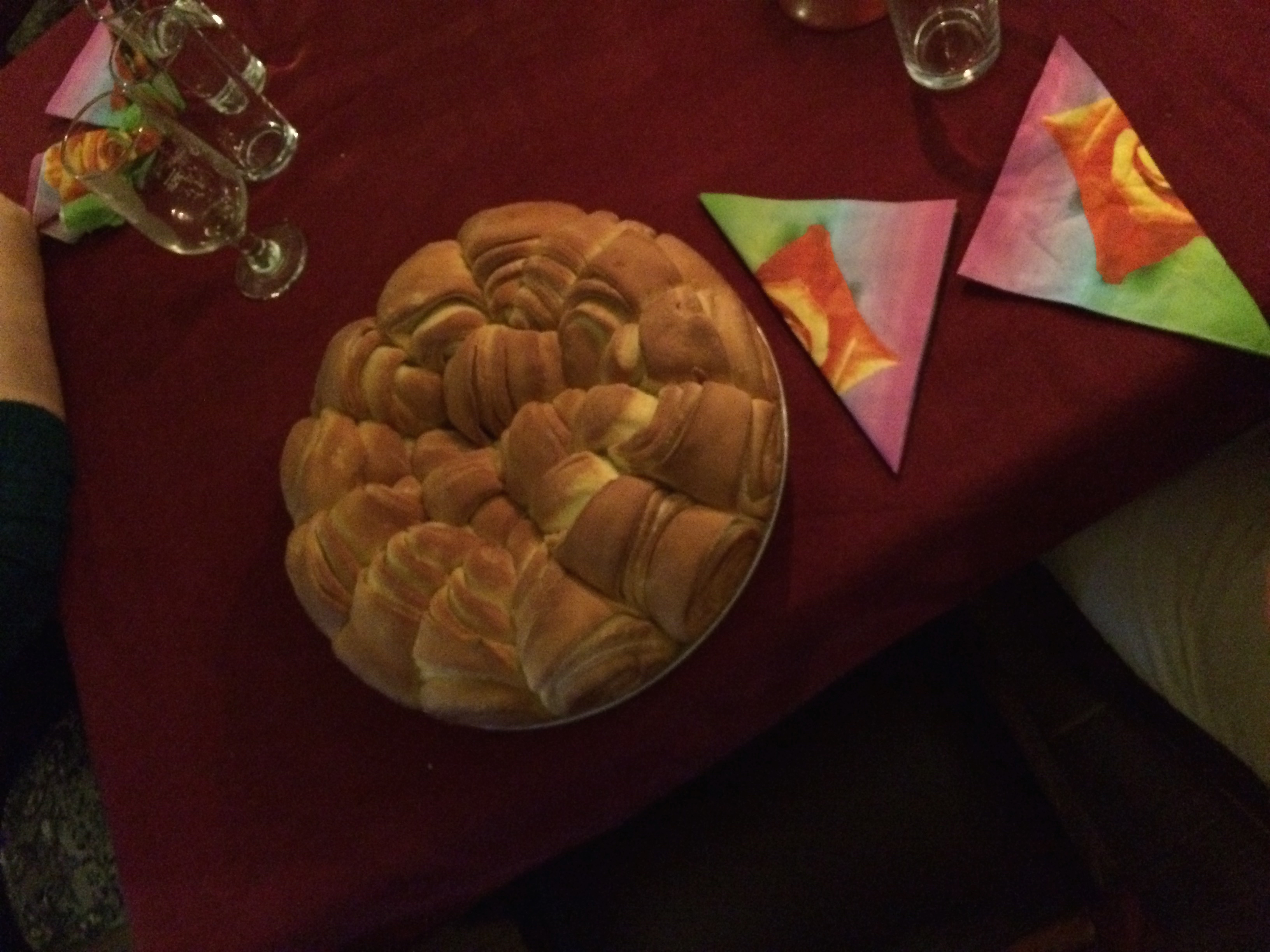
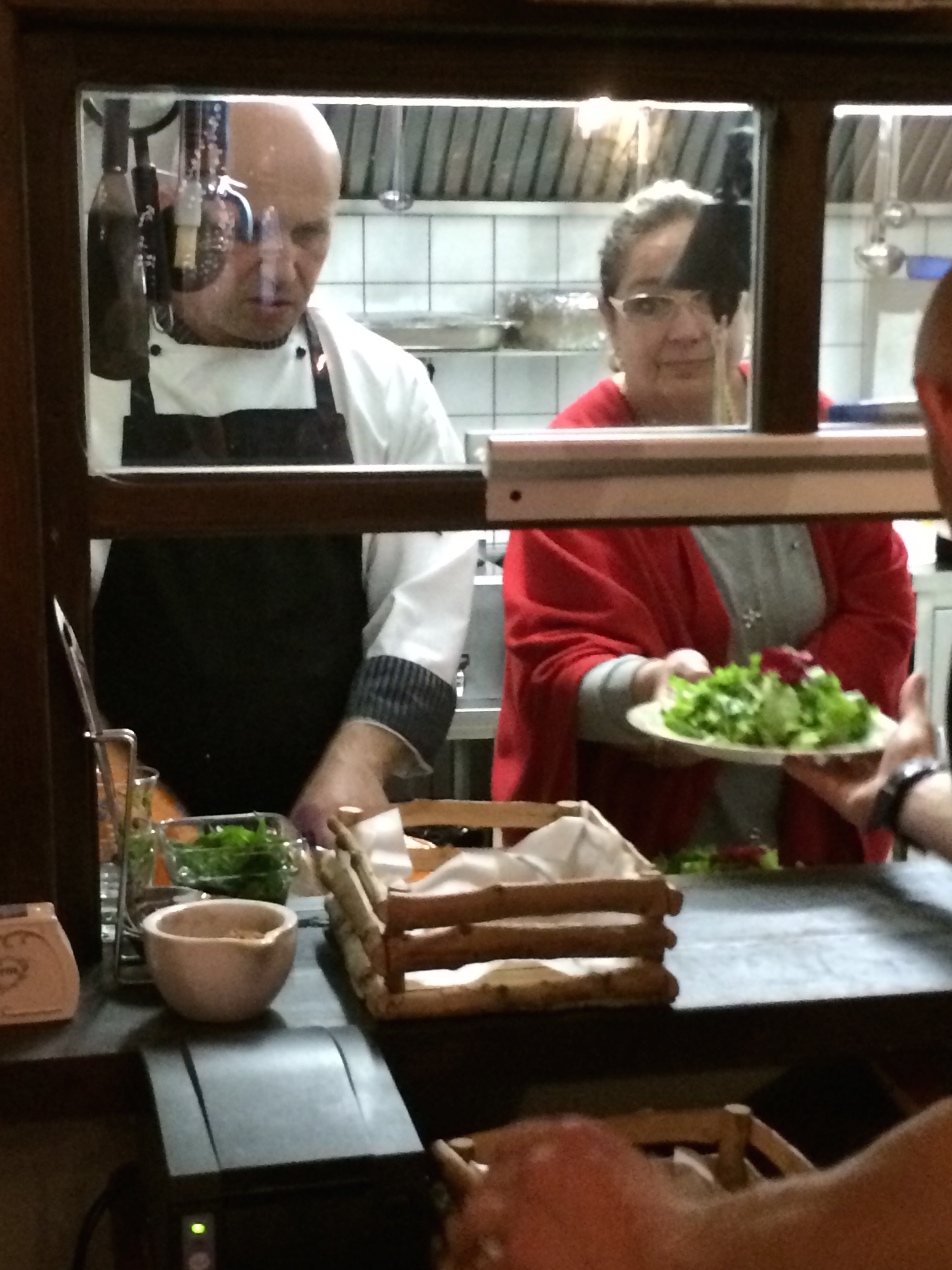
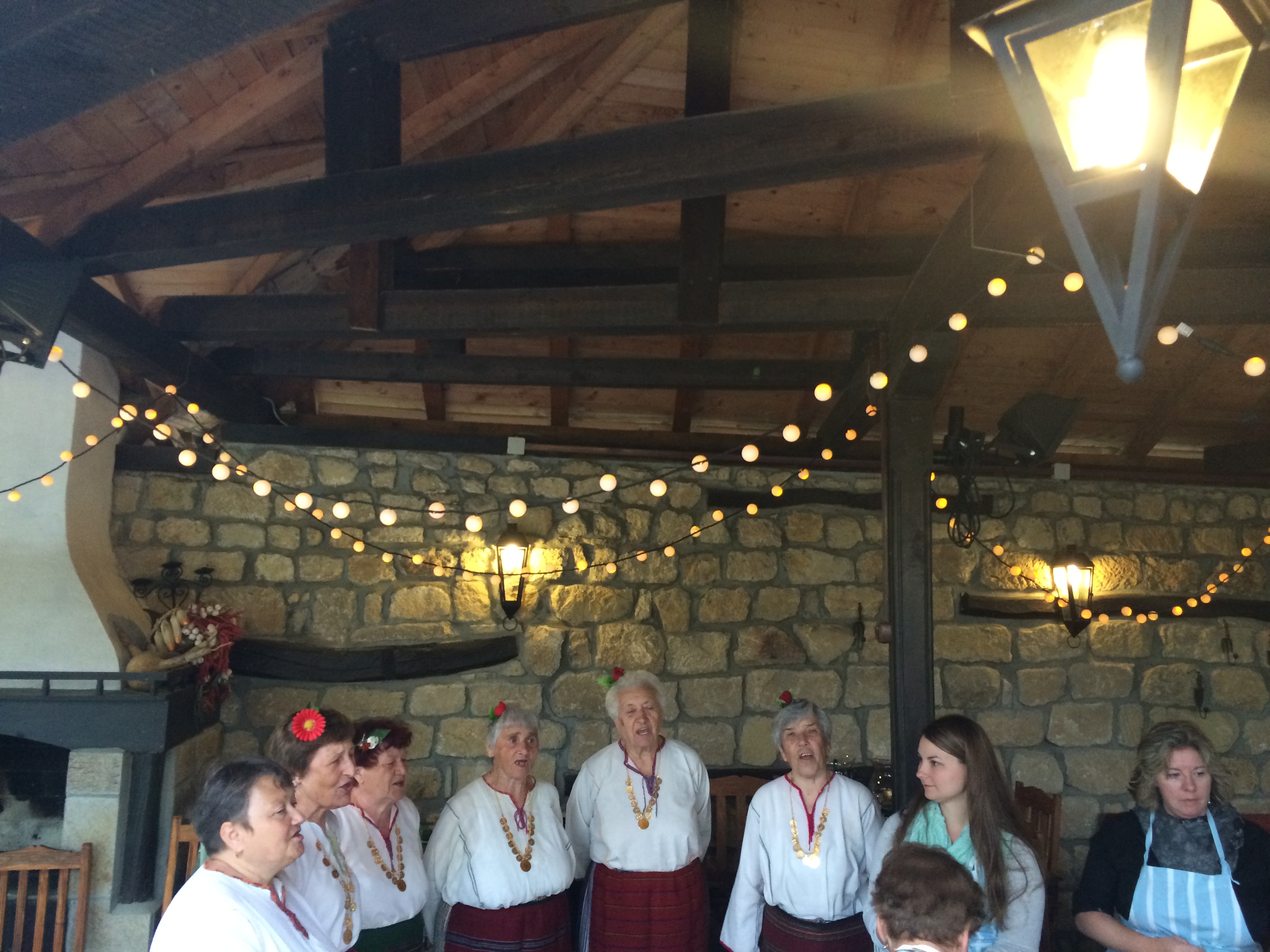
Experience/Culture: The Villa Bulgara was a big treat in offering the warm experience of local women singing traditional songs, teaching our group to dance as they sang, and showing us their bread making and including three women from our group in the process. The dinner there was a slow food experience in that everything we ate was from the local area. The rooms were charming and new. On a walk in the morning, I heard cuckoos calling from trees in a nearby valley. On the other side of the valley, I saw two hotel buildings in progress. I imagined the cooperation with the Villa Bulgara as a special occasion dinner setting; but mostly the couple running the place and cooking our meal reminded me of my neighbors who ran a bed and breakfast together. And through this couple’s efforts, we are able to appreciate local Bulgarian culture that is held over time through individual people, these women who sang for us.

Sunday, May 17, 2015

Walking tour of Sofia

Bulgaria Trip_MNS_5102015 90 Bulgaria Trip_MNS_5102015 91 Bulgaria Trip_MNS_5102015 92 Bulgaria Trip_MNS_5102015 93 Bulgaria Trip_MNS_5102015 94 Bulgaria Trip_MNS_5102015 95 Bulgaria Trip_MNS_5102015 96 Bulgaria Trip_MNS_5102015 97 Bulgaria Trip_MNS_5102015 98 Bulgaria Trip_MNS_5102015 99 Bulgaria Trip_MNS_5102015 101 Bulgaria Trip_MNS_5102015 102 

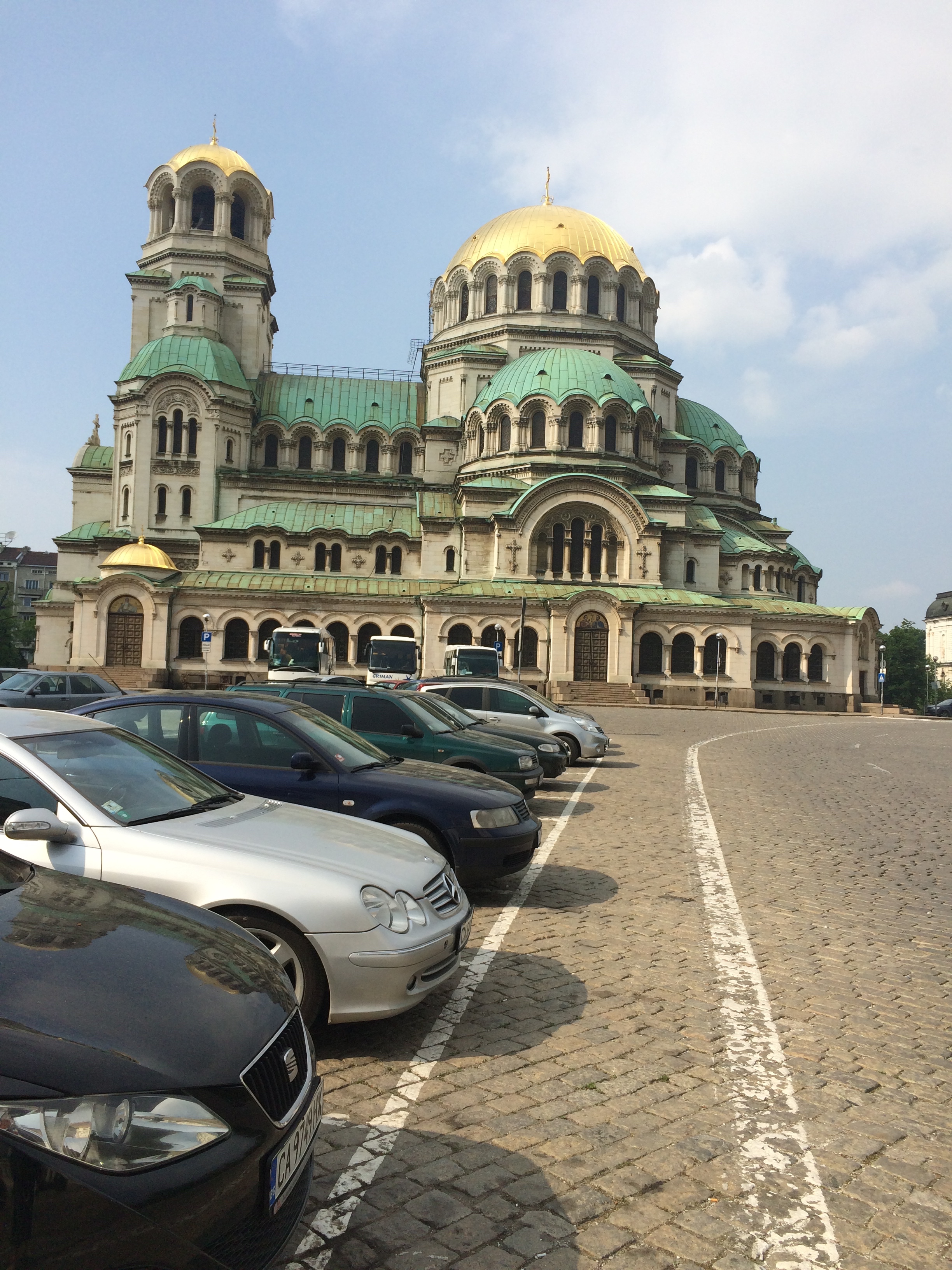
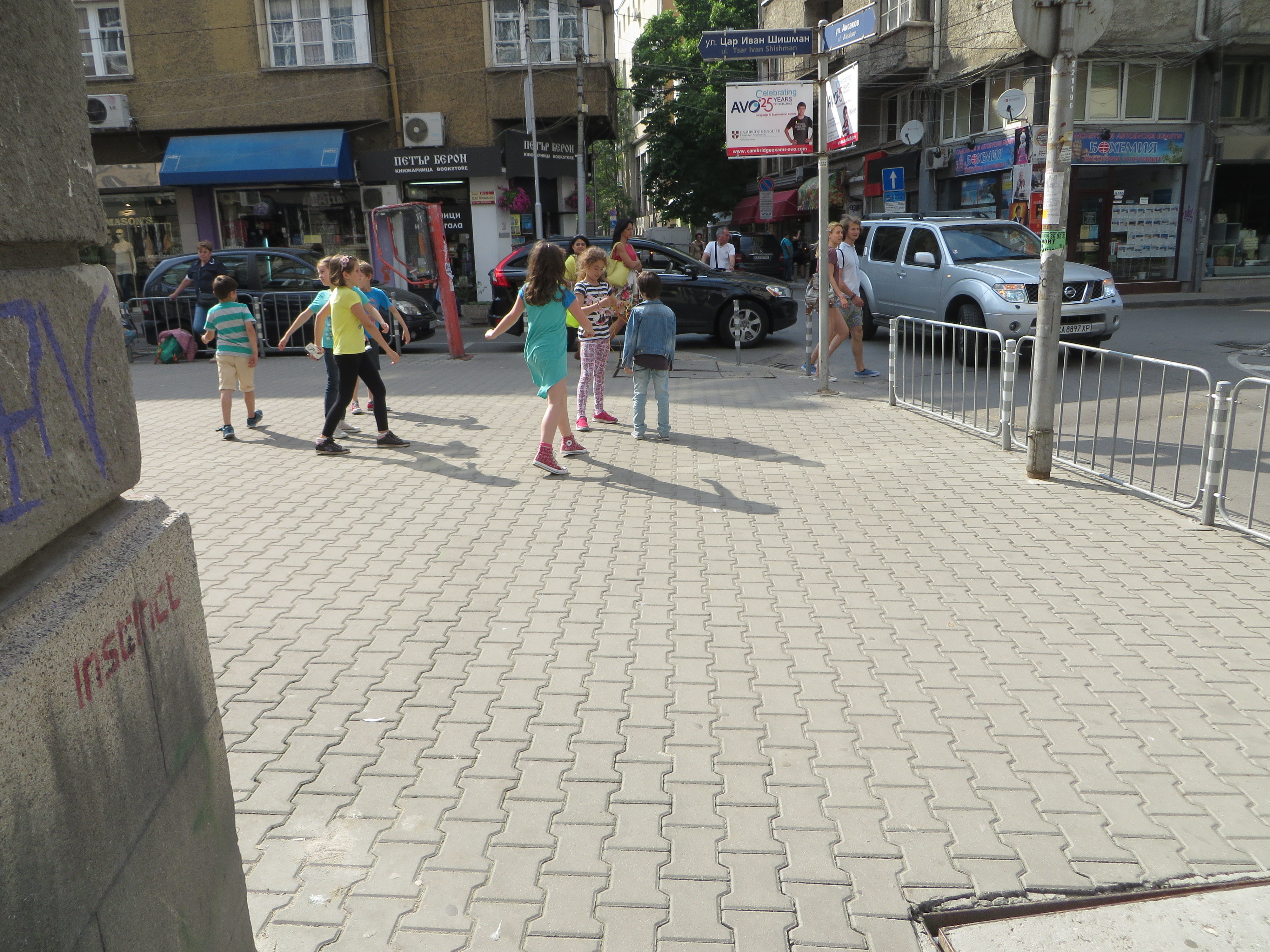
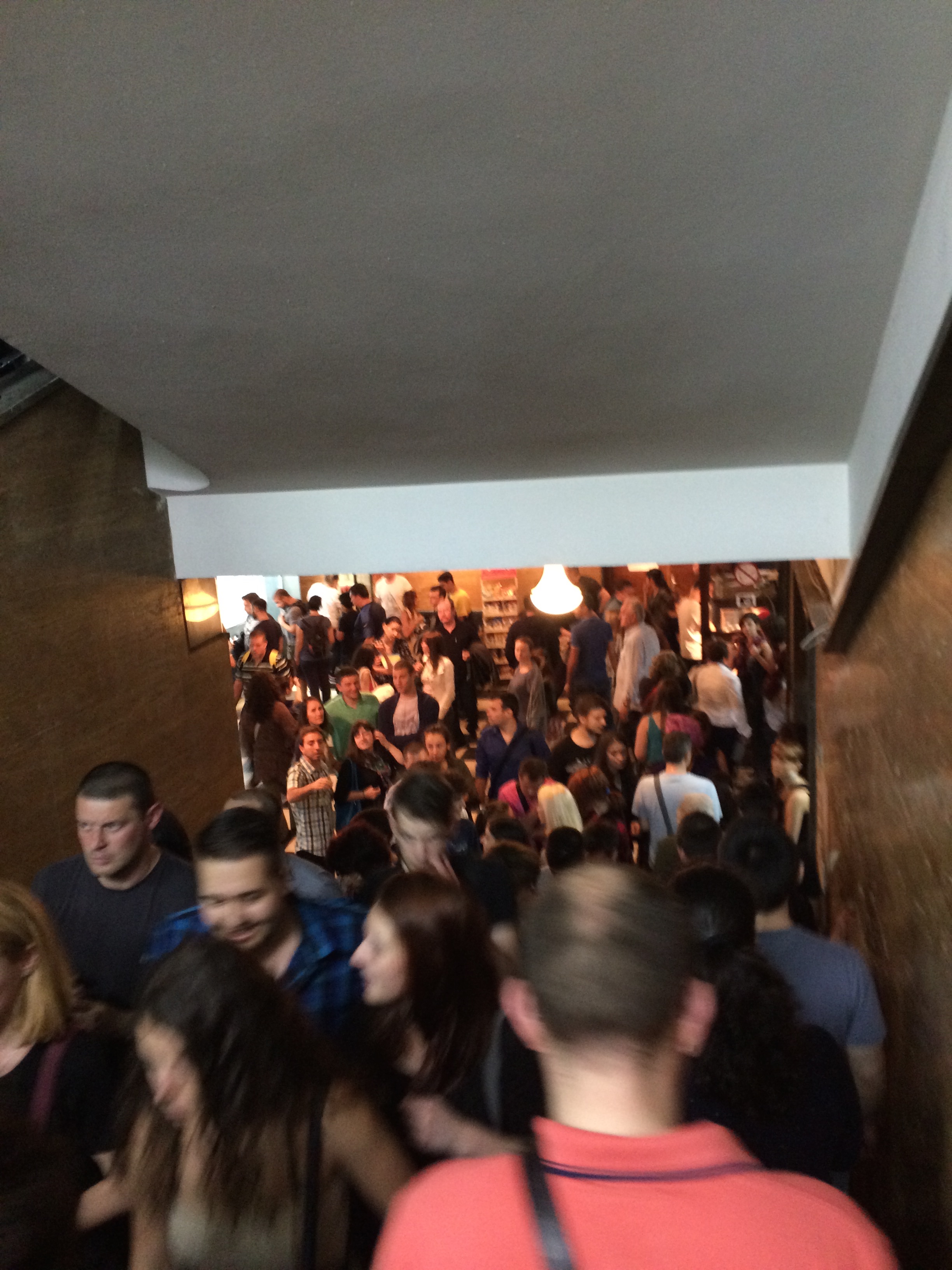
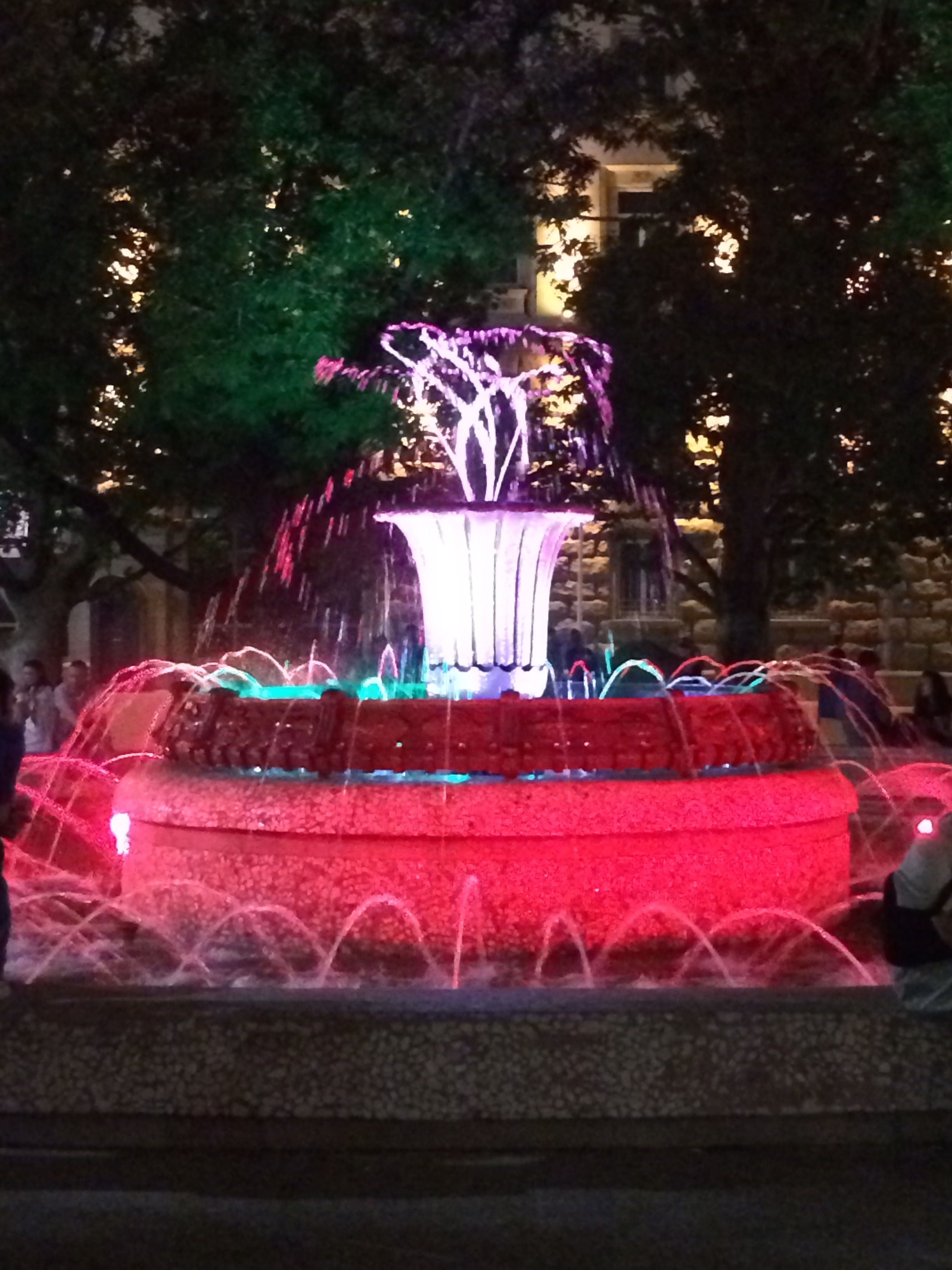
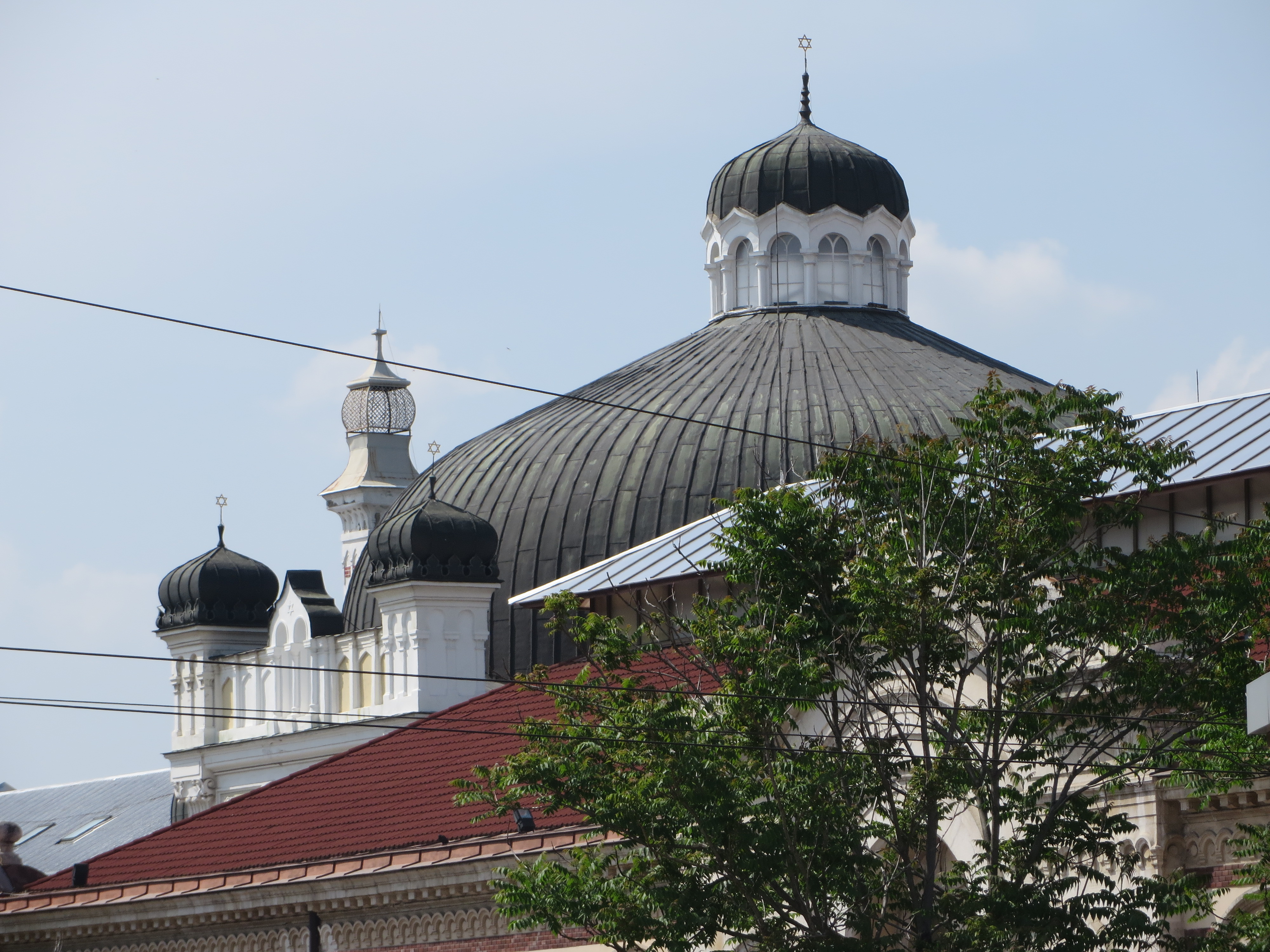
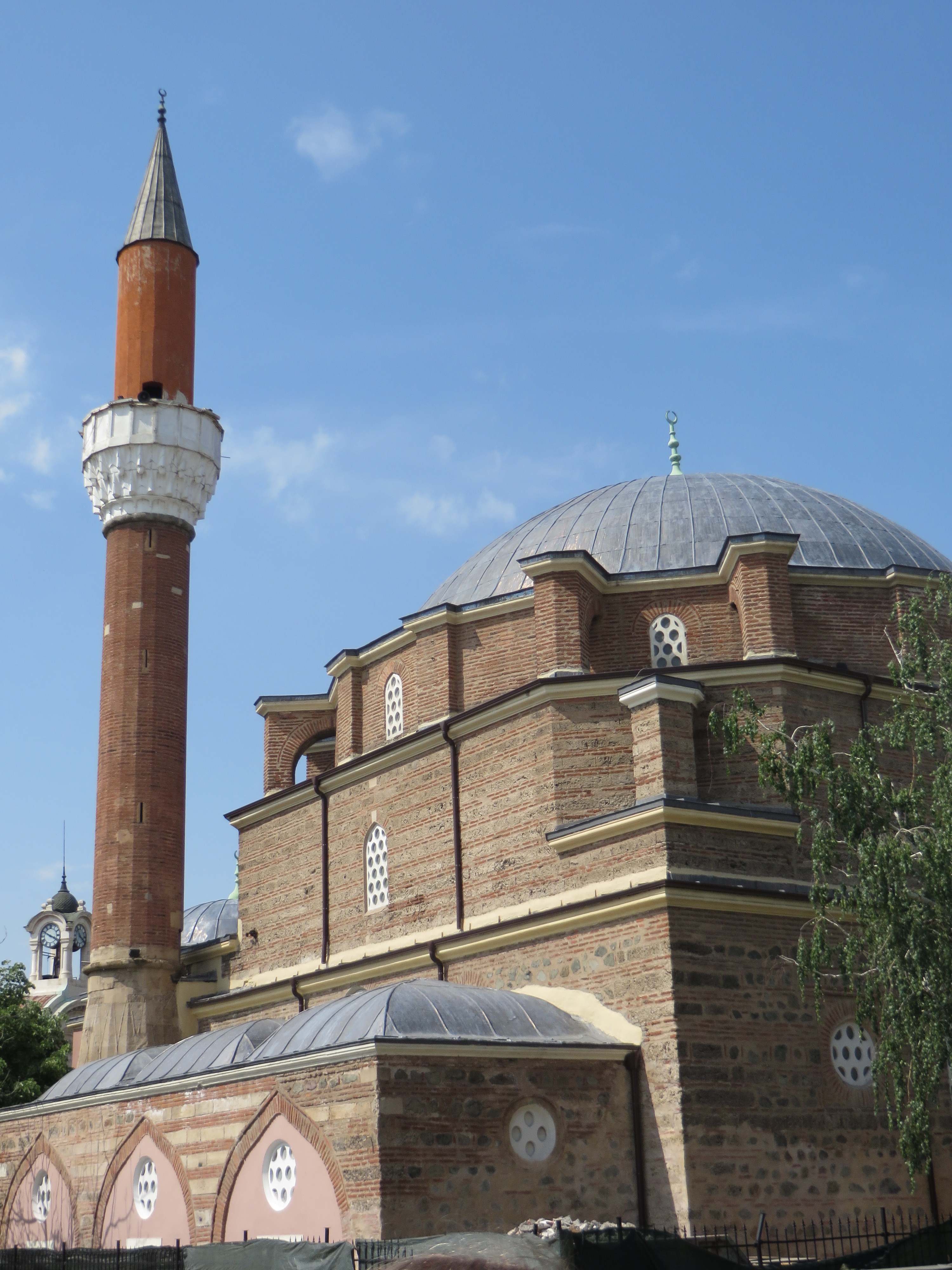
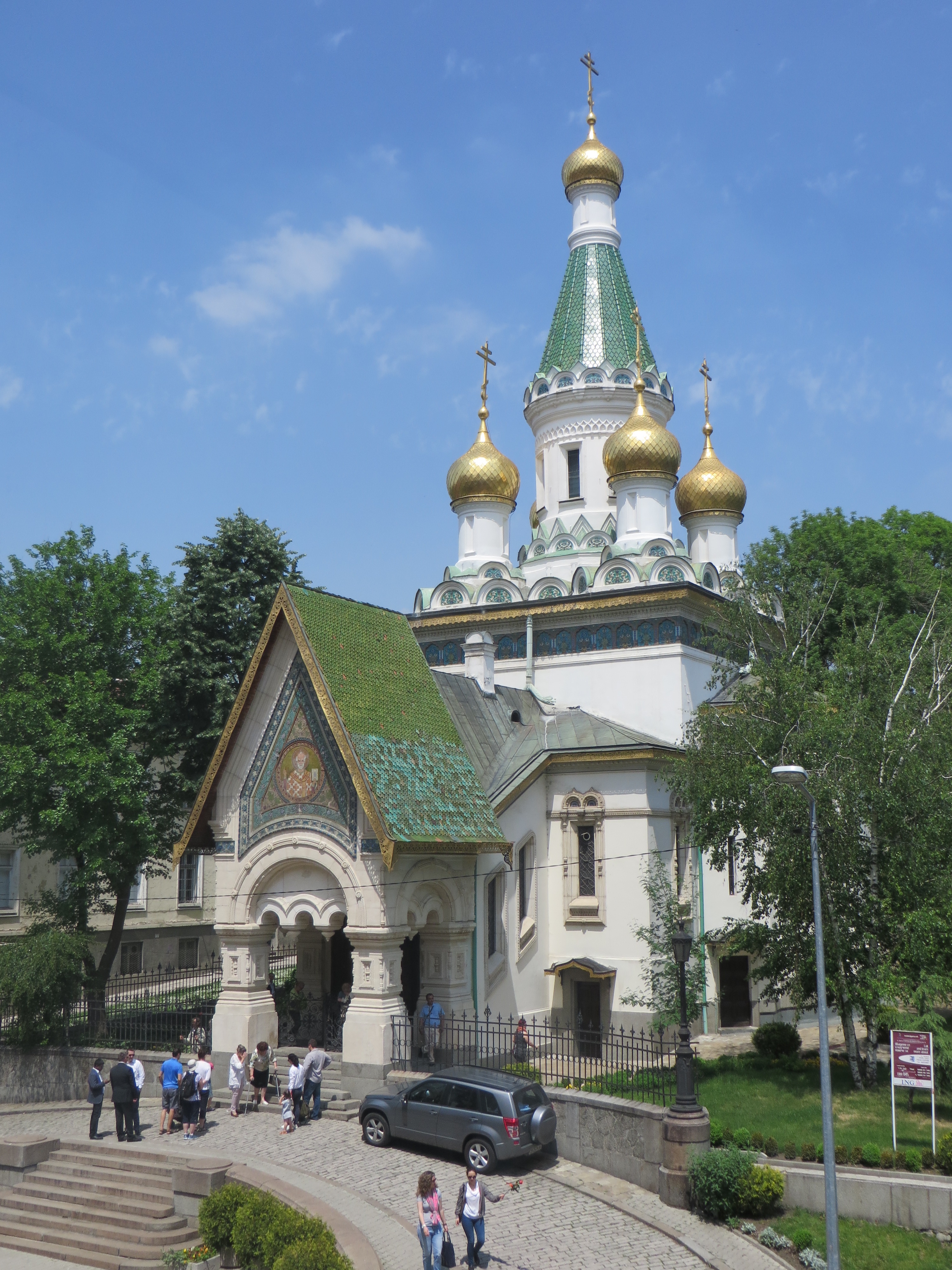
Experience/Culture: The city of Sofia is home to the world’s religions: we took photos of a Jewish temple, a Muslim mosque, and Orthodox Christian churches. One of our group went to a Mormon meeting: she found the meeting place online. The timing of our trip worked out for joining in A Night at the Museums which masses of people turned out for. We found the Natural History museum too packed for comfort, but explored a city gallery, the spectacular fountain in front of the President’s building, and did a lot of people watching. Our lunch on Sunday allowed for photos from floor to ceiling windows on the third floor of a building with views of the yellow brick road and the church of St. Nicholas.


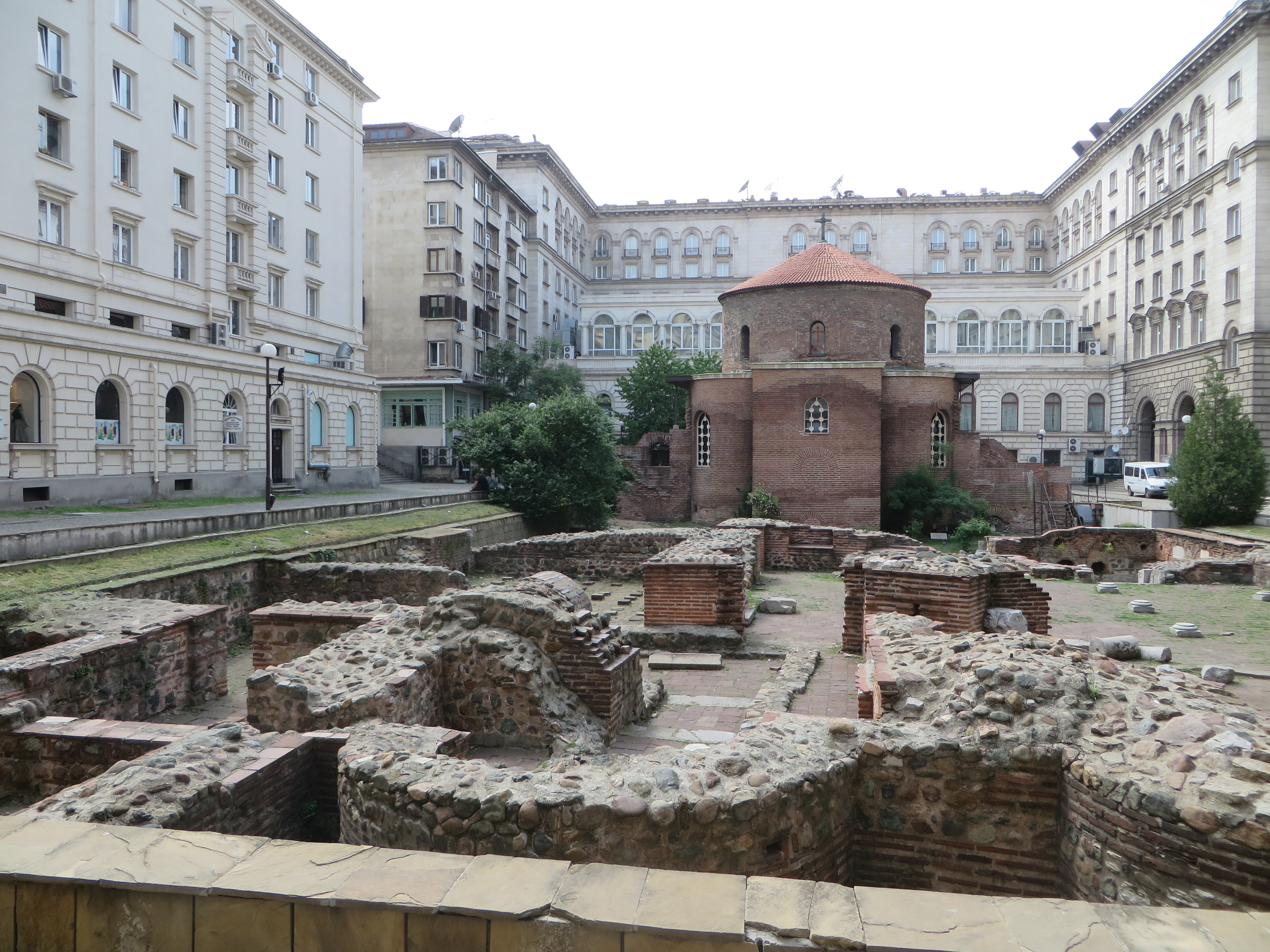
Culture/History: Our tour included the archeology of perhaps the oldest library in Bulgaria, the room under the altar floor of the basilica of St. Sophia. Perhaps critical to the spread of Christianity in the area was the fact that warm water springs fed baptismal pools in the rotunda church of St. and Martyr George the Victor.

Monday, May 18, 2015

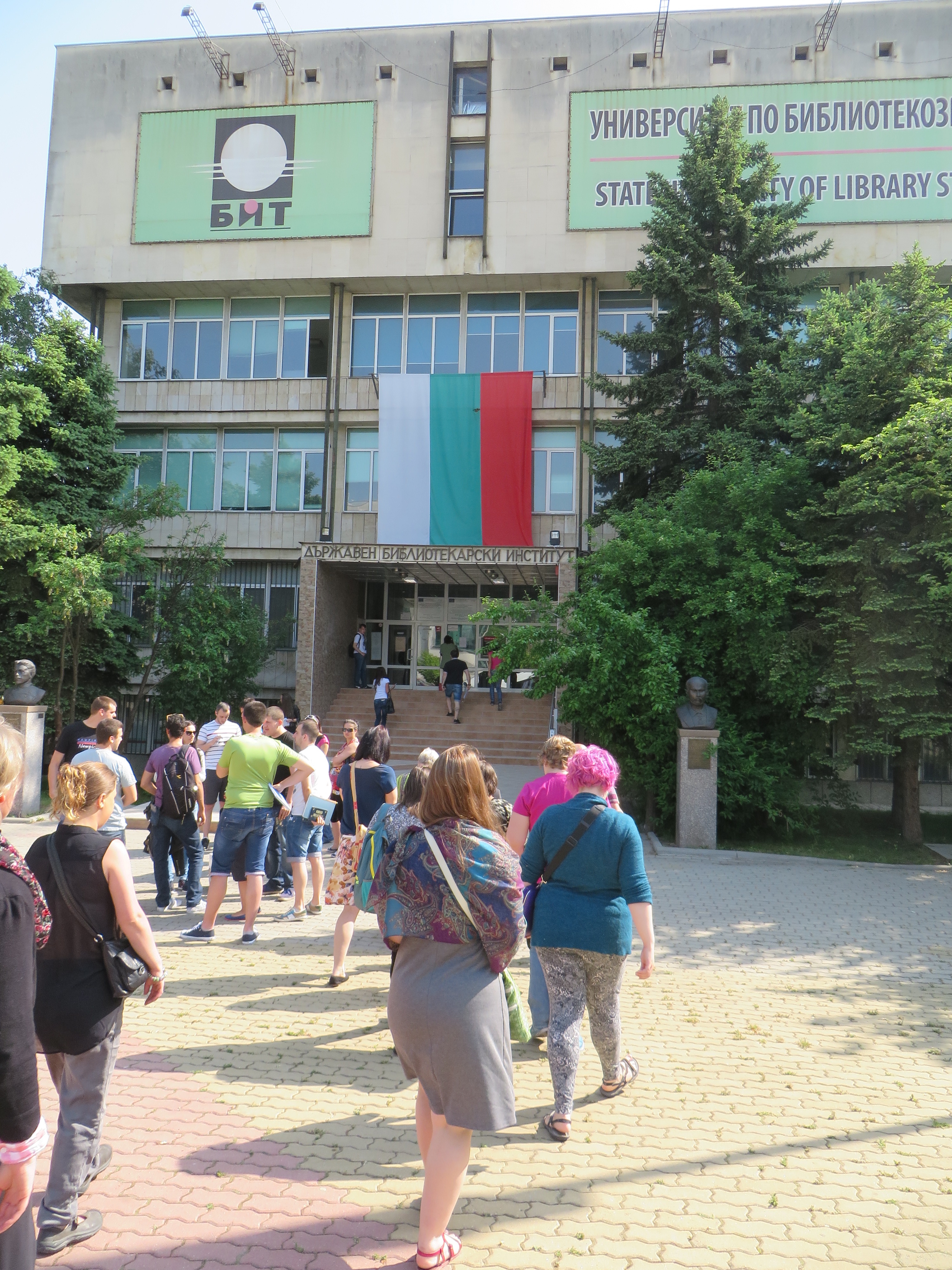
State University of Library Studies and Information Technologies, SULSIT

 Bulgaria Trip_MNS_5102015 103 Bulgaria Trip_MNS_5102015 104 Bulgaria Trip_MNS_5102015 105 Bulgaria Trip_MNS_5102015 106 Bulgaria Trip_MNS_5102015 107 Bulgaria Trip_MNS_5102015 108 Bulgaria Trip_MNS_5102015 109 Bulgaria Trip_MNS_5102015 110 Bulgaria Trip_MNS_5102015 111 Bulgaria Trip_MNS_5102015 112 Bulgaria Trip_MNS_5102015 113 Bulgaria Trip_MNS_5102015 114 Bulgaria Trip_MNS_5102015 115 Bulgaria Trip_MNS_5102015 116

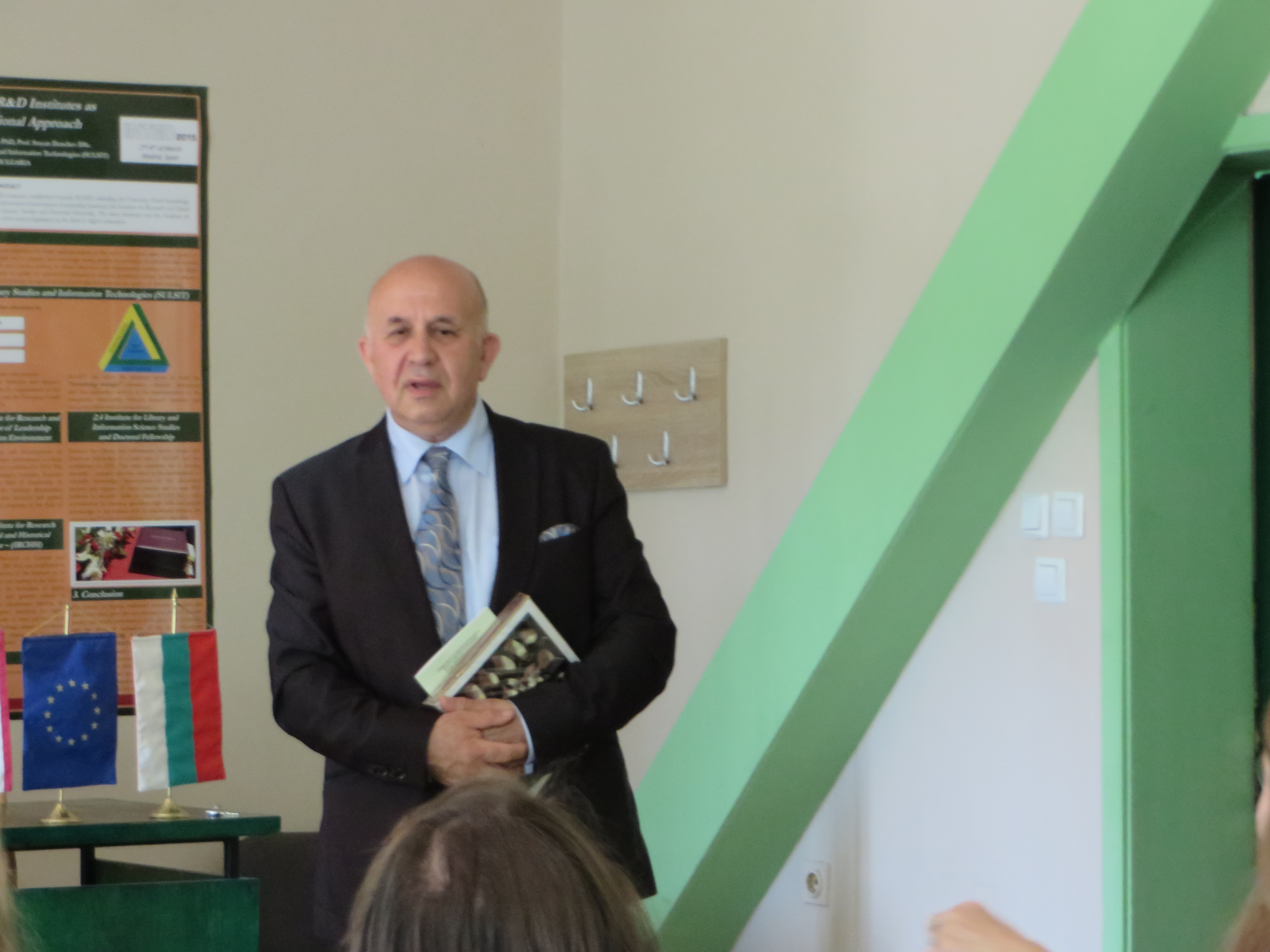
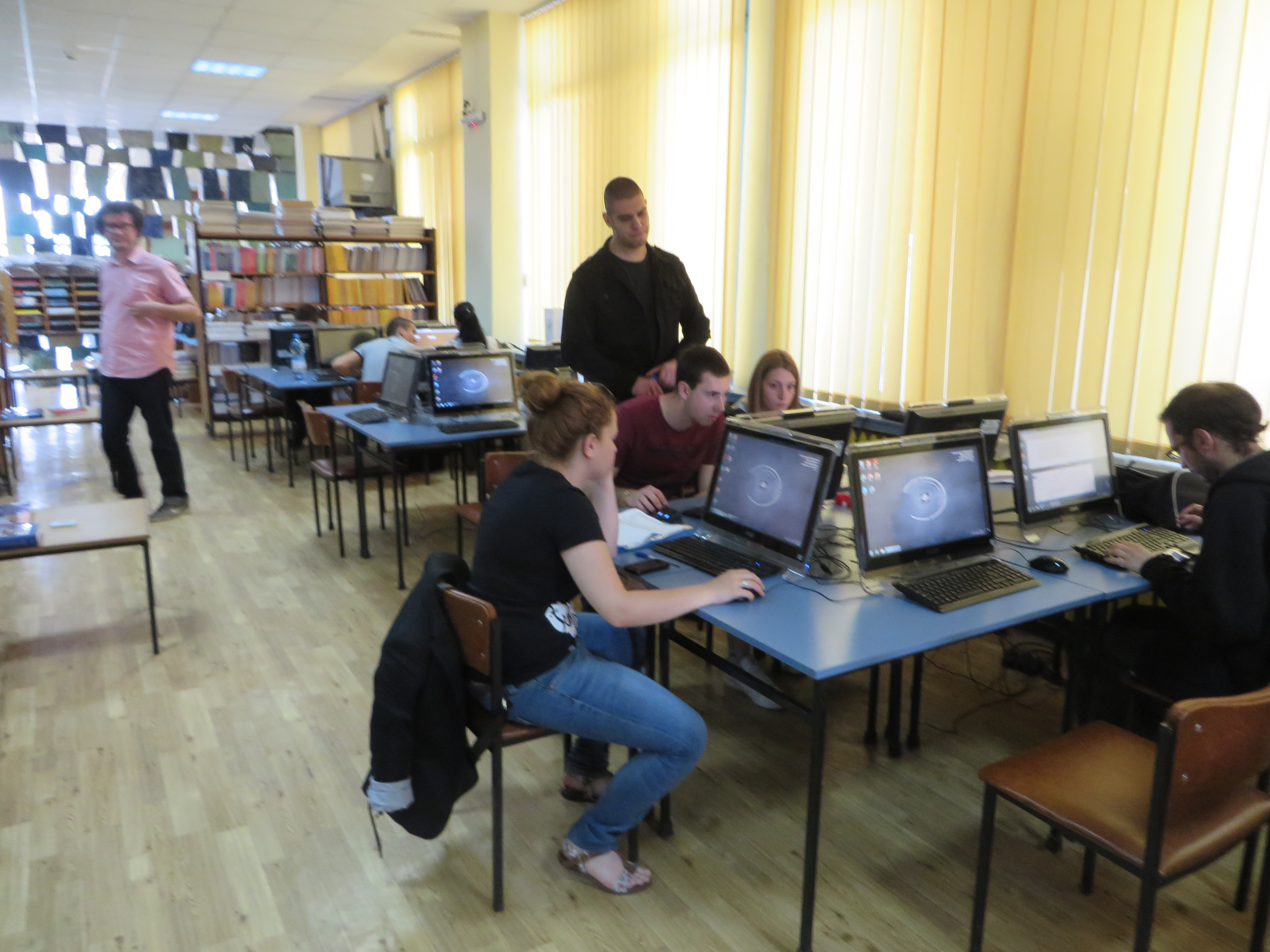
Experience/Learning: The state university library school was a campus that welcomed us warmly and showed us facilities and resources that are functional, bright, and professional. My thought during the formal presentations drifted to my own experience with active learning activities in my courses in the School of Library and Information Management. I hoped that this great Bulgarian library school knows teaching methods as powerful as what I have had in courses with Dr. Sutton, for example; but as the group of students chatted while the director settled into her PowerPoint, I had the thought that newer teaching and presentation methods are born from particular programs or from library instruction articles that get translated into Bulgarian. I hope we can help share ideas for innovative teaching methods with our Bulgarian library school counterparts while respecting the traditions and development occurring in two different countries. Perhaps student exchanges are the best approach.

Return to U.S.

My transition from Bulgaria to home was made during several days in the U.K. in Oxford and London.

I used my time in London to start getting caught up on my email from work at Deets Library, and to get ready for my summer classes at Emporia State University SLIM. I appreciated connecting my travel experience with work I enjoy, library work, and the sense of mission it has for me. I also aired out the emotions of bonding with the travel group and with Bulgaria through Stefan, Luci,(our bus driver), our hosts at the hotels, the grannies, and all the librarians and students we met: the experience had an intensity that I wanted to remember without interruption by people, animals, and chores at home. Enjoying London, pretending I lived there, was a great way to savor the experience of touring libraries in Bulgaria. In fact, my transition to the U.S. started as I added Bulgarian contacts to social media (Facebook). I had been reporting my travels to my own library and family through text and social media, but quickly realized that I would be able to have continued contact with Bulgarian librarians and Stefan, our tour guide, through social media. I have appreciated the concrete contact this provides through photos and text. I have learned to copy and paste the Cyrillic text into Google translator, chunks at a time, to see what people are talking about when the writing is in Bulgarian. Traveling with a tour guide was an experience I hadn’t had before. Stefan acted as our educator and kept our group lively and entertained. I found that his emotional connection to his country (and to the librarians who hosted us) illuminated the context of our presence in Bulgaria.

Summary of experience and learning:

My lasting impressions are the bonds of friendships and perhaps the beginnings of working relationships begun in person: the gift of sharing time and place together in a lively, positive spirit fostered by our tour guide, by the professional nature of the course visit, and most importantly, Nancy Bolt’s connection to all the cooperative work that has been done in the libraries since the mid-1990’s. I cannot thank you enough for the opportunity to tour libraries in Bulgaria!

The latest issue of “Navigator: Colorado Libraries and the World” has been published!

The latest issue of “Navigator: Colorado Libraries and the World” a newsletter of the CAL International Library and Cultural Exchange Interest Group has been published: https://ilceig.wordpress.com/navigator-colorado-libraries-and-the-world-ilce-ig-newsletter/

The group has been busy:

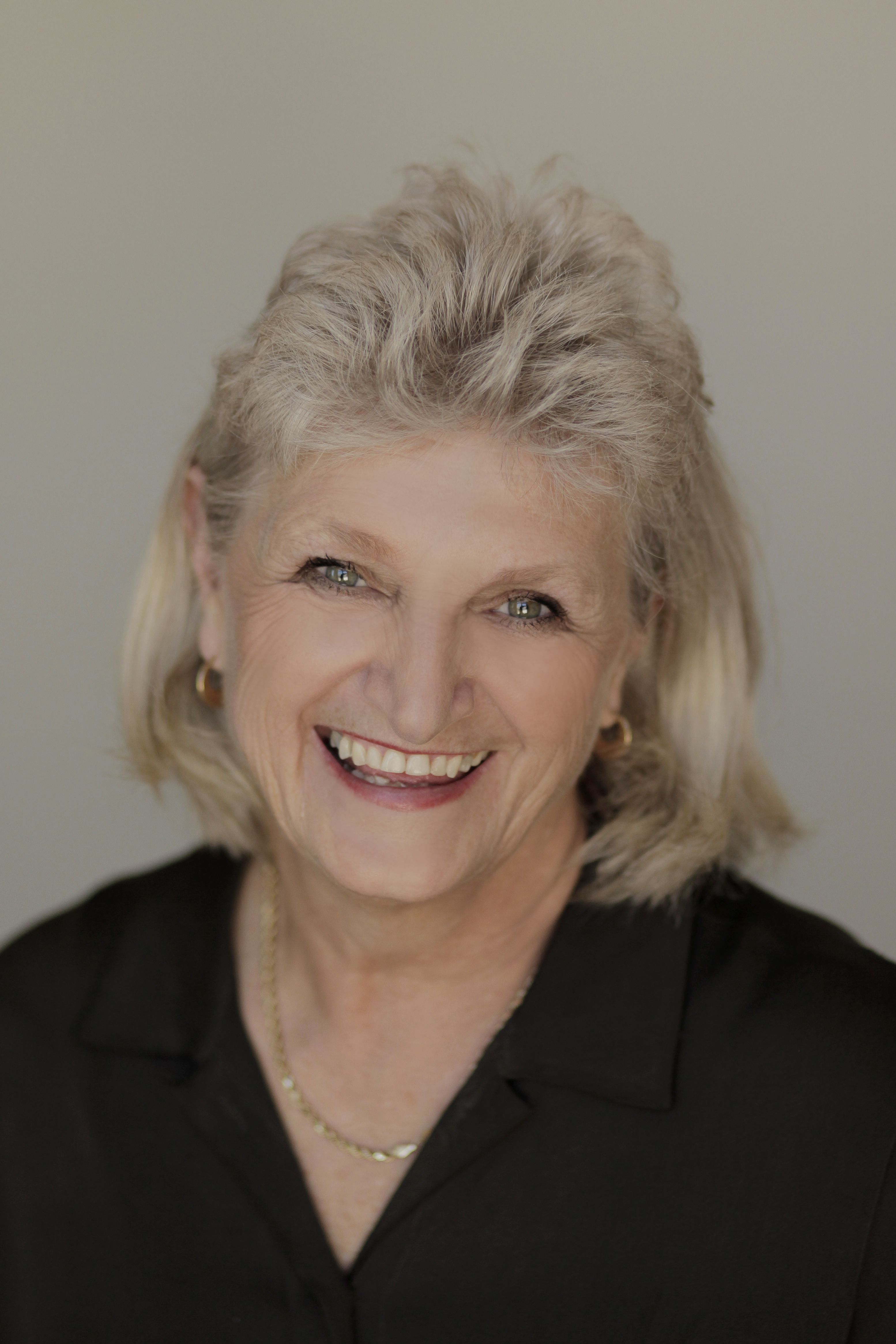
Jane Mirandette (Hester J. Hodgdon Libraries for All Program, based in Loveland and working in Nicaragua) has been awarded the prestigious John Ames Humphry/OCLC Forest Press Award.
Jane photo

We have openings for the CAL/ILCEIG sponsored trip to Nicaragua.

Aurora Sister Cities is conducting a book drive for the public library and school libraries in Nicaragua.

Emporia SLIM students toured Bulgaria

Get a quick update on presentations at ALA San Francisco

Focus on a Project: Axumite Heritage Foundation (Ethiopia), a Denver Sister City.

Interested in becoming involved? Contact Janet Lee (janet.lee35@gmail.com) or Nancy Bolt (nancybolt@earthlink.net)

ILCE-IG WILL SPONSOR A LIBRARY TOUR TO NICARAGUA NOV. 7-16, 2015


ILCE-IG will sponsor a Library Tour to Nicaragua Nov. 7 – 16, 2015

Palacio Nacional : Managua

Palacio Nacional : Managua


Join CAL members on an exciting trip to Nicaragua, November 7-16, 2015 to visit libraries and cultural sites.
Led by Jane Mirandette, director of the San Juan del Sur Library and advocate for libraries, we’ll visit sites in Managua and Granada and visit libraries in San Juan del Sur. For more information, a full itinerary, and registration form, go to https://ilceig.wordpress.com/international-library-tours/

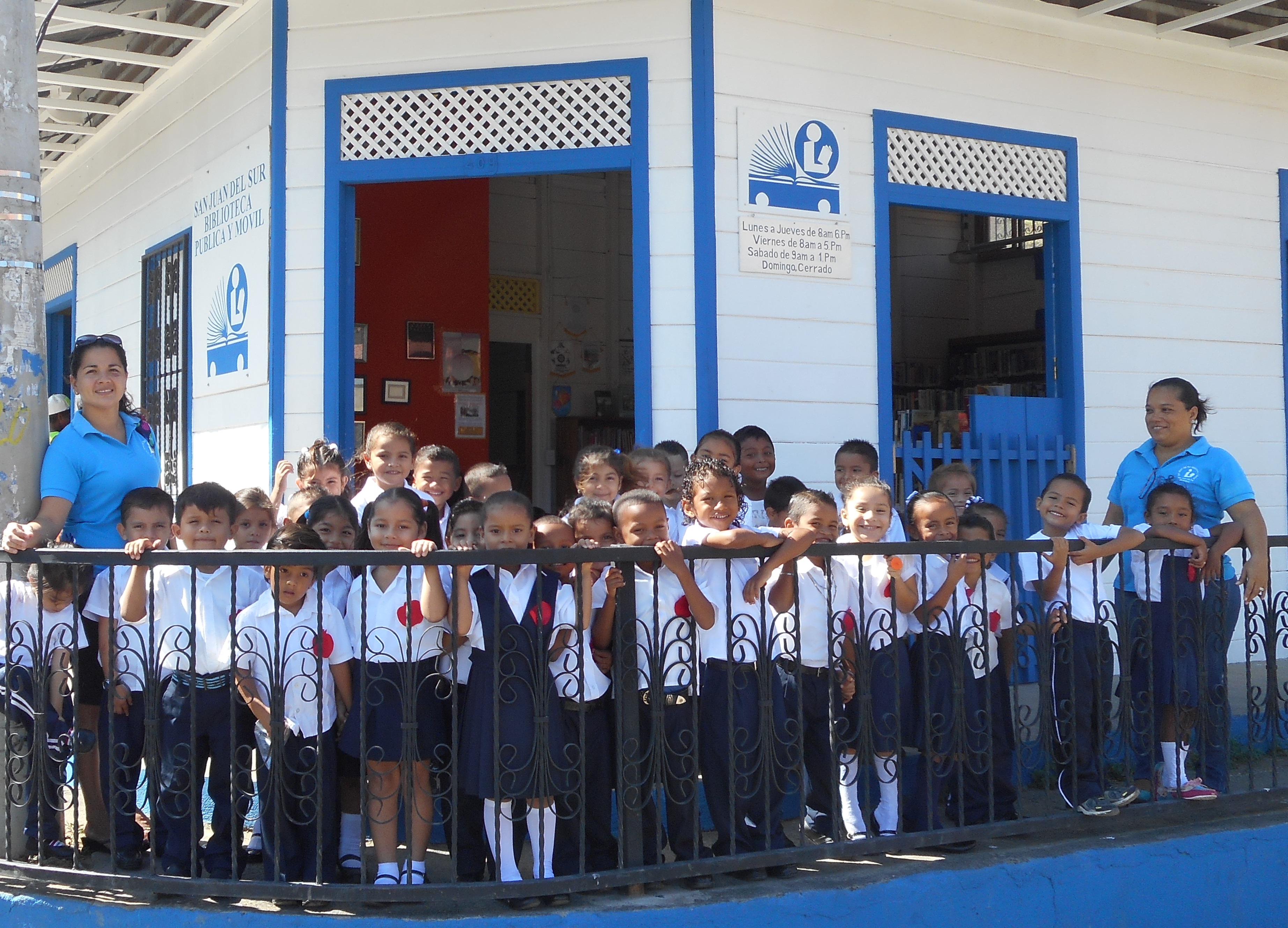
San Juan del Sur Biblioteca, San Juan del Sur, Nicaragua

San Juan del Sur Biblioteca, San Juan del Sur, Nicaragua

People to People Ambassadors

People to People Ambassadors

Visit to Indian Libraries and Cultural Sites

November 2 – 11, 2014


“When libraries open, democracy opens.”

               Dr. Nardiri Khatter, Deputy Librarian, University of Rajasthan


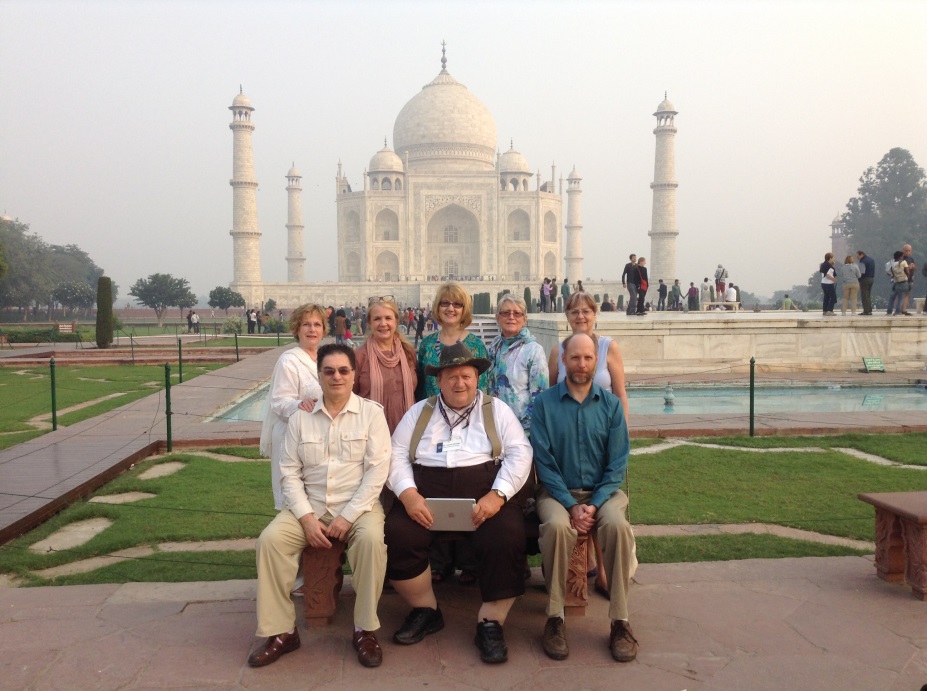
Between November 2 and 11, 2014, eight delegates from People to People Ambassadors visited the Golden Triangle in India:   New Delhi, Jaipur, and Agra.  This exciting trip included visits to the key cultural sites in the areas, visits to local libraries by the professional librarians, and an additional set of cultural sites for the librarians traveling companions.


The Delegates

Back row, left to right:  Karen Watson, Pru Fallon, Betty Luscher, Joan Thompson, Nancy Bolt From row, left to right:  Robert Hubsher, James Morgan, Greg Thompson

Back row, left to right: Karen Watson, Pru Fallon, Betty Luscher, Joan Thompson, Nancy Bolt
From row, left to right: Robert Hubsher, James Morgan, Greg Thompson


Nancy Bolt

Nancy Bolt was State Librarian in Colorado for 18 years.   She left in 2005 to re-establish her library consulting business.  She is currently President of Nancy Bolt and Associates.  She specializes in strategic planning, program development and evaluation, the future of library services, and staff development.  She was Co-Project Director for the development and implementation of the American Library Association (ALA) Library Support Staff Certification (LSSC) Program.  Nancy has been active in international library work for 20 years.    She has been Chair of the ALA International Relations and currently she serves as Secretary of the IFLA Standing Committee on Library Services to People with Special Needs.

Betty Luscher

Betty Luscher has worked at the Corona Public Library in Corona, California since receiving her M.L.I.S. from San Jose State University in 1996. She was Technical Services Supervisor for 9 years before moving to her current position of Youth & Outreach Services Supervisor in 2012. Every month Betty recruits close to 50 teen & adult volunteers through an orientation and brief interviews. Through the Adult Reading Assistance Program, Betty pairs volunteers with functionally illiterate people who need to improve their reading skills.  In 2012 she received a grant to overhaul the library’s Spanish-language collection. She is a member of ALA and the International Relations Round Table of ALA.

Robert Hubsher  

Robert Hubsher is the Executive Director of the Ramapo Catskill Library System (RCLS), a cooperative public library system serving 47 libraries in four New York counties.  Passionate about intellectual freedom, privacy, and information fluency, he has recently been accepted as an Ambassador for Privacy by Design (PhD) an organization that addresses the effects of information technologies and large-scaled networked data systems.   As CEO and Chief Librarian of the Cornwall Public Library, ON, Canada, Robert managed the construction and renovation of the new library building and automated services. With his partner in PLAN22 Archibrarians, Karen Watson, he advises librarians during all the stages of their library building projects.

James Morgan

James E. Morgan is a retired librarian with thirty years’ experience in correctional libraries in Arizona, Nevada, and California.  His last position was at the California Youth Authority in Stockton, California.  He worked at the Arizona State Library as the Institutional Library Development Consultant where he developed a training program for Institutional Consultants in 11 western states.  James is a past chairman of the Library Services to Prisoners Section of the American Library Association and created five programs for prison librarians at ALA conferences. He also chaired the Membership Advisory Group on Library Service to the Developmentally Disabled, and was a past member of the Bibliotherapy Forum of ALA.


Prudence Fallon 


Prudence Fallon is the Adult Services and Reference Librarian for Tiverton Library Services in Tiverton, Rhode Island.  Her duties include adult collection development, programming and reference work for the Essex Public Library and coordinating community service workers and volunteers, book clubs, proctoring, updating the website, computer trouble-shooting and more.   She is currently working to facilitate a move to a brand new, larger library in the spring.  She works with Ocean State Libraries where she is lead purchaser of e-books for the state and on the Digitization and Adult Services Committee and Reference Working Group.  Prudence previously worked in the corporate field for 25 years in Communications, Marketing, Procurement, Research & Development and Consumer Affairs for Ocean Spray Cranberries.


Greg Thompson 

Greg Thompson works at the Carmel Mountain Library, a Branch of the San Diego Public Library in San Diego, California.   He works as a Library Aide at the library where he helps maintain the library collection and helps library use find the materials they want.  He is currently working on his Master’s in Library Science.

Karen Watson

Karen Watson is an Architect. She is particularly interested in coaching librarians to effectively communicate their libraries’ needs to architects. With 35 years’ experience in construction, specification writing, strategic planning, construction safety, interior fit up and residential, commercial and institutional building design, she wants to contribute to the success of the next generation of librarians as they build the future of libraries.  She and her partner Robert Hubsher are authors of “Making the Case for Your Library Building Project – Library Development Guide #5″, for the Southern Ontario Library Service (SOLS). She developed and presents webinars to the SOLS Advanced Public Library Leadership (APLL) Institute.

Joan Thompson


Joan is a counselor and coordinates programs for low income community college students at San Diego Miramar College. She has served at Miramar for 35 years. Her interest in libraries stems from childhood where weekly trips to the local library were a special time. As an educator, she values reading and learning as a way out of poverty.


NOTES FROM THE PROFESSIONAL VISITS

As part of our visit, the professional delegates participated in two conferences and visited three libraries.  The conferences were held at the National Institute of Science, Technology, and Development Studies (NISTADS) and DELNET.

NISTADS

Our first professional day began with a visit to NISTADS, an organization devoted to studying various aspects of the interaction among science, society, and the state.   The NISTADS sponsored conference, Library Information Systems and Services:  Challenges and Opportunities, had nine speakers in about 3 hours.   In introducing the conference, Dr. P. Banerjee raised issues faced by Indian libraries:  increasing digitizataion; the multitude of languages spoken in India; low-level literacy, particularly in rural areas; and lack of local library use.

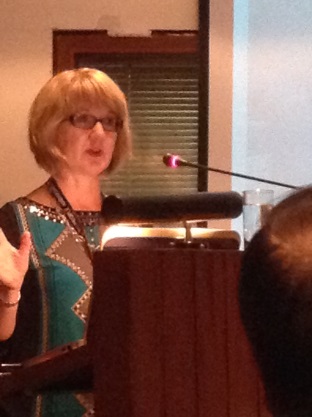
Three of our delegates made presentations.   Team leader Nancy Bolt discussed Predicting the Future:   Eight Emerging Trends in Library Service:  the changing role of libraries; the format expansion of library collections; the need to support community economic development; the library as an educational center for all ages; continually arriving new techbnology; the need for new library staff skills; the library as a community hub; and the need to recruit people to advocate for library service.

Nancy Bolt

Nancy Bolt

Nancy Bolt


Betty Luscher

Betty Luscher

Betty Luscher


Robert Hubsher

Robert Hubsher

Robert Hubsher

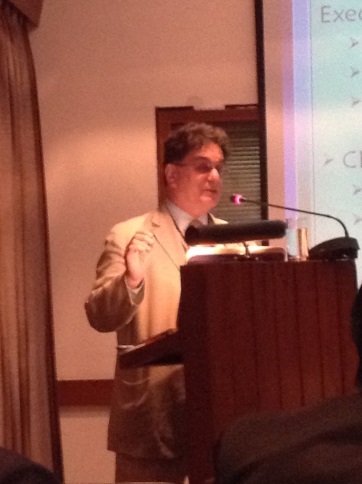
Delegate Robert Hubsher spoke on Intellectual Freedom and Privacy in Libraries:  Challenges in the Ditigal Age.   He began his presentation by acknowledging the impact that Indian philosopher and librarian, Dr. S. R. Ranganthan, had on his career and on the development of Indian public libraries.  He discusses this in more depth his the attached narrative.

Hubster went on to define intellectual freedom, privacy, and confidentialty.  Hubsher praised the role of libraries in protecting these three principles on behalf of their users and  asked who controlls the data collected by vendors in integrated library systems (ILS) that is stored in a digital cloud?   The issue of privacy and confidentiality is particularly sensitive in the arena of social media.   After his presentation, one Indian attendee described Robert as courageous in his defense of these principles.

Betty Luscher, discussed the history of the Corona Public Library in Corona, California and what it faces in the future in Profile of a U.S. Public Library:  Its History, Challenge, and Successes.  Betty described how the community has grown and the struggles of the library to keep up.  From 1993 to today, Corona’s population has increased over 5 times.  Staffing rose along with economic & population growth, but now is back to the same level as in 1990, at 40 employees.   Meanwhile the book budget had dropped from $97,000 to $71,282.   Despite this the library has purchased books, online resources, and audio-visual materials  thanks to fees, donations, fund-raising events and grants.  The library has both a Friends group and a Foundation that raise funds to support the library.  Betty described the multi-source funding of the library and the popular services it offers.  The library will be changing again because of a recent merger with the city’s  Recreation Department.

For the Indian conference contributers, there were several highlights.   Mr. H. R. Meena described the services of the New Delhi Public Library (NDPL) which were remarkably similar to the services of large public libraries in the US.   A disappointment of the trip was that our schedule did not permit a trip to this library, particulalry after we heard Mr. Meena’s description. Through it’s 24 braches and 25 deposit collections,  NDPL provides free public library service to the residents of New Delhi including print and AV materials; digitization of rare books, reference, children’s programs, 120 computers (less than would be in a US public library of this size), book mobiles for rural areas, and services to the incarcerated in prisons.  They also offer an impressive array of cultural programs such as dance and music programs, creative writing, film, and exhibitions as well as training of library staff.  As is true in US libraries, usage is up but budget cuts reduce the number of staff.

Professor B K Sen from the India National Science Academy discussed the explosion of research and the difficult of getting access to this information by researches, estimating that Indian libraries only have access to 2% of the research available.   Subscription costs to databases, even those that include papers done by Indian researchers, prohibit easy access.    Mr. G. Mahesh from the National Knowledge Research Center echoed  the issues of increasing cost and stagnating budgets and the lack of access to current research.

Dr. Anup Das from Jawaharlal Nehru University discussed “Open Access to Scholarly Research:   Implications for Research Libraries.”   His presentation was really a list of helpful hints to be recognized as a scholarly researcher such as:  create a unique personal ID; create your own website to share your research; participate in academic social networking; share your published work in Open Access Repositories; and create a profile in Google Scholar Citations and track when and where you are cited.

In the Q&A that followed the presentations the discussion focused on the difficulty of accessing information and data because of the hardware migration, the disappearance of digital documents, the lack of preservation and that “India contributes to intellectual content but can’t afford to subscribe to the databases that have this content.”   Dr. Bannerjee also commented that the projected growth of technology is fast but that Indian government bureaucracy is not always able to make decisions quickly.  The US delegates quickly concurred.

DELNET

DELNET, created in 1988, is the Indian Developing Network, so named because it strives to be continuously developing its services for its users.   Dr. Sangetta Kaul, DELNET’s Deputy Director, made a presentation about the services of DELNET followed by a conference similar to the one at NISTADS.   At this conference, all the U S delegates were surprised to learn that we were expected to give our presentations again, only a shortened version, which we really didn’t have time to shorten.  However, we did our best.

DELNET serves as the interlibrary loan hub for Indian libraries.   It currently has 20 million records from 4700 member libraries (including some in the United States) and a 95% fill rate for requests.   Most of the member libraries are academic libraries.  Membership costs $150 and the only transaction fee is the postal charges.  They work in 21 languages and use Koha as their ILS, providing support for local libraries that also use Koha.  They consider DELNET to be “the most effective library sharing network in South Asia” with a “common goal to provide information to the public.”

In addition to ILL using a union catalog of books, DELNET also subscribes to e-books, DVDs, and full text databases with a goal of providing the requested resources within three days maximum waiting time.  They do limited reference work and provide training to their members.

Dr. H. K.Kaul, Director of DELNET, opened the conference on “The Future of Librarianship” by commenting that information growth is phenomenal particularly in the digital arena.   Libraries are no longer the depository of all documents.  Publishers are not selling content, they are leasing it.   The growth of MOOCs is decreasing the use of libraries as students get information online from content providers who want to bypass libraries and deliver information to users directly.  Online education is transforming education; what is the role of libraries? Administrators ask why have a library if students can get the information directly.  Library education needs to respond by helping libraries to be subject specialists and to determine what students really need.

Professor P. B. Mangla, the Tagore National Fellow from the Indian Ministry of Culture, discussed the history of public libraries in India.   Robert Hubsher describes Dr. Mangla’s presentation in his attached narrative.

Dr. Gayas Makhdumi, University Librarian at Jamia Millia Islamia, suggested that librarians involve “the taxpayer” in planning library services and ask users what they want from libraries.  He advocated for the Indian Minister of Education to establish a national e-library with free and open access to every student and that library collaboration with students and teachers is “essential.”  Dr. Makhdumi asked how libraries can transform themselves to be more useful to their users.   “Good customer service can produce advocates” and libraries should work toward this goal.

Indian Institute of Health Management Research

Dr. Marthur, Associate Professor and Library Director, described the history of IIHMR, which started as a research institute in 1984.   The institute specializes in training managers and researchers in health services.  IIHMR offers a two-year diploma in hospital and health management.  They have recently  begun a program in pharmaceutical management as well.   They also work with the World Health Organization to do training and have a cooperative agreement with Johns Hopkins University to offer a joint degree in health management.  70% of the placement of their graduates is in rural areas.  Dr. Marthur indicated that getting rural residents to use government health programs is a challenge.  Many  prefer to try to “self-heal” or go to use local “medical quacks” until they are very sick and then go to a “real” doctor.   One goal of IIHMR is to work with local community and women’s groups to do village education and teach health and hygiene.  He did not feel that rural public libraries were used enough to be useful in this effort.   As in other Indian services, the multitude of languages is a challenge.   He commented “go three kilometers in India and the water and language changes.”

IIHMR graduates go into three areas after graduation:

  • Hard core research and evaluation of health management programs
  • Implementing a program, project management
  • Study for their PhD and publish

The library that supports IIHMR is a member of DELNET and has 28,000 books, journals, textbooks, case studies, newsletters, conference proceedings, and reports from all over the world.  The library receives over 130 nnational and international professional and research journals.


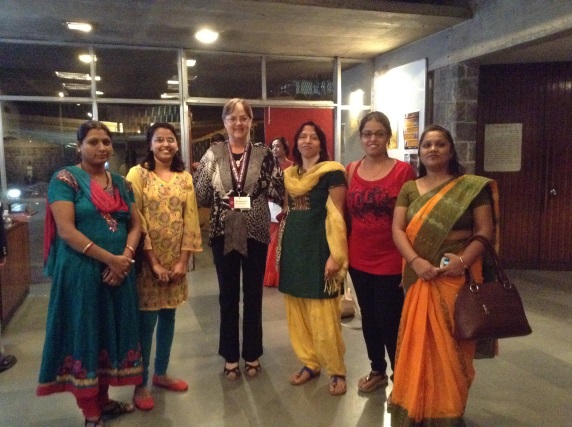
Nancy Bolt with librarians at DELNET

University of Rajasthan


Nancy Bolt with librarians at DELNET

Nancy Bolt with librarians at DELNET


At the University of Rajasthan we met with Professor N. D. Marthur, Director of the central library and Dr. Nardiri Khatter, Deputy Librarian.  Dr. Khatter began with her own  list of the four major problems facing Indian academic libraries:   reduced funding, declining use, lack of modernization, and keeping up with digital collections.   The library has open staff positions without the permission from the university administration to fill them.  “The library is starving for funding,”  Dr. Khatter said.

Still the library does its best to meet the needs of the students.    Officially the library is open from 9am to 9pm, however, the students wanted longer hours so the library is now open 24 hours, without formal permission to do so.   The library has an advisory council made up of faculty members who make recommendations to the university administration about purchases and new library services.  The library has 500,000 items including books, journals, government documents, maps, braille,  microform, and a rare collection from Mount Abu, the home of British envoys during the British domination.   It also has a fine arts collection representing the different cultures of India.  Its annual circulation is 24,126; the annual budget $26,315; a staff of 35; and 10 computers for students.   In our tour of the library we saw the small computer room which had multiple students around each computer.

Still, Dr. Khatter related their hopeful plans for the future:  strengthen the infrastructure, add RFID, renovate the building, add more e-books, add more computers, and hire more trained staff.

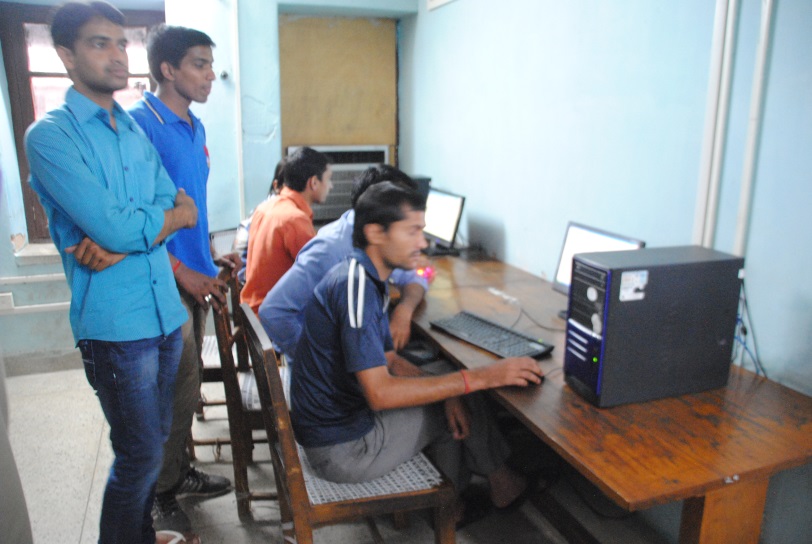
 Computer room at the university


Computer room at the university

Computer room at the university


Public Library of Jaipur

The Jaipur Public Library was an unusual facility.   We were ushered into the Community Meeting room to meet with the library director, Mr. Saharan.   This meeting room was large, clean, and bright, with microphones and soft executive chairs.  The library rents out this room for the use of local government and businesses.  The library itself is very different with dusty shelves and books.   The library seems to serve primarily as a study location for young people studying to improve their opportunities in life.  The library rents out study rooms so researchers or students can reserve a spot to store their research and study materials.  A large study room was filled with young people – segregated with the young men on one side of a wall and the young women on the other.  Mr. Saharan said the library has 95,000 books and 3000 “members.”

A national India Foundation, Raja Rammohun Roy, provides TV equipment, donated books, and furniture. The books did not seem relevant to rural India and were not processed or shelved to be available for the public.

Public Library

Public Library


Commonalities between US and India Libraries

By Nancy Bolt


While in India, the People to People delegation met with many Indian librarians and heard several presentations about Indian libraries.   The US delegates also share information about the current status of US libraries.   We were able to determine many similarities about the issues faced by libraries in both countries.   This provides a foundation for continued possible cooperation between Indian and US libraries.

Commonalities

  1. Many libraries in both countries are dealing with “increasing costs and stagnating budgets” that result in staff cuts as described by Mr. Mahesh, Principle Scientist and Coordinator at CSIR-NKRC.
  2. All speakers discussed the expediential growth of technology and the difficulty that libraries have in keeping current.   More and more documents are digitized and libraries must find ways to access what is available. In addition, as hardware changes, content and data is lost if it cannot migrate to a new platform.
  3. Speakers discussed the movement from owning content to leasing online content. The India speakers mentioned creating content that appears in databases they do not have the resources to subscribe to. In addition, in leased content, if a library ceases to subscribe, all the previously available content is no longer accessible to users.
  4. All libraries were concerned about maintaining their relevance today’s world as people seek information on their own; publishers reach out to buyers individually bypassing libraries; and the difficulty of accessing all the digitization now published.
  5. In order to provide quality service, the libraries in both countries participate in networks like DELNET and cooperative networks in the United States such as Ramapo Catskill Library System.
  6. Advocacy for the role and relevance of libraries is crucial. NGOs, other community partners, and uses can advocate for the value of library services and need to be encouraged to advocate for the library.   Libraries can promote advocacy by asking library users and local NGOs what services they would like and attempting to deliver them.
  7. A multitude of languages in both countries provide challenges for libraries to serve the library user.   The problem includes availability of materials in multiple languages and the ability of staff to communicate with users.   In India, this is particularly a problem in rural areas. In the US, it is more a problem in urban areas where immigrants settle.
  8. Public library services in the New Delhi Public Library seem very similar to modern public library services in the US with the major difference that US libraries are able to provide more computers for public use. Libraries in both countries struggle with sufficient bandwidth.   Libraries in both countries also are offering more cultural and outreach activities, becoming a “place” for people in communities to congregate and receive services beyond traditional books.
  9. Education is changing radically with more and more online education in both countries.   MOOCs are popular in urban India as well as the US.   The role of libraries in serving students in such dispersed areas is unclear.   Libraries need to find a way to provide library services in the far-flung educational environment.
  10. Bureaucracy in both countries can sometimes be a barrier to library development and the initiation of new services that users request.
  11. Library staff must acquire new skills to respond to new demands and challenges. Library education must respond to this need with new curricula.

Dr. Gayas Makhdumi, University Librarian at Delhi University Library summed up the challenge when he said:   “Libraries have to change, can they?”

Impressions of Indian Libraries

By James Morgan


  1. Libraries in India are very strong proponents of advocacy. They use every opportunity they can find to let the public know they are out there, and they try to compete for the public’s attention.
  2. South Africa and India have a problem with multiple languages in their respective countries. There are approximately seven different languages spoken in South Africa. But in India there are at least 1,700 different languages spoken. This presents a problem for libraries that try to collect literature from all over the country.
  3. We saw a wide cross section of libraries on our trip. The public library in Jaipur and the Rajasthan University library were housed in old buildings that were completely inadequate. The buildings were a barrier to the provision of quality of good service. The difference between them is that the University library wanted to build a new facility and the public library seemed to not care about the condition of their building.
  4.  Indian libraries are concerned about funding, just like libraries in the United States are. Support for library service at the national level is fragmented. There is no national library grant program in India like there has been in the United States.


Bulgaria 10 Years Later

Shared by James LaRue – CEO, LaRue & Associates

http://jaslarue.blogspot.com/2014/10/bulgaria-10-years-later.html

My first trip, a State Department grant, happened back in 1994. Nancy Bolt, then State Librarian of Colorado, teamed up with a former legislator in Iowa to arrange for a series of workshops and travel exchanges. Back then, Bulgaria was still throwing off the Soviet influence. Libraries had been tools of the state: a mechanism for the distribution of propaganda. Perhaps as a consequence, they did not enjoy a lot of public use or support.

There was also a parallel institution: the chistalistes. Think “culture center” – a place to celebrate the folk programs and activities of a country very rich in history.

The purpose of that first visit was to present a model of library as community information center. We talked about helping libraries begin to consciously collect and promote their collections to distinct market segments. We tried to encourage our colleagues to become not just passive distributors of state literature, but active, engaged, and visible “players.”

But I don’t want to suggest that our sole purpose was just to tell them to be more like us. We learned a lot from them, too, and found that librarians everywhere are united by more similarities than differences: we are motivated by the desire to serve, we love and promote reading, we work to make our communities better.

I spent time in Sofia, the capital, and then took a lovely bus ride through the Balkans to Dobrich, where I shadowed the very astute and forward-thinking director of the library, Elena (who has now moved on to the leadership of an academic library) for a time.

The Bulgarians were then scrambling to join the European Union. They impressed me. Again, their history goes back past the Romans (although Roman ruins still endure there) to pre-history. I reveled in walking through their cobblestone streets, along rivers, past countless small shops. Their food is amazing.

I’m ashamed to say that over the years, I haven’t stayed in as much contact with my colleagues there as I should have. All of us were busy.

But then I was invited back by the Bulgarian Library and Information Association to present a two day workshop on “community reference” — which I pioneered with my former staff at Douglas County Libraries, and which they have written and spoken about across the country. (See my previous blog for more about “community reference.”)

Bulgaria has changed. It seems far less Soviet and far more European than 10 years ago. A lot more people – young people in particular – speak English. Due to a favorable rate of exchange, it’s very affordable. Sofia is still a wonderfully engaging and walkable city. The food is still great, the people are consistently gracious and interesting. Wifi is everywhere. There are a lot of shops, restaurants, hotels, and parks.

Bulgaria has problems, though, too. First is a subtle demographic: a lot of young people abandoned Bulgaria for points west, in quest of both learning and wealth. That leaves behind some older folks who have begun to wax nostalgic about the unlimited medical care of the old Soviet era. Second is the problem of corruption: I gather it’s fairly widespread, with ties to organized crime. Third is a kind of cynicism: after the Soviet collapse and the embrace of capitalism, people thought their lives would immediately begin to resemble those portrayed on American movies and TV. There is some sense of disappointment, even betrayal.

I talked with a lot of people in my week there. While not everyone agreed with this, one woman said she saw strong evidence of rising anti-American and pro-Russian sentiment. (Bulgaria is, by the way, just about half way between the Ukraine and Israel.) But this is what struck me: there are three ways, she said, that the US and Russia are the same. She said,

  1. You both think you’re exceptional.
  2. Neither one of you knows or cares much about the rest of the world.
  3. Both of you feel free to invade any country you like, whenever you feel like it.

On the one hand, that’s an awkward pairing. On the other, I see how she got there.

After the workshops, funded by the America for Bulgaria Foundation, I thought about the problems some of the directors had shared with me. Bulgarian libraries are seen as “the memory of the people.” That’s fine as far as it goes, and although no politicians would close a library, they don’t invest in its success, either. So with very little funding (a fraction of what goes to even the poorest American libraries), it’s hard to attract new patrons. They can’t buy much in the way of collections, and there are no – not one – purpose-built public libraries in the nation. Instead, they are scattered across former Community Party buildings and other re-purposed structures, broken into a series of small rooms with too many poorly paid workers and too few resources of any kind.

While there, I was also interviewed by someone who works with a lot of children’s publishers. There is widespread illiteracy in Bulgaria – a problem that may be getting worse. (This despite some very well-educated people, too, and lots of outdoor booksellers!)

Upon reflection, I wrote to my key contact in Bulgaria, the wise, vivacious, and extraordinarily dedicated Anna Popova, that although I enjoyed giving the workshop, I do not believe even widespread adoption of that strategy would really address the underlying lack of support of Bulgarian libraries. Instead, I recommended that they adopt something that I have come to believe, more and more, is the foundation of American librarianship: major outreach to children.

If you are not a library user, it takes a life transition to make you one. One of the most powerful transitions is parenthood. In the US, a third to half of our public library business revolves around children’s materials. We provide free storytimes, then send families home laden with books. Study after study affirms the vital importance of a rich exposure to language to the brains of infants. As I’ve noted elsewhere, if a child between the ages of 0-5 can get 500 books in their home, it’s as good as having two parents with Master’s degrees, regardless of the actual education or income of their parents. This, in turn, affects everything from childhood health to earning potential and productivity. It’s a modest investment that pays huge societal dividends.

Moreover, children’s services is the most powerful recruitment strategy for libraries we have. It not only solves real and important social problems, it also establishes an emotional connection with the next generation. It is is essential to our survival.

While many Bulgarian libraries offer some services to children, there is nothing like the widespread all-out recruitment of the US.

Can Bulgaria make that shift?

I don’t know. Culture and history are powerful things. But I concluded this time, as I did the last time I visited, that Bulgarian librarians are up to the challenge. And they represent a significant asset to their nation.

A Library for Panimachivac

Submitted by Jon Walker, Executive Director, Pueblo City-County Library District

Panimachivac School Girls_0

Panimachivac School Girls

PCCLD currently is taking final steps constructing three new libraries in underserved areas of our county.  As we count down the days until these new libraries open to the public, I recently had a unique opportunity to see this effort in a different light.

In July, I worked onsite in a remote village in Guatemala with a group helping build a new community library.  I learned many things there, including what we take for granted here in our community can be a luxury somewhere else.

Guatemala is located in a historically rich region, where the indigenous Maya civilization dates back more than two-thousand years with a written language, beautiful works of art, sophisticated practices in mathematics and astronomy, advanced architectural and construction techniques and more.  Today, however, Guatemala is a poor country where individual families possess only about five percent of the earning power compared with the typical household in the USA.  The people of Guatemala were long subjugated by the Spanish and more recently the area was torn by civil war for nearly forty years from 1960 until the late 1990s.  The country’s economy today principally is tied to agriculture and textiles, but it lacks some basic modern infrastructure such as reliable electricity, available machinery and potable water.  When peace finally came to Guatemala, many citizens for the first time were guaranteed certain basic rights that we accept as a given in the USA, such as access to public education that only recently has become available to most citizens there through sixth grade.

Today, with peace in their nation, there are significant efforts underway to modernize Guatemala.  This includes work to establish schools and libraries.  My recent time there—along with members of the Pueblo Rotary Club and others—was part of a much bigger effort to provide the citizens of the area with improved access to education, information and literacy.

We worked mainly on preliminary construction of a library in Panimachivac, a community located in the distant highlands of the country, but we also visited the site of a recently completed community library that was a year in the making in the village of La Loma.  Almost all work there is done by hand with very little machinery and only basic tools.  Our USA team worked on the library during the day, and we were joined by villagers in the late afternoon as they returned from their daily toil in neighboring agricultural fields.  Our effort was coordinated by PAVA, an in-country non-profit organization dedicated to helping the people of Guatemala.

I could not help but compare my daily life in Pueblo with the locals I worked alongside in Panimachivac and met in La Loma.  Many of the things that we accept as given here are luxuries there, such as indoor plumbing, motorized transportation, professional healthcare, and so on.

Even our relatively modest contribution to enable greater access to information and literacy is important.  One story can help illustrate this.  Only the younger generation there commonly enjoys access to education.  This means older people are often illiterate.  So, it is meaningful now when a young girl in the village of La Loma can take out a book from the new library there on a topic like astronomy.  She had learned to read in school and took the book home to read to her father, who is illiterate.  He told her that although he had seen the stars, moon and sun, he never knew until that moment beyond what he saw in the sky.

My visit to Guatemala provided me with a fresh view of the rich life and opportunities afforded us here in the USA, which are what dreams are made of in places like Panimachivac and La Loma.  It reinforced for me the universal value of free and open access to information, the joy of reading, and the importance of libraries, not only here in Pueblo but also around the world.

Panimachivac Retaining Wall Work_0

Working on the new library retaining wall (Panimachivac, Guatemala)

Panimachivac Cooking Lunch_0

Preparing lunch (Panimachivac, Guatemala)

La Loma New Library Celebration_0

Celebrating opening of new library (La Loma, Guatemala)