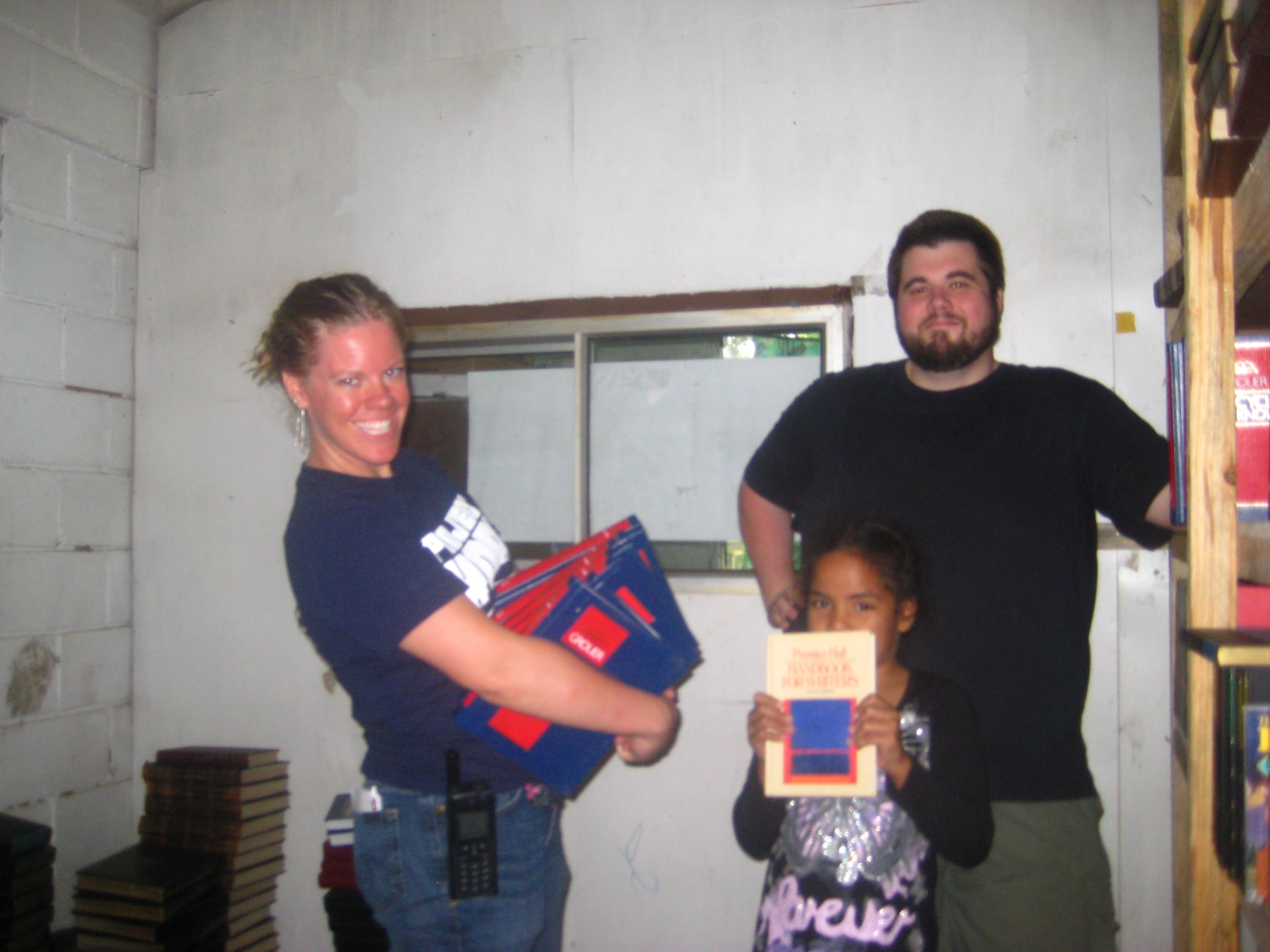
Northern Lights Library, Kingdom of Tonga – Submitted by Rebecca Stephens

Tonga

“I’m going to Tonga. You in?” This is how I was invited on my first international library adventure. Eric Bemiller had been telling me about a Tongan library project for a few weeks, but he was not sure he would be able to go to Tonga. His text came Thursday, June 27, 2013. I said yes June 29, and we were flying to Tonga on Sunday, July 21. In those three weeks we would learn the genesis of the Northern Lights Library and write our goals for the mission, in the month following we accomplished those goals and laid the librarianship foundation for the first public library in the Kingdom of Tonga, and in the year since we have continued to support Kato Havea, a Tongan native and the heart and founder of Northern Lights Library, in her efforts.

Tonga and Samoa were devastated by a tsunami in September 2009 while Kato was living in Alaska. After five anxious days, she finally connected with a young cousin in Ha’apai, Tonga who assured her the whole family was safe despite losing their home and all of their possessions. Then that eleven year old boy, whose connection to his far off cousin was the bookshelf she kept stocked, asked a question that would change Kato’s life. He said, “Our books are gone. Can you send more books?” That afternoon Kato picked up four children’s books and returned to her office. Staring at those books she decided she would not just replace her cousin’s library, she would build a library for all of the children of Tonga. Books had opened the world to her and she wanted to “Provid[e] the children of Tonga an opportunity to explore the world through books.” (Northern Lights Library vision statement)

Spring 2013 was time to ship the donations, approximately 50,000 books and serials, from Alaska to Tonga. Through Operation Handclasp, a United States Navy Pacific partnership, Kato was able to send the books to Tonga on a navy vessel. Other organizations and NGOs were part of Operation Handclasp including Project HOPE, a medical NGO. When the ship arrived in Tonga, Project Hope’s Dr. Lynn Bemiller volunteered to assist with the Northern Lights Library project in her spare time. She asked her son, Eric, for direction in sorting the books, and, when she learned there was no librarian to continue the project, she offered to ask Eric to travel to Tonga to help. The community would host Eric and me, and we would go as Project HOPE volunteers so as to travel under an established nonprofit.

Preparation for the trip included conversations with Kato to understand her and the community’s vision as well as conversations with Janet Lee who helped us focus our goals and set realistic expectations. We arrived at the Princess Kaimana Northern Lights Library in Havelu, Tonga with three goals for our month: weed, organize, and classify the donated books; figure out day-to-day library operations; and organize a library committee. Two weeks after walking into the library we had touched every item in the library, weeded 10-15% of the items, and organized every book by type – children’s, adult fiction, adult nonfiction, reference, and textbooks. Three days before we flew home we had classified every book using a borrowed print Dewey from 1972. Interviews with community leaders and the chosen librarian helped me write collection development and library management policies for the Princess Kaimana Library. We designed library shelving and the layout for the library and trained and encouraged the librarians in basic librarianship. Our final goal was modified when we realized that the concept of committees was too western. We changed our focus to ensuring that the library had stakeholders by reaching out to the community and finding interested parties. Throughout the month we worked closely with Lady Tuna and Vika, two community leaders and members of the local government. We met parents and community members who wanted the library and saw its value to the community. Finally, we met a retired school librarian volunteering in the local high school who was willing to introduce the librarians to the school librarian community and assist with the Princess Kaimana Library. In 19 working days we accomplished every goal and laid the framework for the Northern Lights Libraries in Tonga.

Libraries are so deeply engrained in American and western culture they can be taken for granted, so for me being in Havelu for a month was inspiring. The people of Tonga have libraries, but only small collections in their schools. A public library will allow children more access to reading material, laborers access to philosophy, and the community to medical and health care materials. A year after we committed to this project Eric and I had the opportunity to present at ALA and draw more attention to Northern Lights Library. We are continuing to support Kato in her efforts as she works to establish Northern Lights Library as a nonprofit so she can complete her first two libraries, Princess Kaimana and a yet to be named library in Ha’apai near her cousin, the inspiration for this whole project.
 

New Sister Libraries!

Image

Poudre River Public Library District is pleased to announce that earlier this year we entered into a collaborative agreement as Sister Library to the San Juan del Sur Biblioteca, located in San Juan Del Sur, on Nicaragua’s Pacific coast.

The San Juan del Sur (SJDS) Biblioteca was established in 2000 by a Colorado native, Jane Mirandette, in cooperation with local residents. The SJDS Biblioteca was the first public lending library in the country of Nicaragua. Since its inception, the library has provided services to the residents of San Juan del Sur as well as mobile library services to remote and rural towns and villages in the surrounding region.

The SJDS library recently acquired a new, larger space. The new, 2,000 square foot library opened in May. Its expanded collections, new computers and dedicated staff are offering improved access and learning opportunities in a country where most citizens have never experienced the tremendous benefits offered by a public lending library. As Ms. Mirandette said recently, the SJDS Biblioteca is helping to create a reading culture where none existed before.

The SJDS Biblioteca, the Hester J. Hodgdon Libraries for All Program which supports the SJDS library, and Ms. Jane Mirandette are known and respected internationally and in the US library and educational communities. In 2009, the Hester J. Hodgdon Libraries for All Program was the recipient of the ALA Presidential Citation for International Innovation. The SJDS Biblioteca is also an active member of the Nicaraguan Library Association ANIBIPA and a founding member of their En Tu Biblioteca campaign with ALA and IFLA.

As we considered a cooperative relationship, both parties saw that Sister Library programs offer substantial benefits. They allow for the sharing of information, resources, training and expertise among the staff and patrons from both libraries, promote the concept of a global community of libraries, and raise awareness of issues and needs facing libraries internationally. The American Library Association recognizes the value of Sister Libraries and promotes the establishment of such partnerships through its International Relations Round Table. This partnership is also recognized by the newly formed International Library and Cultural Exchange Interest Group (ILCE-IG)of the Colorado Association of Libraries, with hopes that the two Sister Libraries will serve as an example and resource for other libraries contemplating similar cooperative relationships.

Our agreement is already producing exciting results. PRPLD staff members Carol Gyger and Victor Zuniga helped the SJDS Biblioteca select, customize, and implement Koha library open source software, to establish an automated circulation system and catalog. Victor Zuniga trained the Nicaraguan staff to use and support the software. Johanna Ulloa, PRPLD Outreach Specialist, and SJDS Biblioteca staff have brought together students from San Juan del Sur and a Ft Collins bilingual school (Harris Bilingual Elementary in the Poudre School Distrct) to participate in Skype, traditional pen pal and e-mail pal projects. Over 30 students from both countries have sent letters and drawings of themselves back and forth, with plans to continue the connections between the groups when school begins again in the fall for the Ft Collins students.

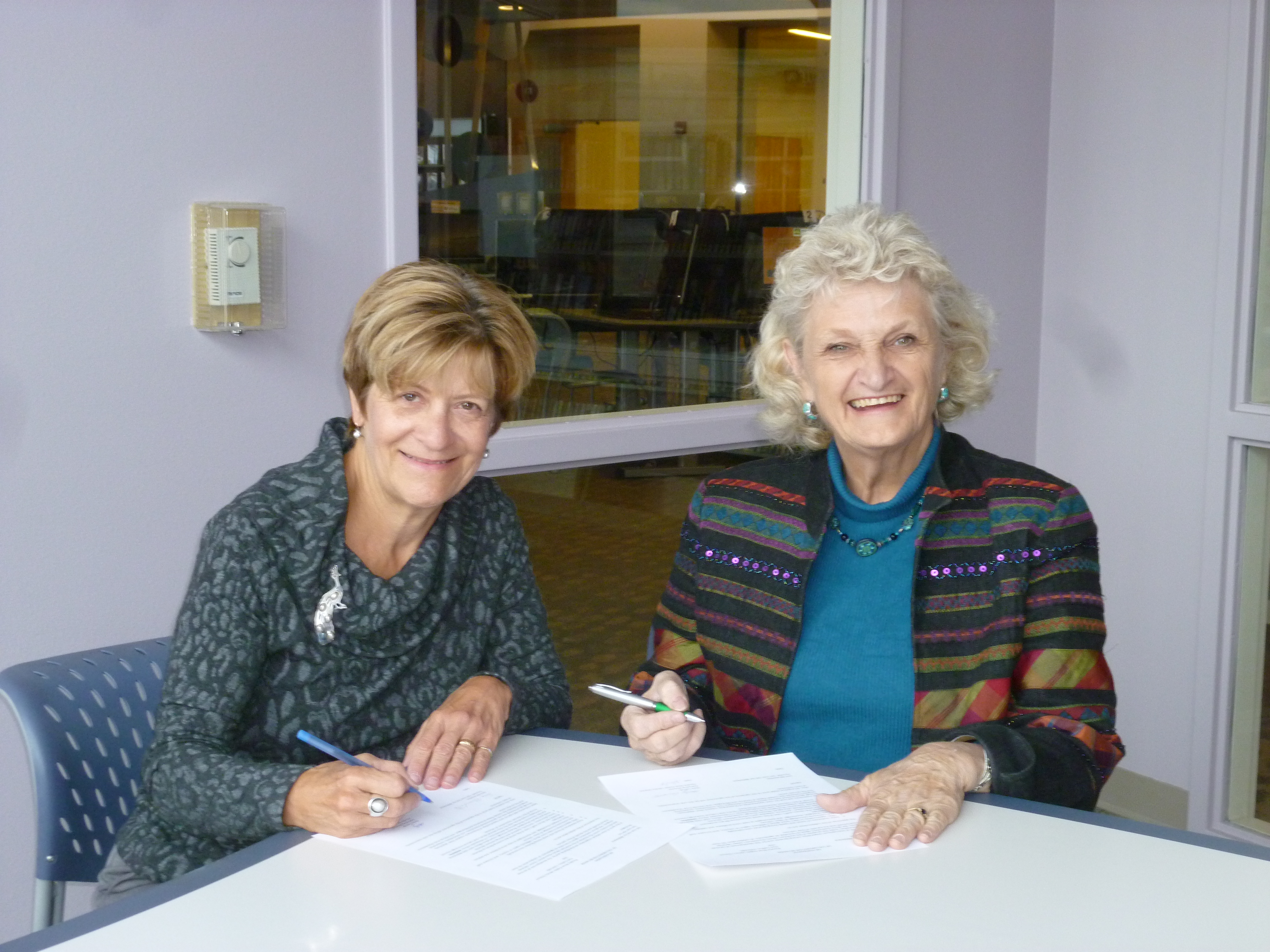
We are hopeful that these efforts are just the beginning, and that moving forward we will forge a collegial and productive relationship between our two libraries. Pictured here is Holly Carroll, Executive Director, Poudre River Public Library District and
Jane Mirandette, Founder/Director San Juan del Sur Biblioteca.

www.sjdsbiblioteca.org
www.librariesforall.org
SJDS Biblioteca catalog(English & Spanish):
http://catalogo.sjdsbiblioteca.org/

Article submitted by Ken Draves, Deputy Director, Poudre River Public Library District

ILCE-IG will present at CALCON 2014!

Image

The ILCE-IG is pleased to announce that our proposal for the CAL conference has been selected. “It’s a Small, Small World: Helping Libraries around the World” is slated for Friday, October 17, 3:00-4:15 p.m. (subject to change).

Members of the CAL International Library Cultural Exchange-Interest Group are active around the world helping libraries.  Come and hear stories of our work. Kathy Plath works with libraries and schools in Lesotho bringing inexpensive durable computers to students and teachers with the One Laptop per Child Project.  Jane Mirandette and architect Justin Martinez collaborated to design and build the new San Juan del Sur Biblioteca using crowd source fundraising.  Nancy Bolt delivered a check from ALA to aid earthquake destroyed libraries in the Philippines and will describe the damage, the efforts to recover, and overall library service.  Janet Lee, Chair of ILCE-IG, will moderate.

Last year our International reception was quite a success.  Watch for announcements of a time and place for this very fun event. 

A Visit to the Bol Library – Submitted by Nancy Bolt

ImageImageImageImage

After a very busy spring I’m on vacation with a similarly exhausted friend and we decided to take a cruise on the Dalmatian Coast of Croatia. I asked a couple of times if there was a library nearby with not much success. Finally we got to Bol on the island of Brac (pronounced Brash) when, immediately upon exit our small cruise boat, we see signs directly us to city sites and there is an arrow pointing to the library (in English). My friend Cher Czyzewski is also a librarian so we set off to look for it. Our tour guide was actually ahead of us and said he had already met the librarian who was off to get coffee and we should come back in an hour, which we did. 

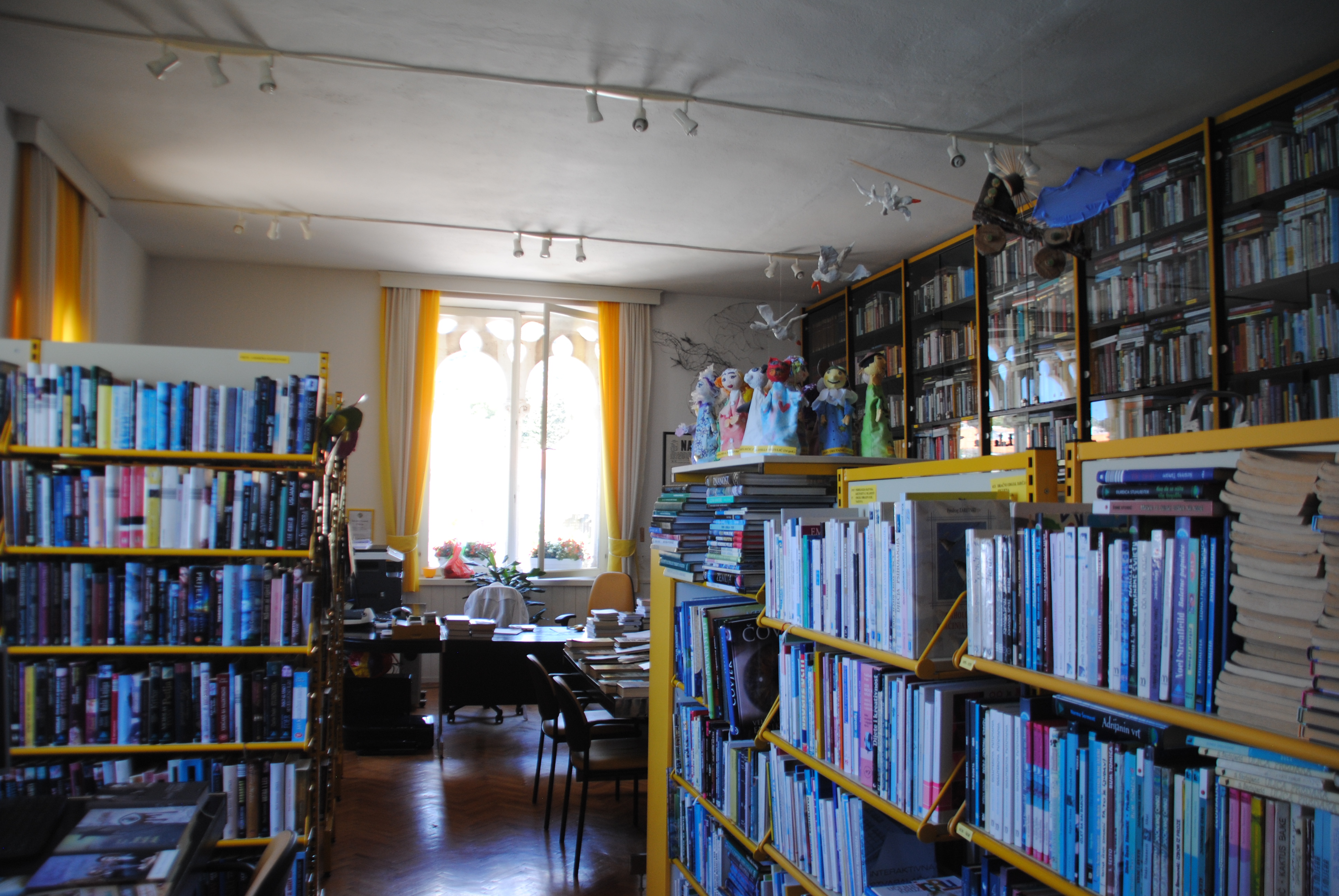
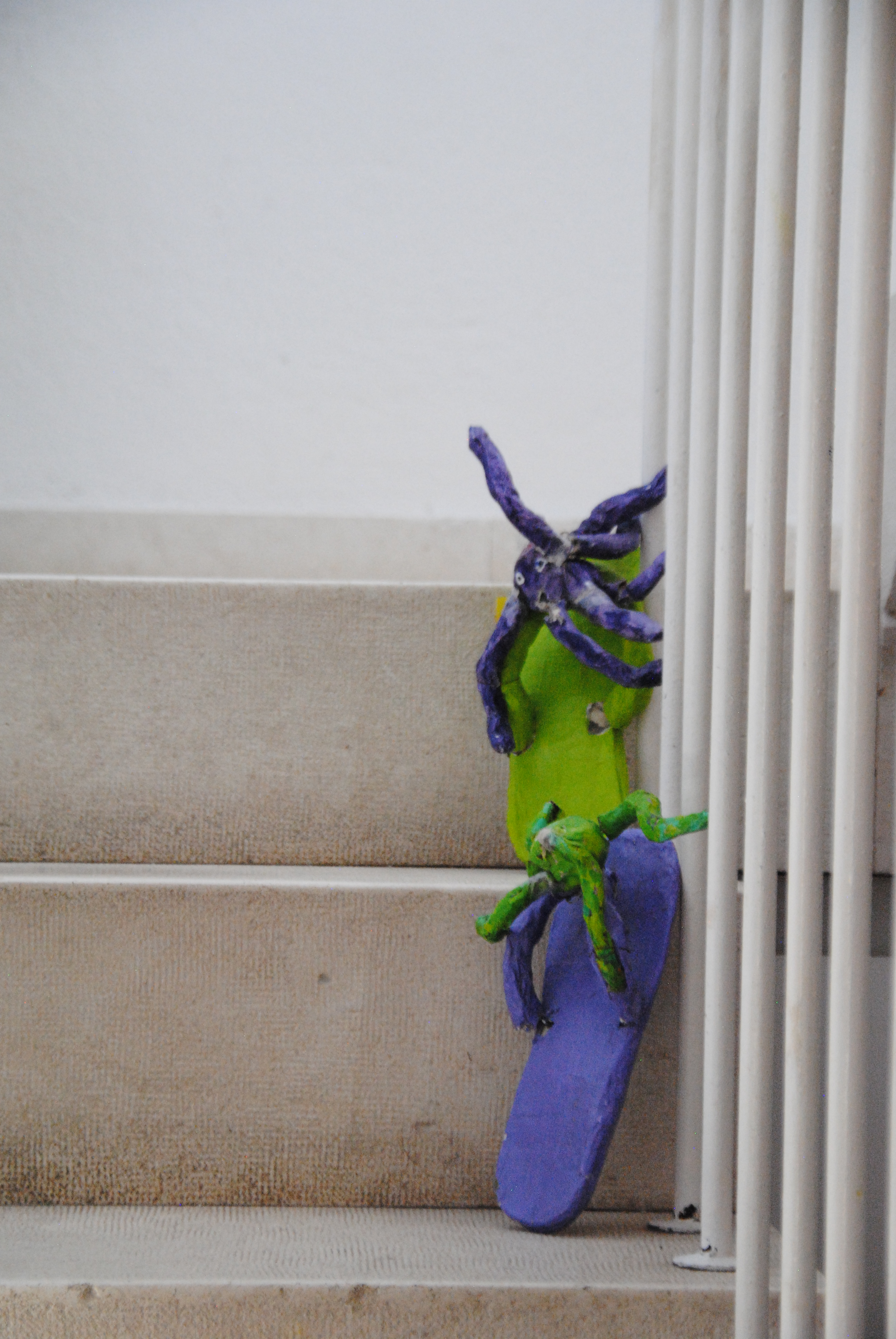
The library was a little hard to find, around a corner and up some stairs, decorated with art work, we later found out, from children’s summer craft programs. The library is one room, bright and airy, with a full length mirror looking out on the Adriatic. Librarian Jadranka Nejasmic said the library is open to tourists who come during the summer months and she does regular programming for children, bringing in local artists and authors. It has about 60,000 books, some of them stored on an upper floor. She wants to expand the library from the one room, and has her eye on a school nearby that will be abandoned when a new school is built. Ms Nejasmic is active in her national library association and participants in continuing education, last year visiting some of the national libraries across Europe. 

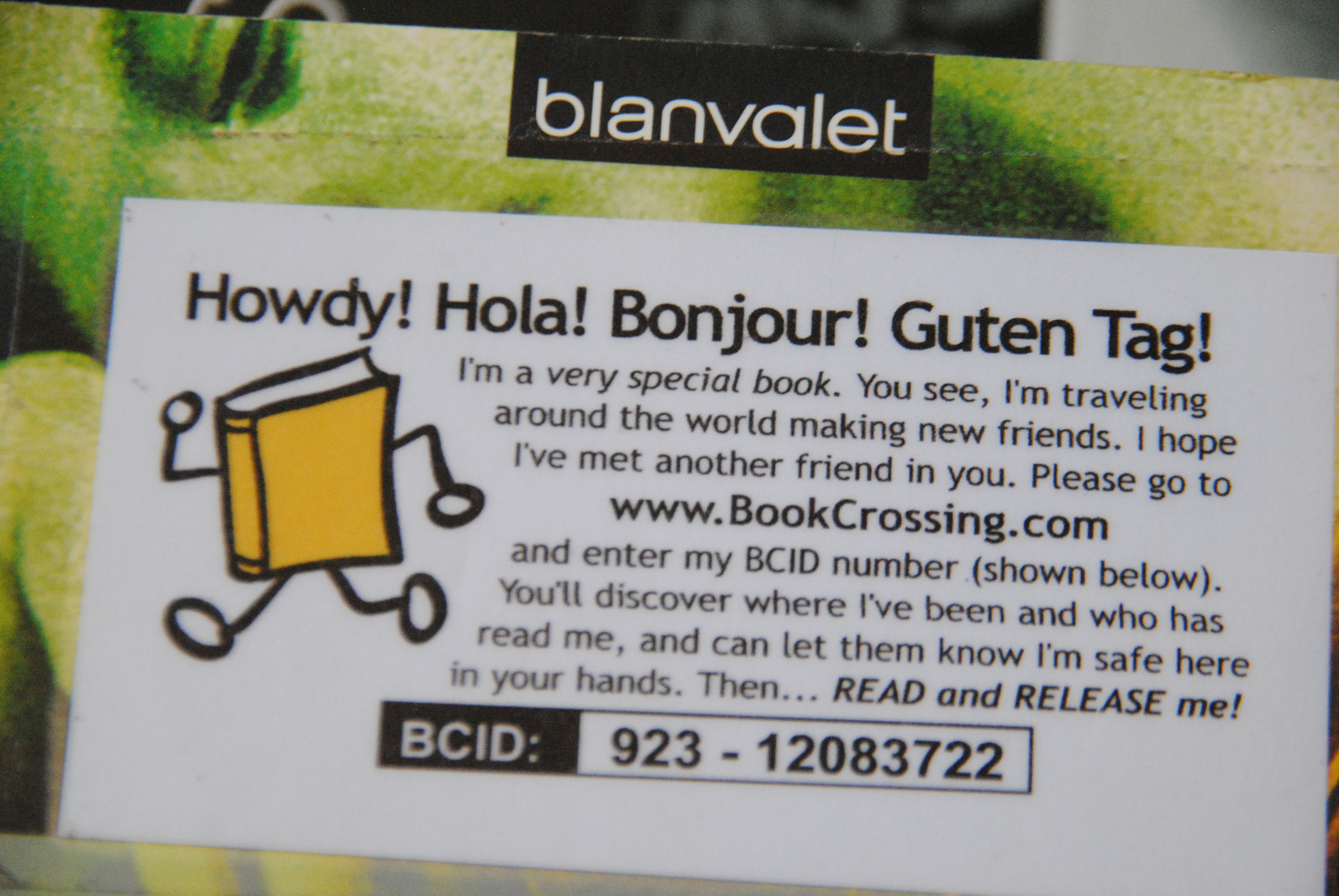
What I found the most fun is the BookCrossing program. During summer months, Ms Nejasmic put a big table of books outside on the dock. All of the books have this notice on the back: “Howdy! Hola! Bonjour! Guten Tag! I’m a very special book. You see, I’m traveling around the world making new friends. I hope I’ve met another friend in you. Please go towww.BookCrossing.org and enter my BCID number(shown below). You’ll discover where I’ve been and who has read me. The READ and RELEASE me!”

So I took The Marseille Caper by Peter Mayle (much fun, particularly if you like French food) and will pass it on to someone else to read.  Here are some photos of the library, of Ms Nejasmic with me, of the crafts on the stairs, and the Book Crossing information.

Visit with Rossi in Gotche Delchev Library – Submitted by Nancy Bolt

ImageImageImageImageImage

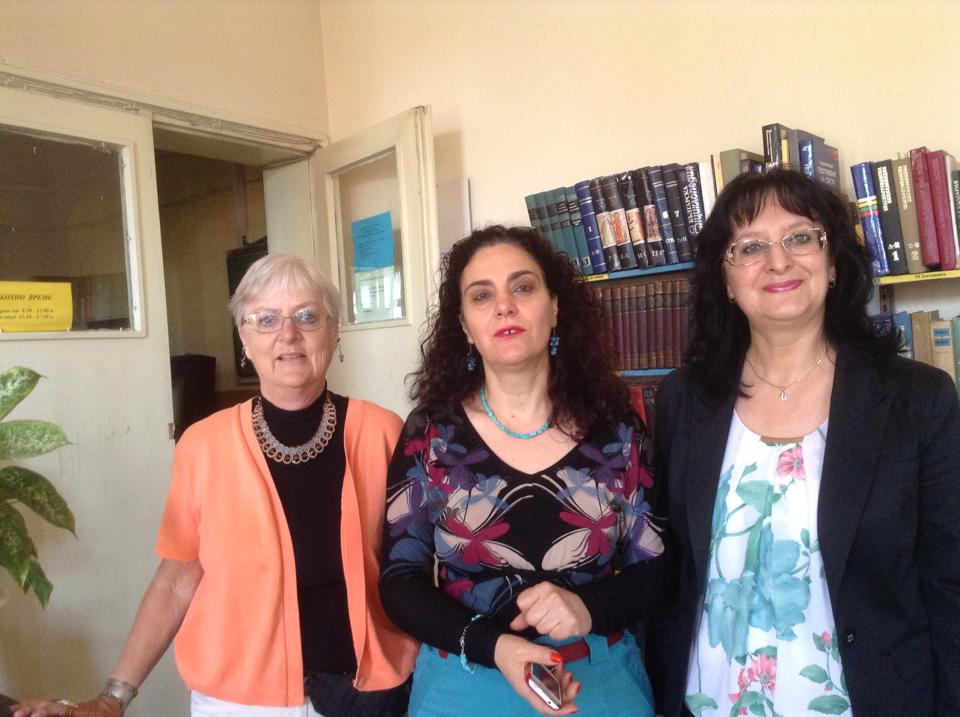
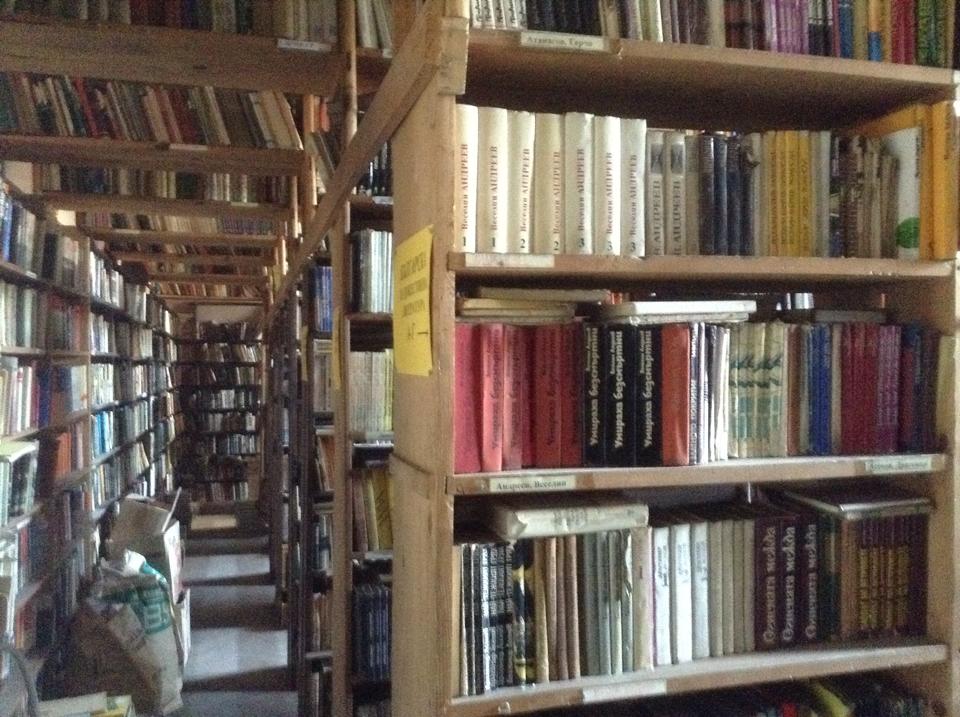
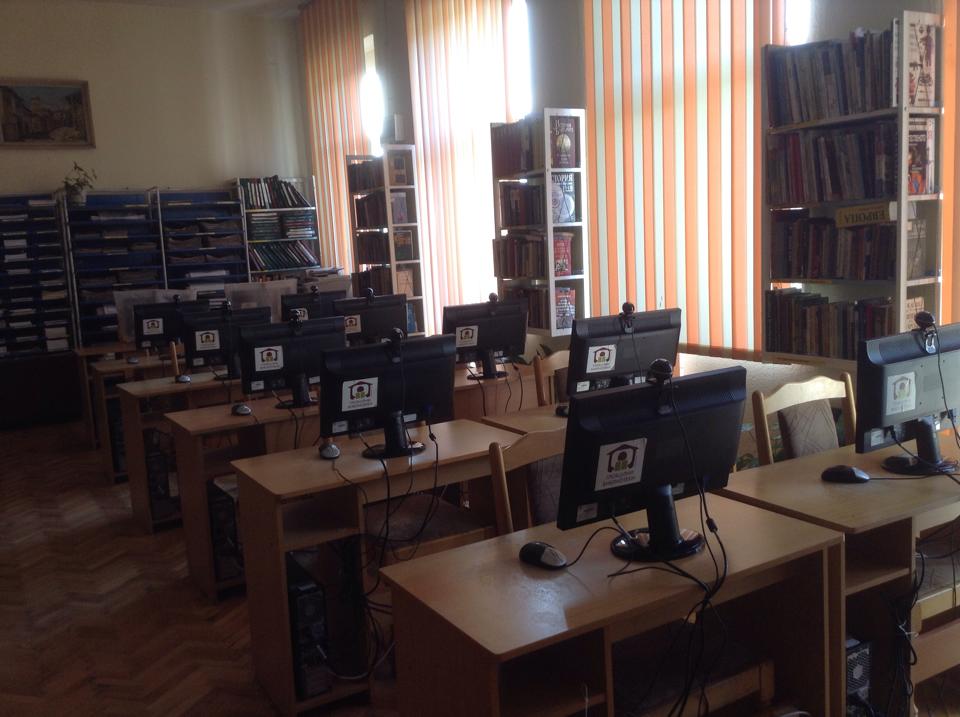
On my way to Greece a week ago I visited Rossi Poparkova in Goyse Delchev. Rossi directs the library in Gotche Delchev, Bulgaria. Her library was an ABLE partner with the Annette Choczyzk, first with the Arapahoe County Library and then the Delta County Library District in Colorado. When the Bill and Melinda Gates Foundation invested in Bulgaria, Rossi’s Library became a Gates Global Library. I visited the library about seven years ago. much has changed; much not. The library is part of a chithalisthe, or community center, that provides the library facilities, utilities, internet and wifi, and some funding for library materials. There is a new children’s room, but away from the main part of the library. There are now about 20 computers for people to use with classes taught by library staff. Rossi says that library use has dramatically increased because of the computers and expanded English language collection used by students learning English.

The library is still heated by wood and coal stoves and the storage room is still crammed with books for which there is no space, and Rossi still struggles to find funding. She cobbles together a budget from the chithalisthe, Gotche Delchev municipality that buys magazines, the national Ministry of Culture that pays for the small salaries, and a small book budget from readers cards which people have to buy to use the library. Since both the main library and the children’s library are up stairs, Rossi recently applied to the national ministry for social services to fund an elevator.

Photos above show Rossi and colleague Maria Krostilova in the main library, Rossi and children’s librarian Katerina Milenova in the children’s room, a very full storage area, and the Gates computers before the the library opened, hence no one using them.

Register now for the Western Balkan Information Literacy Conference!

Image

There’s still time to Register for the Western Balkan Information Literacy Conference, Bihać Bosnia & Herzegovina June 11-14th 2014. This year’s programs will be centered on the theme, “Embracing Relentless Change: Information Literacy and Lifelong Learning in a Digital Age.” REGISTER ON OR BEFORE 5th JUNE 2014 . For more information and to register visit: http://conference.bibliotekabihac.com/

Exciting news and an invitation from Nancy Bolt!

Image

I’m honored to be asked by People to People and the American Library Association to lead a tour to India November 2-11, 2014.  I’ve been working with international libraries for 20 years and was Chair of the ALA International Relations Committee last year. I’m also I’m co-founder of the International Library Cultural Exchange Interest Group of the Colorado Association of Libraries.  

I’m excited to lead this tour because it combines visits to cultural sites and interacting with our librarian colleagues in India.   People to People tours always create wonderful opportunities for networking and expanding our understanding of the successes and challenges of our library colleagues around the world.

You can learn more about this trip at www.peopletopeople.com/ALA

As People to People describes it:   You can experience India firsthand with your library and information services peers from India and around the world through vibrant professional exchanges, valuable networking, and meaningful discussions tailored to your focus and interests.

Professional highlights of the trip include:  

  • Local library and information science professionals from various sectors for a mini-symposium in New Delhi.
  • Librarians and information technology specialists at local libraries (public, children’s, and school depending on the interests of tour participants.)
  • Professionals at a local university to learn about the extent of professional development available to Indian librarians and the delivery mechanisms for professional development.

Information about the cultural sites we will visit in New Delhi, Jaipur, and Agra go to www.peopletopeople.com/ALA. You are invited to bring a guest with you who will have alternative visits while we meet with librarians.

I hope you can join me for this trip to India.

Why We Do What We Do

Submitted by Janet Lee, Chair, International Library & Cultural Exchange Interest Group, Dean, Regis University Library, Returned Peace Corps Volunteer, Ethiopia

Each of us has come to this interest group because we have a passion for travel and a passion for libraries.  Many of us have had the good fortune to have worked in or set up libraries abroad.  Some of these projects have been very successful.  Some have become sustainable.  Some have not.  We have seen libraries that are filled with users.  We are aware that some of these same libraries lose their appeal once we leave, books go unread and seats are empty.   Yet we return and try again, each time with measured optimism.   There are so many roadblocks in the developing world:  few books, even fewer trained staff; a lack of a reading culture; little electricity let alone Internet; no public funding; and few local language materials.  Yet when the magic happens and a child and a book come together, it is all worthwhile.

I recently picked up a book, “The Boy Who Harnessed the Wind” by William Kamkwamba, a young man from Malawi.  I had a copy of his children’s book that I picked up at a book signing, but had not read his memoir.  William lived in rural Malawi and had a somewhat normal African childhood, until a great famine happened, the government changed, and his family could no longer afford his school fees. He and his family faced starvation and did their best to make a living through subsistence farming.  He loved taking things apart and putting them back together:  radios, bicycles, anything with parts.   He tried sneaking into school despite the fact that he had not paid his fees, but was caught and kicked out.  Rather than play games, drink or smoke, he discovered the library.

He writes:

“I started wasting time in the trading center playing bawa.  Someone also taught me a wonderful game called chess, which I started playing every day.  But chess and bawa weren’t enough to keep my mind occupied.  I needed a better hobby, something to trick my brain into being happy.  I missed school so terribly.”

“I remembered that the previous year a group called the Malawi Teacher Training Activity had opened a small library in Wimbe Primary School that was stocked with books donated by the American government.  Perhaps reading could keep my brain from getting soft while being a dropout.”

“The library was in a small room near the main office.  A woman was sitting behind a des when I walked in.  She smiled. ‘Come to borrow some books? She said. This was Mrs. Edith Sikelo, a teacher in Wimbe who taught English and social studies and also operated the library.  I nodded yes, then asked, ‘What are the rules of this place?’ I’d never used such a facility.”

“Mrs. Sikelo took me behind a curtain to a smaller room, where three floor-to ceiling shelves were filled with books.  It smelled sweet and musty, like nothing I’d ever encountered.  I took another deep breath.  Mrs. Sikelo then explained the rules for borrowing books and showed me the collection.  I’d expected to find nothing but primary readers and textbooks, boring things.  But to my surprise, I saw American textbooks on English, history, and science; secondary texts from Zambia and Zimbabwe; and novels for leisurely reading.”

“I spent the day coming through the books while Mrs. Sikelo graded papers at her desk.  Despite the variety of titles, I left that afternoon with books on geography, social studies, and basic spelling—the same textbooks my friends were studying in school.  It was the end of the term, and my hope was to get caught up before classes started again.”

Eventually, William found a physics book that together with his imagination and ability to take things apart and put them back together allowed him to build a windmill that produced electricity to light his family’s house.  His reputation spread and caught the attention of faculty and journalists and ultimately he returned to school and ultimately came to the U.S. and attended school at Dartmouth College.

Had it not been for that library, the teacher/librarian, and that physics book, William might have remained uneducated and a farmer for life.

 http://www.amazon.com/Boy-Who-Harnessed-Wind-Electricity-ebook/dp/B002PEP4U0/ref=sr_1_1?s=books&ie=UTF8&qid=1398737501&sr=1-1&keywords=kamkwamba